Chapter 10 Insights
Signs · 623 insights
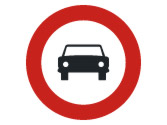
The circular red-bordered car sign bans motor vehicles except two-wheeled motorcycles without a sidecar.
Vertical signs always take precedence over road markings when they contradict each other.
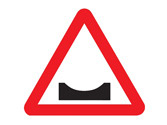
A triangular sign showing a downward dip warns of a depression in the road ahead.
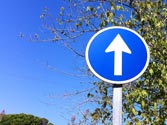
Circular blue signs are mandatory; a blue arrow forces you to follow that direction with no U-turns.
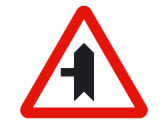
The priority intersection sign means the road on the indicated side must yield to you.
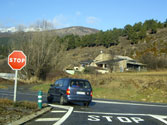
Horizontal markings and vertical signs share meaning, but vertical signs prevail when they conflict.
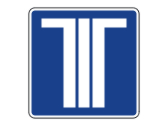
A square electronic toll sign permits but doesn't require electronic payment; the circular version makes it mandatory.
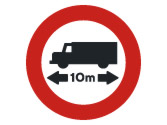
The length restriction sign bans vehicles whose total length, load included, exceeds the indicated metres.
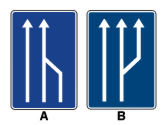
A sign showing the right lane closing warns that a traffic lane is ending and a merge is needed.
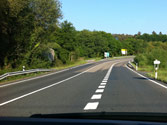
A noticeably wider broken white line marks the boundary of a special lane.
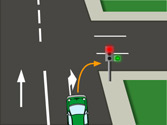
A green arrow allows passage in its direction with caution, yielding to traffic in the lane you join.
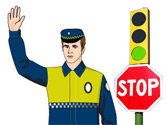
Traffic officer signals override all other signs, lights, and rules.
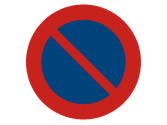
The no-parking sign forbids parking on its side of the road but still allows stopping.
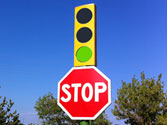
Traffic lights take precedence over vertical signs in the signal hierarchy.
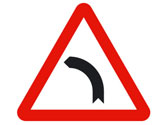
A triangular sign with a curving arrow to the left warns of a dangerous left-hand bend.
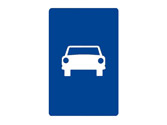
The blue car sign marks a road reserved exclusively for motor vehicles.
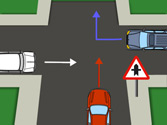
The priority intersection sign tells you the crossing traffic must yield to you.
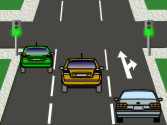
Arrow markings on the carriageway dictate the only directions permitted from that lane.
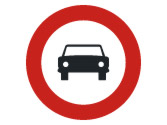
The motor vehicle prohibition sign blocks cars but allows two-wheeled motorcycles through.
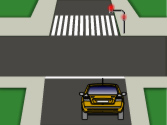
Always stop before the transverse stop line, which must never be crossed to obey a sign or light.
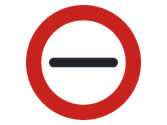
An octagonal STOP-style sign with text inside marks a mandatory stop at customs, police, or toll posts.
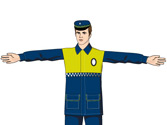
An officer with arms extended horizontally requires users approaching from front and rear to stop.
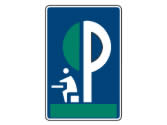
The picnic-table symbol sign marks a roadside rest area.
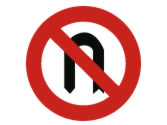
The U-turn prohibition sign bans only U-turns, not left turns.
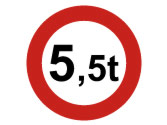
The weight restriction sign bans vehicles whose actual laden mass exceeds the indicated tonnage.
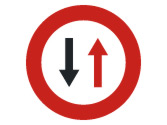
The red-arrow narrowing sign means you must yield to oncoming traffic through the bottleneck.
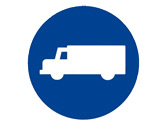
A blue mandatory truck sign without tonnage requires all trucks and vans to use that road.
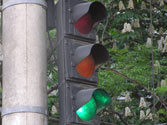
A green circular light grants priority passage unless you'd block the intersection by stopping inside it.
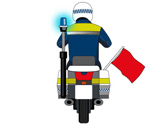
A red flag closes the road to all traffic from the point where the carrying vehicle passes.
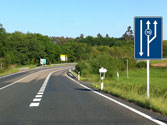
Even on a minimum-speed lane, drive in the rightmost lane when circumstances permit.
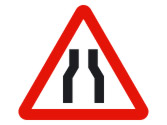
A triangular sign with inward-pointing lines warns the carriageway is narrowing ahead.
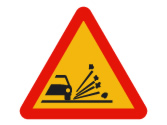
Yellow-background signs mark roadworks; the symbol still gives the actual hazard, like loose chippings.
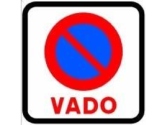
The dropped kerb sign forbids parking only, not stopping or briefly standing.
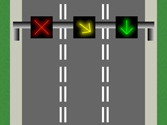
Lane-specific overhead signals govern only the lane directly beneath them.
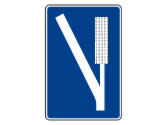
An escape lane sign marks a runaway-vehicle ramp reserved for brake-failure emergencies only.
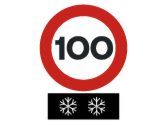
A speed sign with a weather supplementary panel applies only under that specified condition.
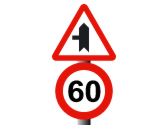
A speed sign mounted with a danger warning applies only while that hazard lasts.
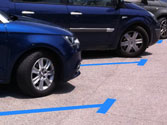
Blue parking-bay markings indicate a limited-duration zone, often subject to payment.
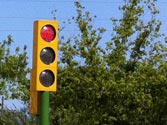
Steady amber requires stopping just like red, unless you're too close to halt safely.
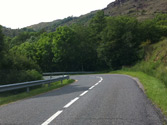
Shorter gaps between broken-line dashes warn of a continuous line or special-risk section ahead.
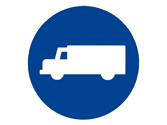
The mandatory truck sign without tonnage requires every truck and van to use that road.
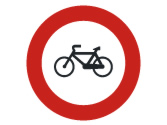
The cycle prohibition sign bars bicycles and other cycles from entering.
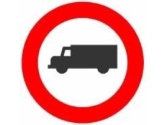
The truck/van prohibition sign bans goods-transport vehicles regardless of weight.
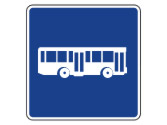
The bus-lane sign reserves the lane for collective transport, plus taxis if 'Taxi' is shown.
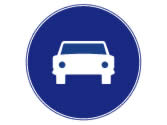
A mandatory motor-vehicle road sign forces cars to use it but doesn't ban other vehicles.
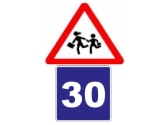
A recommended-speed sign under a danger warning applies only through the hazardous stretch.
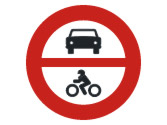
The motor vehicle prohibition sign blocks cars and special vehicles; the no-entry sign blocks everything.
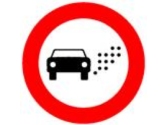
The Low Emission Zone sign restricts entry based on environmental badge or criteria.
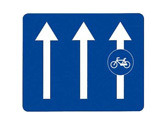
A cycle path lane sign reserves that specific lane exclusively for cycles.
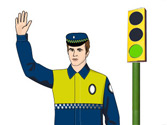
Traffic officer orders must always be obeyed, even when they contradict other signs or rules.