Chapter 10 Insights
Signs · 623 insights
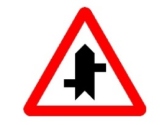
At sections with direct accesses, you have right of way; users entering from those accesses must yield.
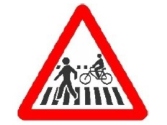
Approaching a combined pedestrian and cyclist crossing requires reduced speed and extra caution.
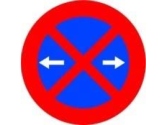
No stopping or parking signs apply along the entire stretch between the nearest intersections or signs.
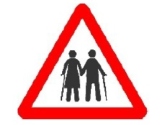
Signs warning of people with motor or sensory difficulties demand reduced speed and heightened awareness.
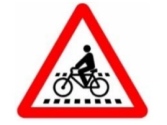
The cyclist crossing danger sign warns of nearby crossings where cyclists have priority.
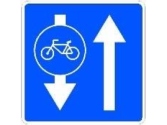
A contraflow lane marked with a bicycle sign is exclusively for bicycles.
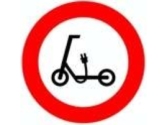
The PMV prohibition sign blocks electric scooters but does not affect bicycles or mopeds.
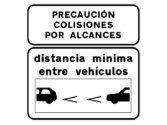
Chevron markings indicate the minimum number of symbols you must keep between your vehicle and the one ahead.
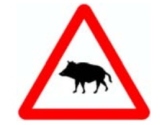
Wild animal warning signs alert to free-roaming wildlife, especially wild boar, crossing the road.
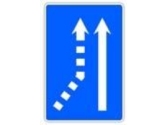
A merging-lane sign warns that another lane joins from the side, requiring attention and speed adjustment.
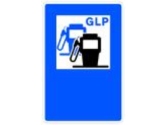
The LPG service station sign indicates fuel availability including autogas for LPG-powered vehicles.
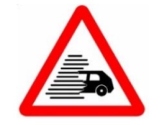
Reduced visibility signs warn of fog, rain, snow or smoke, requiring lower speed and greater caution.
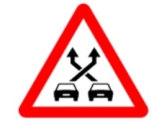
Conflicting traffic signs warn of frequent collisions from lane changes and merging movements.
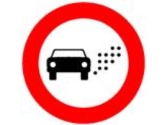
Environmental restriction signs limit access based on the vehicle's environmental badge or criteria.
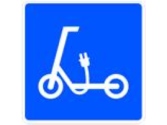
Roads reserved for personal mobility vehicles cannot be used by pedestrians.
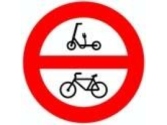
This prohibition sign blocks both bicycles and personal mobility vehicles from the road.
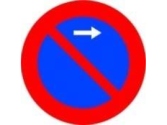
The directional no-parking sign prohibits only parking, not stopping, in the arrow's direction.

Mandatory winter tyre signs require chains or anti-skid systems to continue along the section.
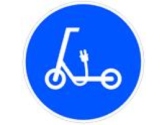
A mandatory PMV road forces personal mobility vehicles to use it and bans all other users.
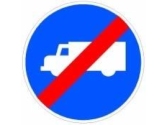
Sign R-509 marks the end of the mandatory carriageway for lorries, articulated lorries, and vans.
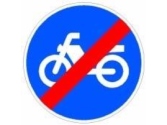
Sign R-510 marks the end of the reserved and mandatory road for mopeds.
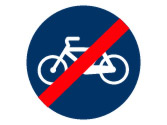
This sign marks the end of the cycle-only road; cyclists must rejoin general traffic.
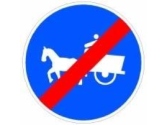
Sign R-511 marks the end of the mandatory path for animal-drawn vehicles.
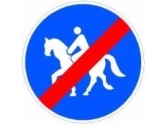
This sign ends the obligation for riding animals to use the reserved path.
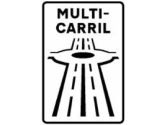
Sign S-1b marks the start of a multi-lane road with its special traffic rules.
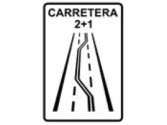
On a 2+1 road, the generic maximum speed for passenger cars is 90 km/h.
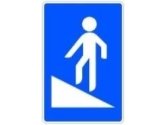
This sign indicates an overhead pedestrian crossing equipped with a ramp.
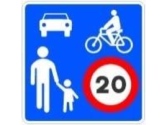
Shared zones prioritise pedestrians; vehicles travel at max 20 km/h under special rules.
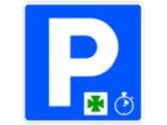
This sign authorises parking only for a specific purpose and limited time.
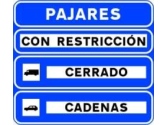
Mountain pass signs require passenger cars to carry chains or authorised anti-skid devices.
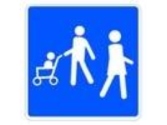
Personal mobility vehicles cannot enter pedestrian-only zones unless specifically permitted.
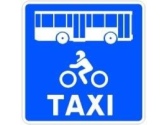
Reserved lanes showing a motorcycle pictogram permit motorcycles to circulate in them.
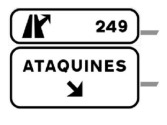
White immediate-exit signs on motorways indicate the exit leads to a conventional or multi-lane road.
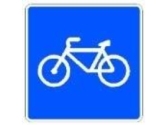
A road reserved exclusively for cycles prohibits all other types of vehicles.
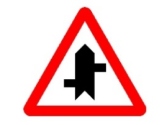
On a section with direct accesses, vehicles on the main road have priority over those entering.
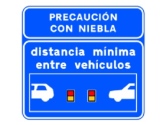
In frequent-fog stretches, keep the indicated number of luminous beacons between vehicles.
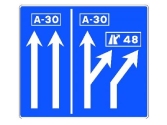
Lane direction signs at junctions show the only permitted directions and through road for each lane.
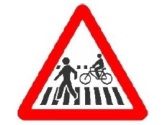
This sign warns of an attached or shared pedestrian and cyclist crossing ahead.
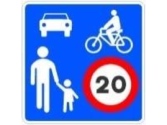
In coexistence zones, vehicles may park only in places specifically signed or marked.
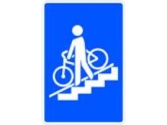
This sign indicates a pedestrian underpass with a rail or ramp for cyclists.
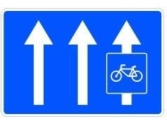
Sign S-65a reserves the marked lane exclusively for cycles, prohibiting all other vehicles.
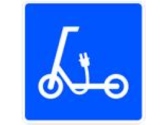
Roads reserved exclusively for PMVs cannot be used by cycles.
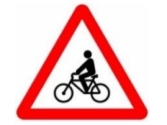
This sign warns of a stretch with frequent cyclist traffic, requiring caution and safe overtaking.
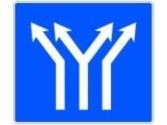
Sign S-63b indicates the central lane splits, creating two lanes to the left and two to the right.
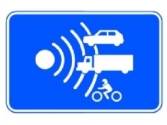
This sign warns of speed control devices on motorways or dual carriageways.
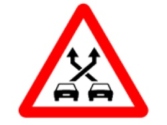
At conflicting traffic sections, exercise extreme caution and anticipate lane-change manoeuvres.
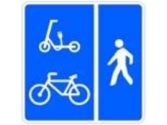
This sign indicates a road shared by cycles, PMVs and pedestrians with separate spaces for each.
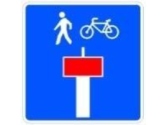
This sign indicates a dead-end road with exit only for pedestrians or cyclists.
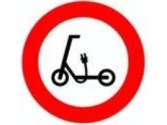
Electric scooter users must stop and not enter when facing a PMV access prohibition sign.
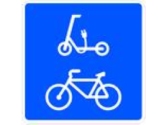
This sign reserves the road exclusively for cycles and PMVs, prohibiting all other vehicles.