Chapter 10 Insights
Signs · 623 insights
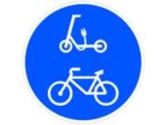
A blue circular sign with a bicycle reserves the road for cycles and PMVs only.
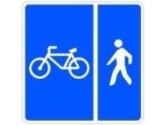
A divided cycle-pedestrian sign means each user has a separate reserved space.
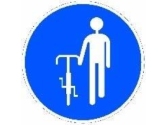
Sign R-422 obliges cyclists to dismount and continue on foot.
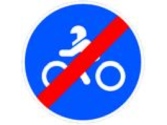
Sign R-508 marks the end of the mandatory lane for two-wheeled motorcycles and assimilated trikes.
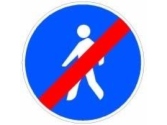
Sign R-513 marks the end of the reserved and mandatory pedestrian path.

Sign R-514 marks the end of the compulsory road for tractors.
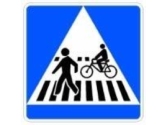
A combined pedestrian-cyclist crossing sign marks where both may cross, often with separated spaces.
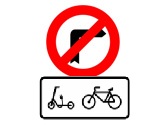
A sub-panel with vehicle pictograms restricts the main sign's prohibition to those vehicles only.
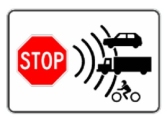
This sign warns of an automatic STOP-compliance enforcement device at the intersection.
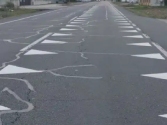
A through-road sign demands reduced speed and extra caution due to vulnerable users.
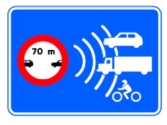
This sign warns of a minimum following-distance control on a motorway or dual carriageway.
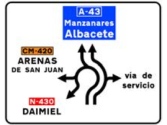
Roundabout pre-signalling shows each exit's direction and the correct lane to use.
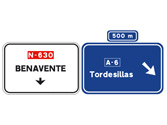
Advance exit signs with distance adopt the destination road's colour when exiting to a higher-category road.
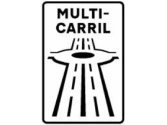
On multi-lane roads, cars may overtake at a maximum of 90 km/h.
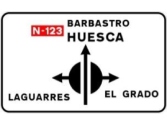
A split-roundabout sign means the main carriageway continues without losing priority.

This sign marks an emergency parking area mainly for snowfall and exceptional incidents.
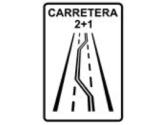
Sign S-1c marks a 2+1 road where the central lane alternates for overtaking.
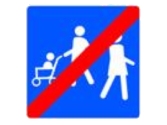
This sign marks the end of a pedestrian-reserved zone, restoring normal traffic rules.
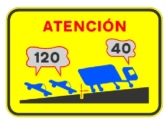
This sign warns of rear-end collision risk where lorries climb slowly on motorway gradients.
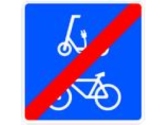
This sign marks the end of a road exclusive to cycles and personal mobility vehicles.
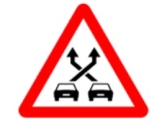
This sign warns of weaving zones where on-ramps and off-ramps are close together.
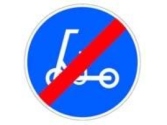
After this sign, PMVs no longer have to use the reserved lane.
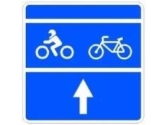
This sign marks an advanced waiting area at traffic lights for motorcycles, mopeds and cycles.
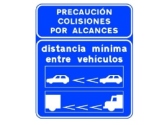
Inside tunnels, keep the number of chevron markings indicated as your safety distance.
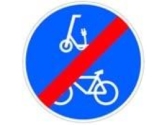
After this sign, cycles and PMVs no longer need to use the reserved lane.
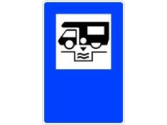
This sign marks a wastewater disposal point for caravans and motorhomes.
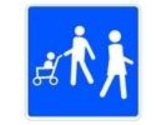
This sign designates an area reserved exclusively for pedestrian use.
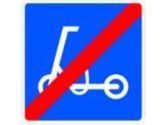
This sign marks the end of a road exclusively for personal mobility vehicles.
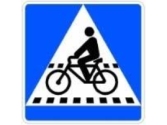
This sign marks a crossing reserved exclusively for cyclists.
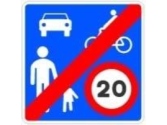
After leaving a coexistence zone, the urban limit of 50 km/h applies on two-lane same-direction roads.
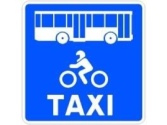
A reserved-lane sign permits only the vehicles shown in its pictogram.
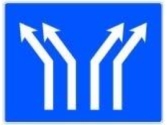
Sign S-63a warns of a four-lane fork: two lanes go left, two go right.
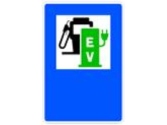
This sign indicates a service station offering both conventional fuel and electric charging.

This sign marks the location of a park or natural space, possibly named on the sign.
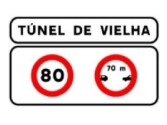
This sign marks a tunnel on conventional roads along with its specific traffic obligations.
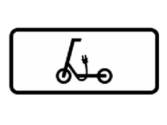
This sub-panel restricts the sign above to apply exclusively to personal mobility vehicles.
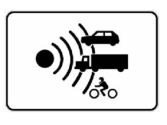
This sign warns of a speed-control device on conventional or multi-lane roads.
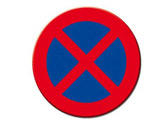
Stopping and parking are prohibited where indicated by the sign.
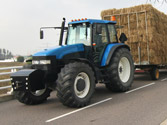
The auto-yellow light signals the presence of an agricultural tractor nearby.
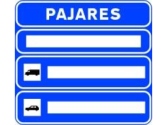
Passenger cars have no restrictions where this sign is present.
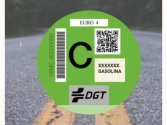
The V-25 badge shows a vehicle's environmental classification based on emissions.
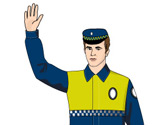
If already in an intersection, continue through when an officer raises their arm vertically.
Environmental classifications for vehicles include 0 emissions, ECO, C, and B.
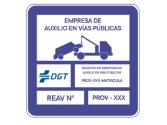
This sign identifies a roadside assistance service vehicle.
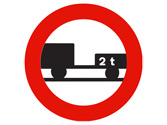
Single-axle trailers are not affected by the sign prohibiting other trailers.
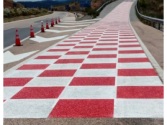
White and red markings indicate an emergency braking area where stopping is prohibited.
A long whistle blast from an officer signals to resume movement.

The sign indicates the end of all previous prohibitions for moving vehicles.
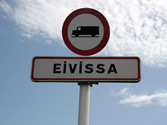
Urban area rules apply from the town entrance sign, prohibiting truck circulation.
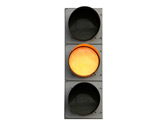
Take extreme caution and yield when approaching flashing amber lights.