Chapter 10 Insights
Signs · 623 insights
When yielding, never force priority vehicles to brake or swerve abruptly.
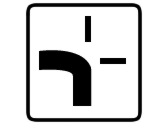
On priority road signs, the thick line shows which branch keeps priority.
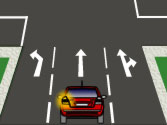
To turn left, position your vehicle in the leftmost lane beforehand.
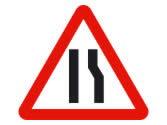
A road-narrowing sign with a metre panel shows the width of the narrowing.
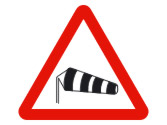
A windsock sign warns of frequent strong crosswinds ahead.
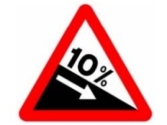
A descending percentage sign warns of a steep downhill gradient.
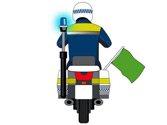
A green flag means the road is reopened to traffic from where the vehicle has passed.
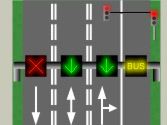
A green lane arrow never overrides a red circular light — you must still stop.
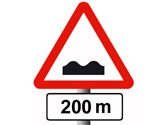
A panel under a danger sign shows the distance to where the hazard begins.
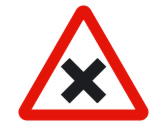
At unsignalled intersections, vehicles approaching from your right have priority.
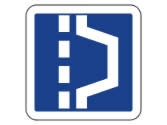
This sign marks a lay-by for emergency stopping to clear the road.
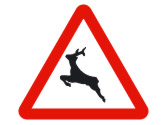
This sign warns that free-roaming animals may cross the road frequently.
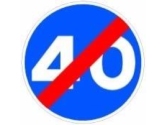
This sign marks the end of a previously imposed minimum speed obligation.
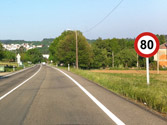
Posted speed limits must never be exceeded, even when overtaking.
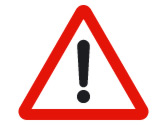
The general danger sign warns of a hazard not covered by other specific signs.
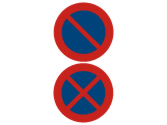
When signs conflict, obey the more restrictive or higher-priority one.
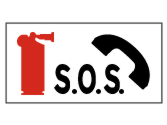
This sign marks a lay-by equipped with a fire extinguisher and emergency telephone.
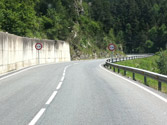
Stay within your lane; broken lines may only be crossed when necessary and safe.
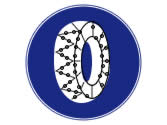
You may pass a snow chains sign with chains or other authorised equivalent devices.
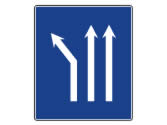
This sign warns of a left fork on a three-lane same-direction carriageway.
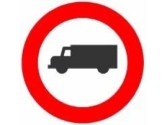
This sign bans all goods transport vehicles regardless of weight or whether loaded.
Traffic officers and road workers must always be visible from at least 150 metres away.
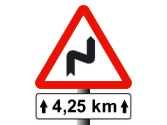
A panel with two side arrows shows the length of the hazardous stretch.
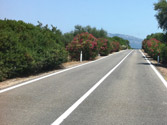
You may drive left of a continuous line only on a one-way road.
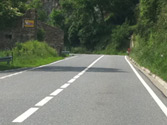
Shorter gaps between dashes warn of a continuous line or special-risk section ahead.
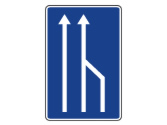
This sign warns that the right-hand lane is ending and you must change lanes.
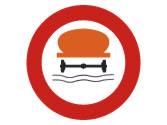
This sign bans vehicles carrying more than 1000 litres of water-contaminating products.
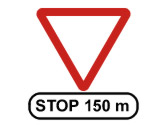
A distance panel under a give way sign marks the distance to the next stop sign.
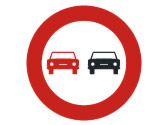
A no-overtaking prohibition ends only at the corresponding end-of-prohibition sign.
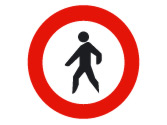
This sign prohibits the entry of pedestrians.
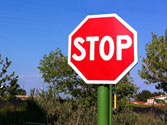
At a stop sign, you must always halt completely and yield to crossing traffic.
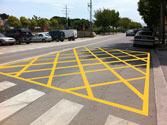
Never enter a yellow grid intersection if you risk getting stuck and blocking traffic.
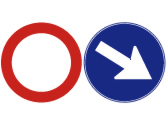
At a refuge, pass on the side indicated by the arrow only.
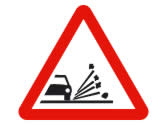
This sign warns of a section where passing vehicles may project gravel.
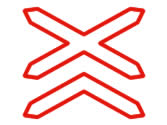
A double-X level crossing sign indicates an unbarriered crossing with multiple tracks.
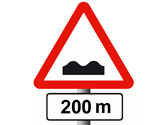
A panel with only a number under a danger sign shows the distance to the hazard.
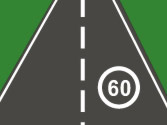
A speed limit painted within a marked lane applies only to vehicles in that lane.
One long whistle blast orders traffic to resume movement.
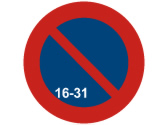
This sign bans parking from the 16th to the 1st at 9:00; parking is allowed otherwise.
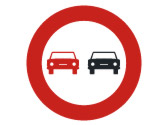
No-overtaking signs forbid overtaking only when it requires entering the oncoming lane.
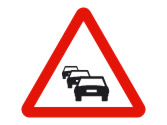
This sign warns of a section ahead with traffic congestion or holdups.
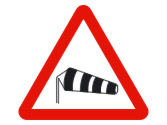
This sign warns of an area with frequent strong crosswinds.
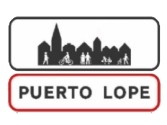
In urban areas, the limit on roads with two or more lanes per direction is 50 km/h.
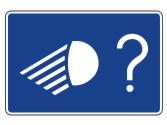
This sign marks the end of the obligation to use dipped headlights.
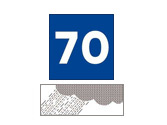
A recommended speed sign with a rain panel applies only during rainy conditions.
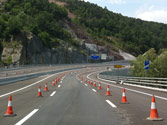
Cones and small flags prohibit crossing the real or imaginary line between them.
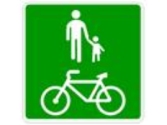
This sign marks a shared path for pedestrians, cycles and PMVs separated from motor traffic.
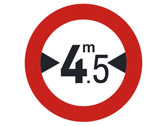
This sign bans vehicles whose width, including load, exceeds the indicated value.
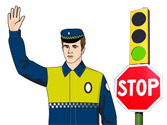
A traffic officer's signal always overrides traffic lights and other signs.
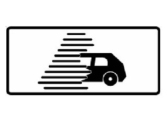
A fog symbol panel means the main sign applies only in foggy conditions.