Chapter 10 Insights
Signs · 623 insights
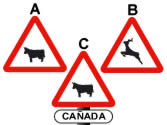
Animals have right of way at signposted drovers' roads (cañadas) marked with the domestic animals danger sign.
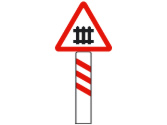
A level crossing with barriers sign warns of an upcoming railway crossing equipped with barriers or half-barriers.
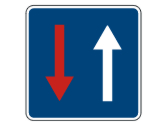
The priority-over-oncoming-traffic sign grants you right of way through an upcoming narrow passage.
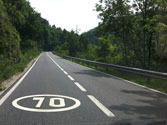
Speed markings inside a delimited lane apply only to that lane, not the whole carriageway.
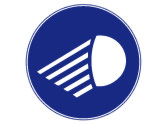
The dipped headlights sign requires at least low beam regardless of lighting or visibility conditions.
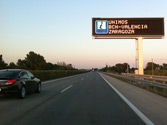
Variable message panels can inform, warn of hazards, and give mandatory instructions.
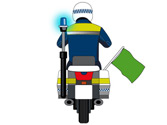
A green flag from an officer's vehicle reopens the road to traffic from that point onward.
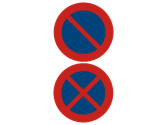
When two signs of the same type contradict each other, always obey the more restrictive one.
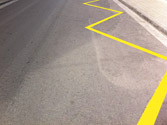
Yellow broken kerb lines prohibit parking but allow brief stops under two minutes with the driver present.
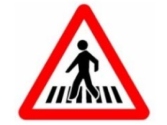
The pedestrian crossing warning sign indicates one or more upcoming pedestrian crossings.
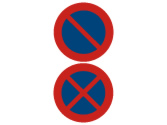
When signs of the same type contradict each other, the most restrictive one prevails.
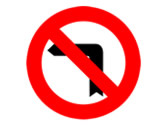
The no-left-turn sign also prohibits U-turns, but no-U-turn does not prohibit left turns.
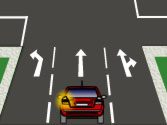
Lane arrows require following indicated directions, but lane changes are allowed where road markings permit.
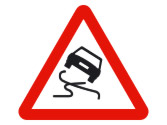
The slippery road triangular sign warns that the road surface ahead may be very slippery.
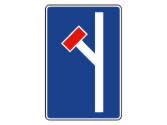
This sign warns of an upcoming dead-end road on the left side.
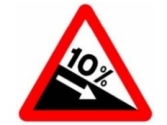
The steep downhill sign shows the gradient percentage; numbers descend on downhill, ascend on uphill.
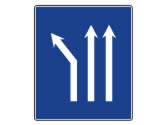
This sign indicates a left-side fork on a three-lane road travelling in the same direction.
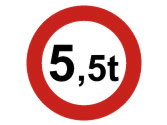
This weight-limit sign applies to vehicles whose current laden mass exceeds the figure indicated in tonnes.
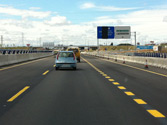
Roadworks markings have the same meaning as standard ones but are coloured yellow.
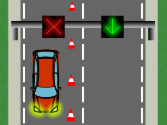
A green arrow over a lane permits travel but you must still obey signs and right-of-way rules.
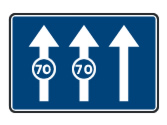
The minimum speed sign requires vehicles in the indicated lanes to travel at or above that speed.
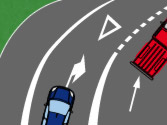
A white triangle on the road requires you to yield right of way at the next intersection.
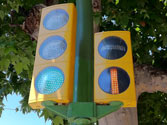
Bar-shaped traffic lights apply exclusively to trams and scheduled bus services.
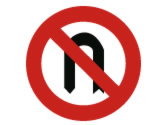
The no-U-turn sign prohibits U-turns only and does not prohibit turning left.
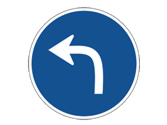
A mandatory direction arrow sign requires following the direction the arrow points.
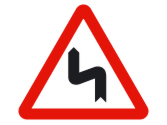
This sign warns of a succession of dangerous curves close together, with the first one to the left.
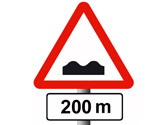
A danger sign with a numbered panel below indicates the distance in metres to the start of the hazard.
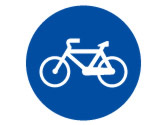
The cycle road sign requires cyclists to use that road and prohibits all other users.
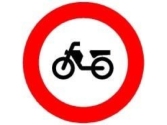
The moped prohibition sign also prohibits entry to vehicles for persons with reduced mobility.
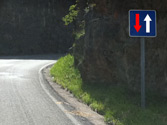
Priority-over-oncoming-traffic sign gives you right of way through an upcoming narrow passage.
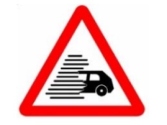
This sign warns of reduced visibility ahead caused by fog, rain, snow, or smoke.
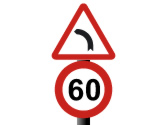
The maximum speed sign sets a binding limit that must never be exceeded.
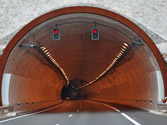
A red traffic light at a tunnel entrance prohibits entry; you must stop and wait.
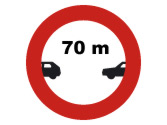
A safety distance sign requires keeping at least the indicated separation, except when overtaking.
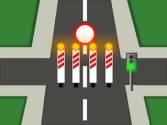
Delineator signs outrank traffic lights in the order of priority among traffic signs.
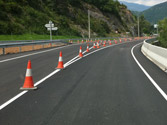
Cones and circumstantial signs outrank all other signs except those given by traffic officers.
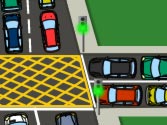
Never enter an intersection on green if you risk stopping and blocking cross traffic.
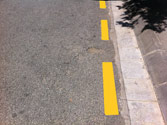
Leaving the driving position counts as parking, which is prohibited on broken yellow kerb lines.
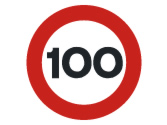
This sign indicates the maximum permitted speed in km/h.
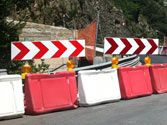
A temporary directional panel in roadworks prohibits passage and indicates the direction of traffic flow.
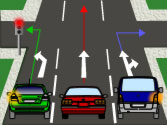
Traffic lights only on the left apply to vehicles going straight or turning left, not those turning right.
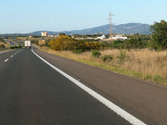
The carriageway edge line may be crossed when necessary and when circumstances safely permit it.
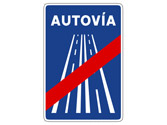
This sign indicates the end of a dual carriageway section.
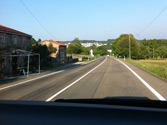
A continuous longitudinal line must never be crossed, driven on, or overtaken across.
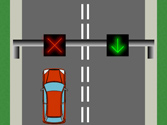
A red X over a lane prohibits its use; you must safely leave it as soon as possible.
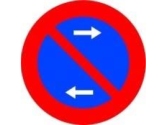
This sign prohibits parking on both sides of it, but stopping remains allowed.
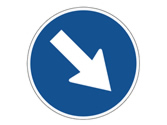
The mandatory passage arrow shows which side of a refuge island vehicles must pass.
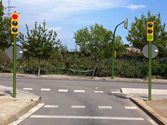
Going straight or turning left, obey the traffic lights on the left; turning right, obey those on the right.
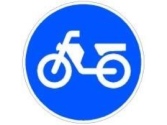
This sign indicates a road reserved exclusively for mopeds, prohibiting all other users.
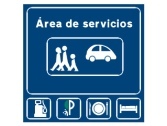
A blue service area sign indicates a service area on a motorway or dual carriageway.