Chapter 10 Insights
Signs · 623 insights

Short, frequent whistles from an officer mean stop; a long whistle means resume.
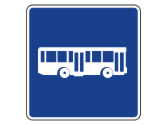
The bus lane sign reserves the lane for buses, with limited use allowed for others.
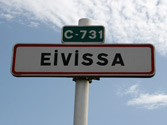
The built-up area sign marks entry into urban roads with their corresponding rules.
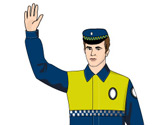
An officer with arm raised orders all approaching road users to stop.
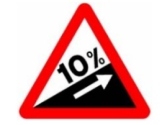
An uphill gradient sign warns heavy vehicles will likely slow down considerably.
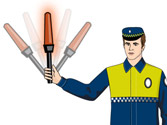
An officer swinging a yellow or red light orders those it points at to stop.
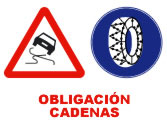
This panel obliges using snow chains or equivalent authorized devices to continue.
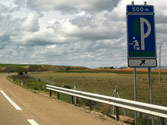
This sign marks a rest area along the road.

This sign requires headlights on, using high or low beam as conditions dictate.
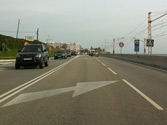
A straight arrow in a lane warns that the lane is about to end.
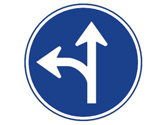
Mandatory direction arrows show all permitted movements, including allowed turns.
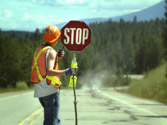
Construction workers' signals override other priority rules at narrow passages.

This sign forbids circulation of all vehicles in both directions, not just entry.
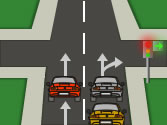
When a green arrow lights up, vehicles in that lane must follow the arrow's direction.
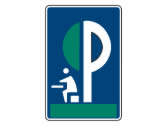
This sign marks a rest area, distinct from picnic or service area signs.
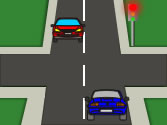
Treat a traffic light beyond the intersection as if it were placed before it.
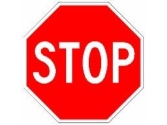
If visibility is insufficient after a STOP, advance and stop again where you can see.
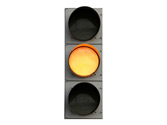
Steady yellow means stop like red, unless safe stopping is no longer possible.
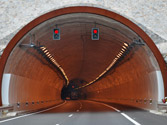
A red light always requires stopping and waiting, even before tunnels.
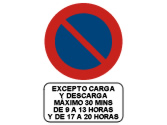
A 'no parking' sign with time panel allows loading/unloading only during those hours.
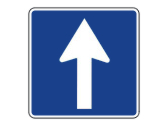
The square one-way arrow sign permits changing direction; only the round version forbids it.
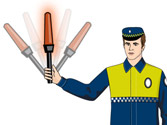
An officer swinging a yellow light orders those it's directed at to stop.
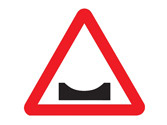
This triangular sign warns of a dip in the roadway, not a speed bump.
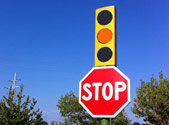
Flashing yellow means caution but does not cancel a STOP sign's stopping requirement.
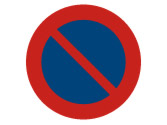
A 'no parking' sign still permits stopping (under two minutes, without leaving the vehicle).

Headlights-mandatory sign requires low or high beam depending on road and visibility.
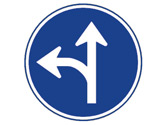
Mandatory direction arrows showing only some movements forbid all others, including U-turns.
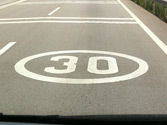
A painted speed limit ends at 'end of prohibitions', 'end of limit', or a new limit sign.
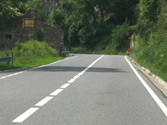
Shorter dashes on a broken line warn of approaching hazard or upcoming continuous line.
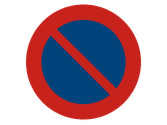
A 'no parking' sign permits stopping; restriction runs to the next intersection.
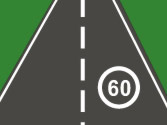
A speed limit painted on a delimited lane applies only to that lane.
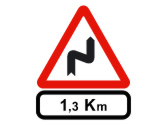
A panel below a danger sign indicates the distance to where the hazard begins.

Circulation prohibited applies to all vehicles in both directions, unlike 'no entry'.
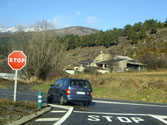
If the stop line gives no visibility, advance and stop again where you can see.
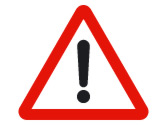
The general danger sign warns of a hazard not covered by any specific sign.
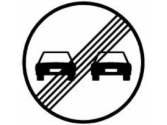
End of no-overtaking does not lift any previously imposed speed limit.
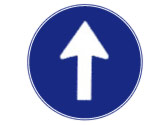
A mandatory direction arrow forbids both changing direction and reversing course.
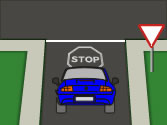
When signs contradict, vertical signs take priority over road markings.
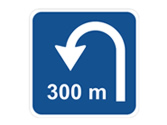
A U-turn sign warns of a place where reversing direction at the same level is permitted.
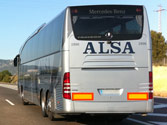
A rear yellow rectangle with red border signals a vehicle longer than 12 metres.
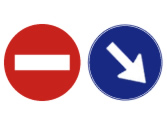
Compulsory passage signs indicate which side of a refuge to pass and still allow direction changes.
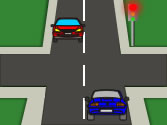
A traffic light beyond the intersection still applies as if placed before it.
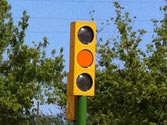
A steady yellow light requires stopping just like a red, unless stopping safely is impossible.
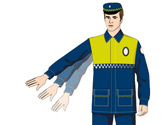
An officer's arm moving up and down alternately means reduce speed.
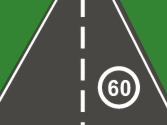
Speed limits painted on a delimited lane apply only to that lane.
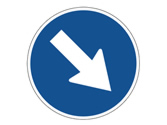
Compulsory passage indicates which side of a refuge to use; compulsory direction dictates the route.
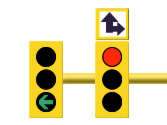
A green arrow allows passage in its direction but you must yield to traffic in the lane you join.
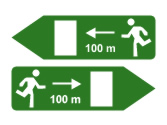
This sign points to an emergency exit in a tunnel and its distance.
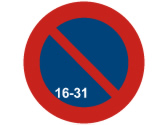
Half-month parking signs prohibit parking but never prohibit stopping.
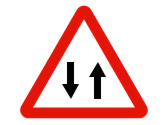
This triangular sign warns of an upcoming stretch with two-way traffic.