Chapter 10 Insights
Signs · 623 insights
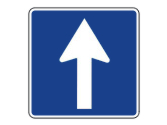
Travel must follow the direction indicated by the one-way sign's arrow.
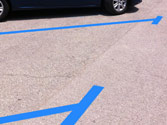
Motorcycles can park in areas marked with blue road markings.
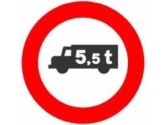
Trucks can enter if their maximum authorized mass is below the indicated limit.
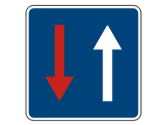
This sign indicates priority over vehicles coming from the opposite direction.
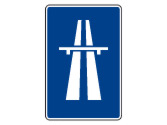
The sign marks the beginning of a motorway with special traffic rules.
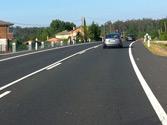
Only consider the marking on the side you are traveling when adjacent lines differ.
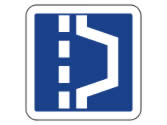
The sign indicates the location of a lay-by for emergencies.
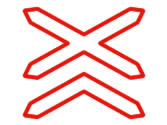
This sign warns of a level crossing without barriers with multiple railway tracks.
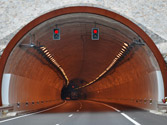
Do not enter a tunnel when a red traffic light is displayed at its entrance.
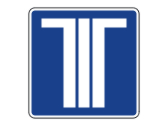
The sign indicates lanes where electronic toll payment is available.
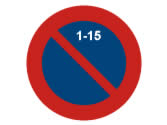
Parking is prohibited from 9:00 on the 1st until 9:00 on the 16th.
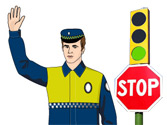
Always obey the signals given by traffic agents immediately.
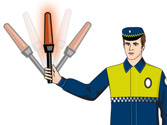
A moving red light from an officer requires you to stop.
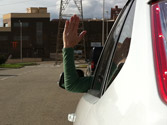
A right turn can be signaled with the right indicator or arm raised.
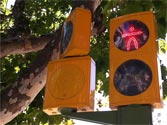
A stationary red light indicates to pedestrians that they must not cross.
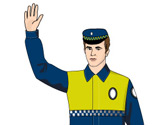
All road users must stop when an officer signals them to do so.
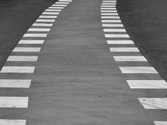
The markings indicate a cycle crossing where cyclists have the right of way.
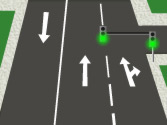
In the right lane with a green light, you may turn right or go straight.
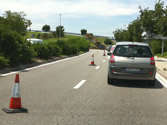
Cones on the roadway prohibit crossing the line that connects them.
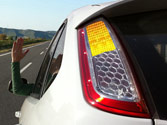
Obey the driver's arm signal over conflicting light signals.
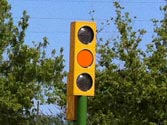
A steady amber light requires vehicles to stop unless it's unsafe to do so.
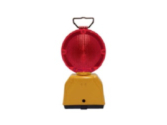
A steady red light indicates the road is completely closed to traffic.
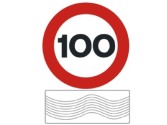
In fog, do not exceed the speed indicated on the sign.
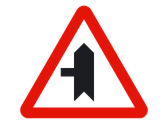
This sign indicates you have right of way at the upcoming junction.
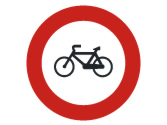
Bicycles are prohibited from entering where this sign is displayed.
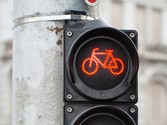
Traffic lights showing a cycle silhouette apply only to cyclists.
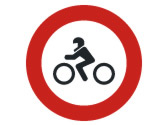
Mopeds are allowed on roads that prohibit motorcycles.
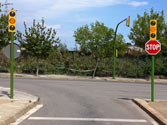
You may cross a continuous marking if stopping is not mandatory.
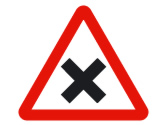
The general right-of-way rule applies at the next intersection.
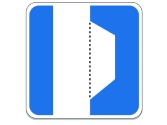
This sign indicates a place to pull aside in a tunnel for safety.
Short gaps in broken lines may indicate a stretch of road with special risk.
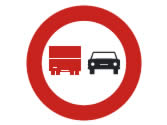
Overtaking is prohibited for trucks exceeding 3,500 kg.
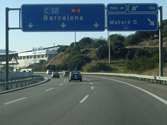
Blue signs indicate lanes leading to other roads or towns.
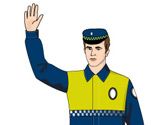
Pedestrians must stop when encountering an officer with their arm raised.
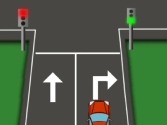
Drivers in the right lane must turn right if indicated by the arrow.
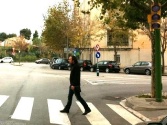
Stop and give way to pedestrians at a crossing if the traffic light is out.
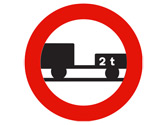
This sign does not prohibit entry for trucks.
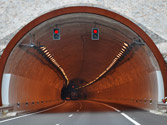
A red light always means stop; wait until it goes out, regardless of location.
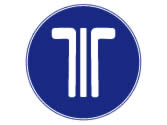
A circular electronic toll sign makes electronic payment mandatory; the square version only permits it.
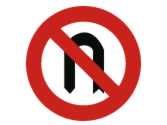
The U-turn prohibition sign does not forbid turning left, but a no-left-turn sign forbids U-turns.
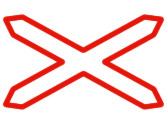
St. Andrew's cross signals an immediate level crossing without barriers, just metres away.
Green flag reopens the road, red flag closes it temporarily, yellow flag warns of danger.
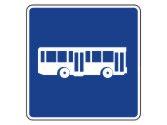
A bus symbol on a square blue lane sign means a lane reserved for buses.
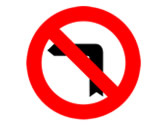
The no-left-turn sign also prohibits U-turns; the no-U-turn sign does not block left turns.
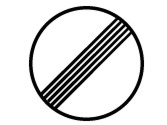
End of prohibitions sign cancels all previous specific prohibitions for moving vehicles.
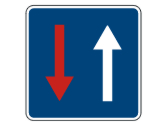
Priority over oncoming traffic at narrow passages is shown by a black-and-red arrow sign.
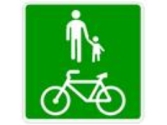
Segregated paths shared by pedestrians, cycles, and PMVs require pedestrians to yield to cycles and PMVs.
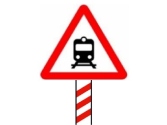
Inclined stripes ascending right indicate a level crossing approaches on the right side.
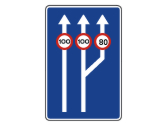
Lane signs with speed numbers indicate the maximum speed for each lane shown.
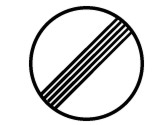
The end-of-prohibitions sign lifts all earlier specific prohibitions on moving vehicles.