Key Insights
2818 insights
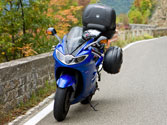
Signal a broken-down motorcycle obstructing traffic with hazard lights if fitted.
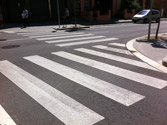
Overtaking near pedestrian crossings requires speeds low enough to stop instantly for pedestrians.
When tailgated, increase your front gap so you can brake gently and predictably.
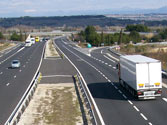
Use the central reservation on a motorway only as a last-resort emergency stopping place.
Always enter and exit a stationary vehicle from the side closest to the kerb.
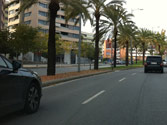
Overtaking on the right is allowed only within built-up areas with marked lanes.
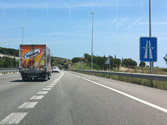
When merging onto a motorway, judge other vehicles' position, trajectory and speed, stopping if needed.
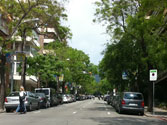
On one-way urban roads you may park on either side of the carriageway.
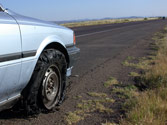
After a flat tyre, get the vehicle off the carriageway to a safe spot quickly.
Double-row parking without a driver is considered a serious obstruction to traffic.
In a tunnel breakdown, keep going to the exit or an emergency lay-by if possible.

Parking on the pavement is generally prohibited unless explicitly signposted.
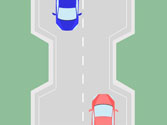
On steep narrow sections without signs, the uphill vehicle has priority.
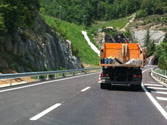
Indicate it's safe to overtake by waving the extended arm from back to front.
Double-parking without a driver present is a serious traffic obstruction.
Reversing is signalled by extending the arm horizontally with palm facing rearward.
Turn off the indicator only after completing the lateral movement of the manoeuvre.
Stopping or parking on the left of a two-way interurban road is never allowed.
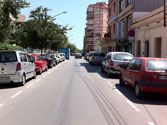
Park so as to make the best use of available space, normally parallel to the kerb.
Mopeds turning left on interurban roads must position themselves on the right, off the carriageway.
Signal turns at intersections using the indicator lights or, failing that, the arm.
Overtaking on blind bends or crests is forbidden unless directions are clearly delineated and you stay in lane.
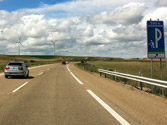
On motorways, park only in specifically signposted areas like rest or service stops.
Signal lateral movements with indicators until the new trajectory is reached, or use the arm.
Reversing is always prohibited on motorways and dual carriageways.
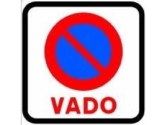
Parking is forbidden at garage entrances, though brief stopping is allowed.
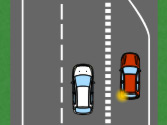
Vehicles already on the motorway should facilitate merging when possible.
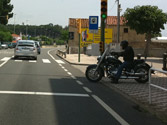
Drivers must facilitate the merging manoeuvre for all vehicles joining traffic.
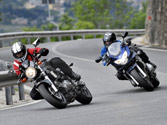
Avoid the front brake during slow tight turns, as wheel lock-up may cause a fall.
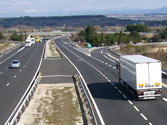
U-turns through central reservation gaps on motorways are always prohibited.
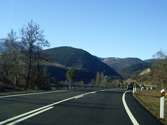
U-turns are permitted on roads only in suitable, safe locations.
Towing a broken-down vehicle requires another vehicle specifically designed for that purpose.
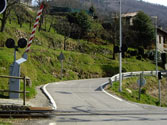
Overtaking is prohibited at level crossings except for narrow two-wheelers after warning.
When leaving the vehicle, switch off the engine and remove the ignition key.
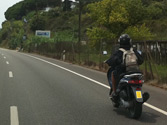
Mopeds turning left on interurban roads must move to the right, off the carriageway, before turning.
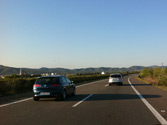
You may stay in the left lane for a second overtake if it doesn't hinder faster traffic behind.
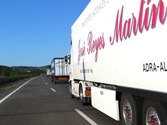
Overtaking several vehicles is allowed only if you can safely return to the right if needed.
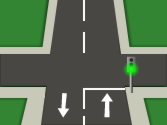
Overtaking at intersections is allowed when your road has priority and conditions permit.
Double-row parking without a driver is the classic case of serious traffic obstruction.
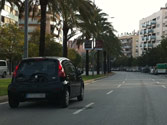
Signal lane changes using the direction indicators, with sufficient advance notice.
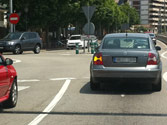
Activating the indicator never grants priority; you must still ensure the manoeuvre is safe.
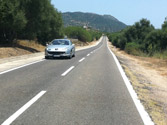
For a U-turn on a narrow road, position to the right edge and wait until it's safe.
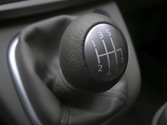
On a downhill slope, leave the vehicle in reverse gear with the parking brake applied.
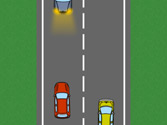
If overtaking becomes risky, abort, slow down and return safely to your lane.
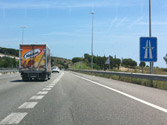
Travelling faster in an acceleration lane is not considered overtaking.
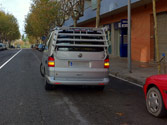
Stopping or parking requires at least 3 metres of clearance to the opposite edge or solid line.
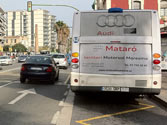
In urban areas, you must facilitate buses leaving designated stops, even by stopping.
Reversing is generally forbidden on all roads except as a brief complement to certain manoeuvres.
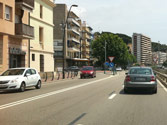
On urban through roads, choose the lane best suited to your destination, including for left turns.
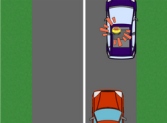
You may pass a stationary obstacle, even using the opposite lane, once safety is assured.