Key Insights
2818 insights
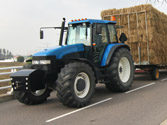
Special vehicles towing a trailer cannot exceed 25 km/h.
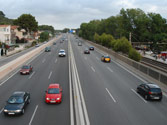
On motorways, drive within 120 km/h and adapt speed to current traffic conditions.
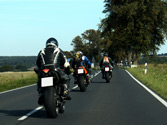
Motorcyclists may never exceed the generic maximum speed on conventional roads.
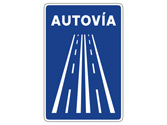
Cars, motorcycles, light motorhomes, and pick-ups have a 120 km/h generic limit on dual carriageways.
Insufficient following distance risks rear-end collision if the vehicle ahead brakes.
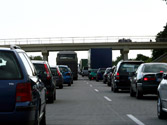
In congested traffic, lane changes are not allowed for overtaking.
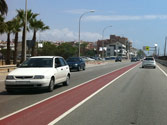
Through roads (travesías) have a default 50 km/h speed limit without signage.
Passenger-car-derived vehicles have a 90 km/h maximum on conventional roads.
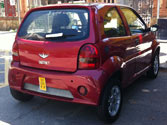
Light quadricycles, being four-wheeled mopeds, are limited to 45 km/h.
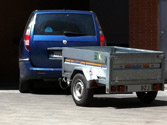
Urban roads with two lanes per direction have a 50 km/h limit, even with a trailer.
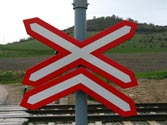
Approach level crossings and movable bridges with extreme caution and moderate speed.
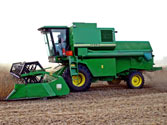
Special vehicles without brake signalling are limited to 25 km/h.
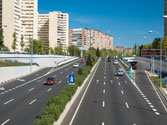
On urban motorways without signage, the maximum speed is 80 km/h.
Speed within legal limits can still cause accidents if not adapted to conditions.
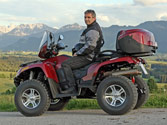
Heavy quadricycles have a maximum speed of 70 km/h on conventional roads.
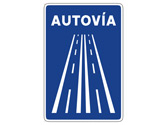
Motorcycles up to 125 cm³ may travel up to 120 km/h on dual carriageways.
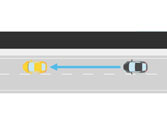
The duty to leave room for overtaking does not apply where overtaking is prohibited.
A car towing any trailer cannot exceed 90 km/h on motorways or dual carriageways.
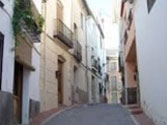
Reduce speed where buildings have direct access to the carriageway.
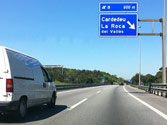
The generic maximum speed cannot be exceeded for overtaking on any road.
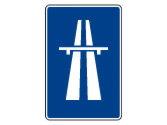
Thick fog justifies driving below the minimum speed to match your reduced visibility.
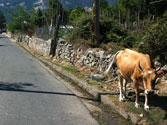
Reduce speed and stop if necessary when animals may enter the carriageway.
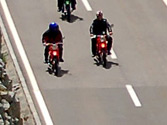
Motorcycles must keep a lateral distance proportional to speed and road conditions in town.
Adapting speed to traffic, road, vehicle, and driver conditions is appropriate speed.
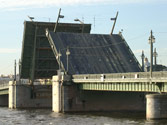
Approach movable bridges with extra care and reduce speed below the maximum.
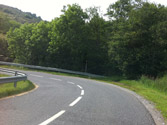
Excessive speed in a curve causes centrifugal force to push the vehicle outward.
On conventional roads, cars cannot exceed 90 km/h, not even to overtake.
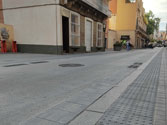
Roads with a single shared platform for carriageway and pavement are limited to 20 km/h.
Since March 2022, no vehicle may exceed speed limits to overtake.
Inappropriate speed is one that doesn't fit traffic, road, vehicle, or driver conditions.
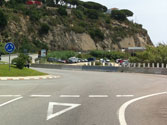
Vehicles already circulating inside a roundabout always have priority over those waiting to enter.
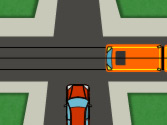
Trams and rail vehicles have priority over all other road users at unsignposted intersections.
If stopped in a tunnel, stay in the vehicle, switch off the engine, and keep sidelights on.
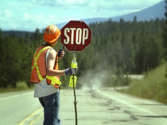
Roadworks personnel are authorised to direct traffic and their instructions must be obeyed.
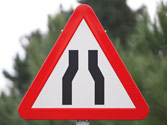
At unsignposted narrowings, the vehicle harder to manoeuvre has priority; cars with trailers outrank buses.
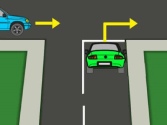
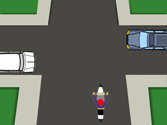
A stop line without an accompanying sign does not remove priority; right-hand priority still applies.
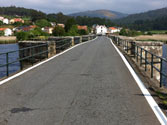
At unsignposted narrowings, the vehicle that entered first has right of way.
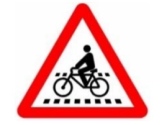
Cyclists always have priority on signposted bike lanes, cycle crossings, and hard shoulders.
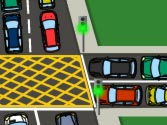
If blocking an intersection, clear it immediately without waiting for the green light, when safe.
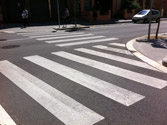
When turning into another road, drivers must yield to pedestrians crossing it, marked or not.
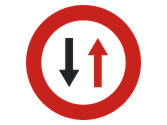
The narrow-passage sign with the red arrow means oncoming traffic has priority — you must wait.
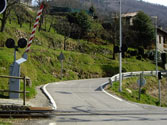
A moving half-barrier at a level crossing requires you to stop and wait.
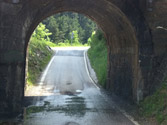
On steep narrow sections, the uphill vehicle has priority unless the downhill one can reach a passing place first.
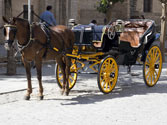
Animal-drawn vehicles follow the general right-hand priority rule at unsignposted intersections.
Vehicles already in a roundabout have right of way over those intending to enter.
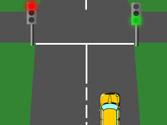
Going straight or turning left, obey the traffic light immediately to your left.
Priority vehicles may use only the flashing light when omitting the siren poses no danger.
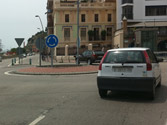
When entering an unsignposted roundabout, yield to vehicles already circulating inside.
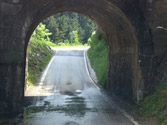
On steep narrow sections without signs, the uphill vehicle has right of way.
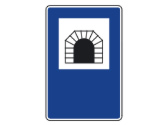
Maintain at least 100 metres or 4 seconds behind the vehicle ahead in a tunnel.