Key Insights
2818 insights
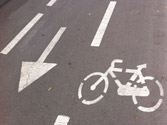
Motor vehicles must yield to cyclists travelling on signposted bike lanes.
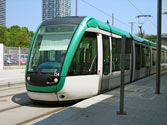
Trams have priority over all other road users, regardless of which side they approach from.
In a tunnel fire, pull right, switch off the engine, leave keys in and doors open, and evacuate.
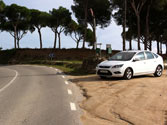
Vehicles on paved roads have priority over those coming from unpaved roads.
Cyclists have priority over motor vehicles on duly signposted bike lanes.
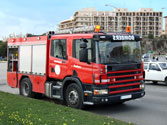
Make way for emergency vehicles by adapting to circumstances — typically moving right or stopping.
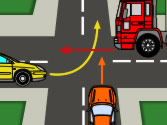
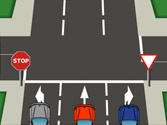
At unsignposted intersections, yield to vehicles approaching from the right.
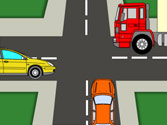
Without signage, the general rule is to yield to vehicles approaching from the right.
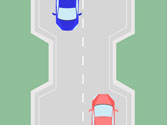
On steep narrow sections without signs, the uphill vehicle has right of way.
When entry timing is unclear at narrowings, animal-drawn vehicles outrank cars in priority.
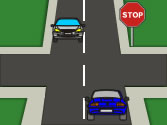
A STOP sign only applies at the next intersection after the sign, not before it.
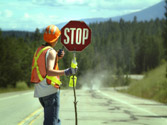
Roadworks personnel are authorised to regulate traffic and their signals must be obeyed.
On unsignposted narrow flat passages, the vehicle that entered first has priority.
Make way for emergency vehicles by pulling right or stopping if necessary.
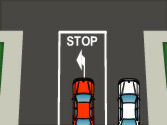
A stop line marked in a single lane only obliges the vehicles in that lane.
In a tunnel fire, leave the keys in the ignition and doors open before evacuating.
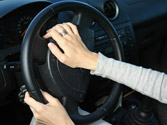
Non-priority vehicles in emergencies may use audible signals to warn others of their situation.
When turning right, obey the signal on the right side of the intersection.
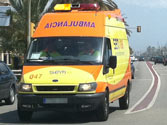
Priority vehicles retain right of way using only the flashing light when the siren is unnecessary.
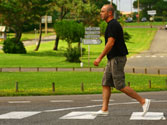
Pedestrians should only step onto crossings when approaching vehicles' speed and distance allow safe passage.
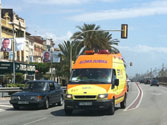
Yield to approaching priority vehicles by moving right or stopping if necessary.
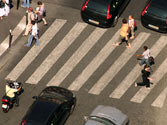
Never enter an intersection or crossing if you'll likely block cross traffic or pedestrians.
Animals may only travel on conventional roads when no drove road is available.
Stopped over two minutes in a tunnel: switch off the engine and keep sidelights on.
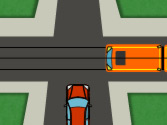
Trams have priority over all other road users at unsignposted intersections.
Priority vehicles only have right of way when actively performing an emergency service.
Emergency vehicles using only their flashing light still have full priority and must be given way.
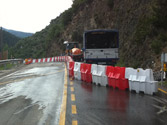
At an unsignposted narrowing in roadworks, the vehicle that entered first has priority.
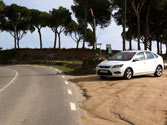
Vehicles on paved roads have right of way over those joining from unpaved roads.
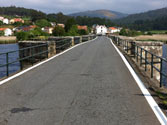
When same-type vehicles meet at a narrowing, priority goes to the one needing to reverse less.
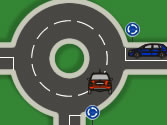
Vehicles inside a roundabout have priority — they need not yield to those entering.
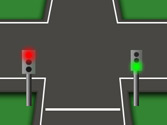
When going straight or turning left, obey the traffic light immediately to your left.
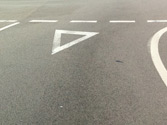
Only resume movement when sure you won't force the priority vehicle to brake or swerve.
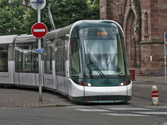
Trams always have priority over other vehicles at unsignposted intersections.
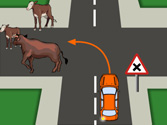
When turning into another road, yield to animals crossing it, even without a designated crossing.
At narrowings, cars have priority over mopeds and motorcycles when entry timing is uncertain.
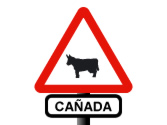
On signposted drove roads (cañadas), drivers must give way to animals.
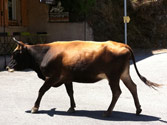
Yield to animals when turning into a road they are crossing, even without a designated crossing.
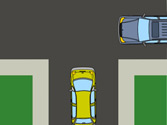
Rail vehicles like trams have priority over all other road users at unsignposted intersections.
If dazzled by glare, look to the right edge and reduce speed, stopping if necessary.
Lights must be on during the day inside tunnels, underpasses, and sections marked with the tunnel sign.
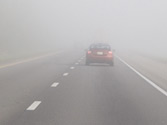
The rear fog light is mandatory in conditions that severely reduce visibility, to make your vehicle visible from behind.
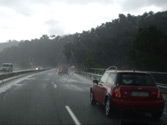
Heavy rain significantly reduces visibility, so using the lighting system is mandatory.
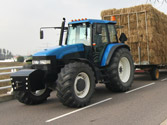
Special vehicles must use the amber rotating light when travelling at 40 km/h or less on public roads.
Low-beam headlights are mandatory by day on reversible lanes, hard shoulders, and contraflow lanes.
The rear fog light is only mandatory in VERY heavy rain, not in ordinary heavy rain.
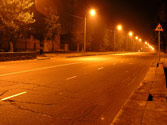
Parked vehicles need no lights when the urban road is sufficiently lit for others to see them.
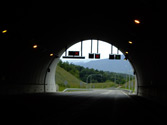
In an insufficiently lit tunnel, use position lights together with low-beam headlights.
When in doubt about lighting, switch on the dipped headlights to be more visible.
Adaptive lighting that follows the curve of the road is permitted on any vehicle.