Key Insights
2818 insights
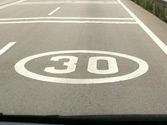
Speed limits painted within a delimited lane apply only to that lane.
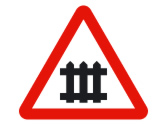
This triangular sign warns of an upcoming level crossing equipped with barriers.
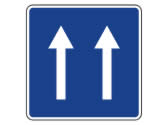
Arrows showing direction of travel prohibit going the wrong way but not changing direction.
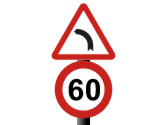
A speed limit on the same post as a danger sign ends when the danger ends.
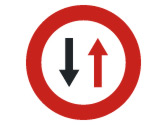
Priority to oncoming traffic forbids entering a narrow passage if it would force others to stop.
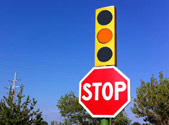
A flashing yellow light demands caution but does not exempt you from obeying a STOP sign.
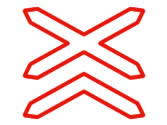
A double X level crossing sign warns of an unbarriered crossing with multiple tracks.
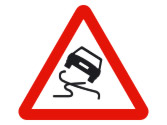
A slippery surface sign warns of slipperiness without specifying the cause.
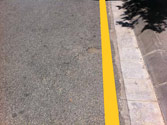
A continuous yellow curb line forbids both stopping and parking.
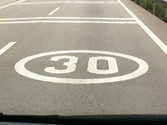
Speed limits painted in a delimited lane apply only to that lane.
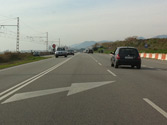
A downward arrow signals that the lane ends soon and you must follow its indication.
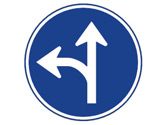
Compulsory direction signs only allow the directions shown; U-turns are forbidden.
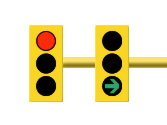
A green arrow obliges you to advance in its direction if your lane corresponds.
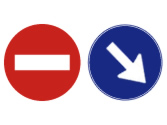
Compulsory passage signs allow direction changes; compulsory direction signs do not.
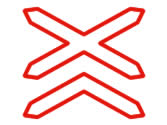
A double-cross level crossing sign warns of an unbarriered crossing with multiple tracks.
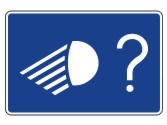
This sign marks the end of a section where dipped headlights were mandatory.
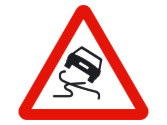
A slippery road sign warns of slipperiness without specifying the cause.
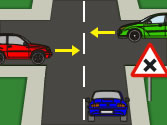
An intersection-with-priority-from-the-right sign means yield only to vehicles coming from the right.
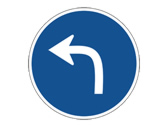
Compulsory direction signs forbid U-turns since you must follow the arrow.
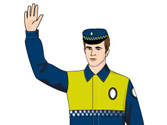
An officer with arm raised vertically requires all approaching road users to stop.
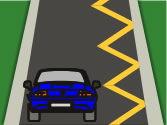
A yellow zigzag line forbids parking but allows stopping.
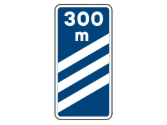
Diagonals rising left to right indicate an exit on the right ahead.
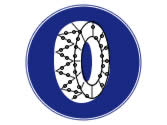
Studded tyres satisfy the obligation to use snow chains or equivalent devices.
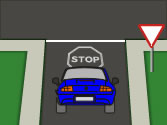
Vertical signs override road markings when they appear to contradict each other.
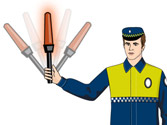
An officer swinging a red or yellow light requires those facing it to stop.
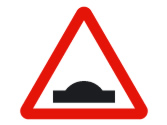
This triangular sign warns of a speed bump ahead.
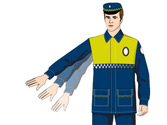
An officer's arm moving alternately up and down means reduce speed.
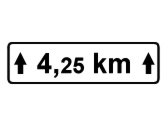
A panel with arrows on both sides shows the length of the affected section.
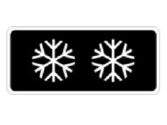
A snowflake supplementary panel restricts the main sign's application to snowy conditions.
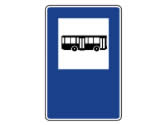
This sign marks an area reserved as a bus stop.
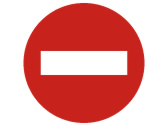
A red circle with white horizontal bar prohibits entry to all vehicles.
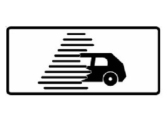
A fog supplementary panel restricts the main sign's application to foggy conditions.
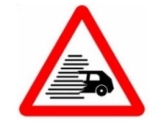
This triangular sign warns of reduced visibility ahead from fog, rain, snow or smoke.
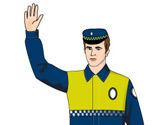
An officer with arm raised vertically requires all approaching road users to stop.
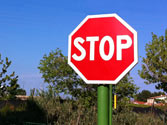
A STOP sign always requires a complete stop before yielding, regardless of traffic.
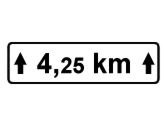
A panel with arrows on both sides indicates the length of the affected section.
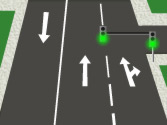
Lane arrows indicate all directions permitted from that lane.
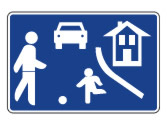
A residential zone sign gives pedestrians priority and limits vehicles to 10 km/h.
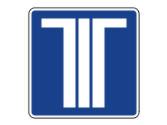
A dynamic toll lane also accepts manual payment unless marked exclusively electronic.
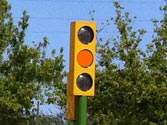
On amber, only continue if stopping safely before the line is impossible.
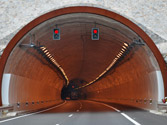
A red light must be obeyed wherever located, including tunnel entrances.
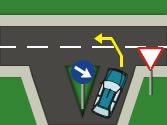
Compulsory passage signs indicate the side of a refuge and still allow direction changes.
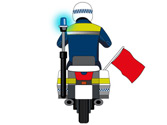
A red flag from a vehicle means the road is temporarily closed to traffic.
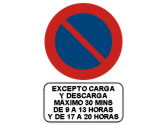
A no-parking sign with hourly exception panel allows loading and unloading only during those hours.
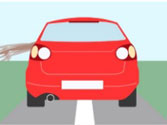
Arm extended downward moving up and down signals an intention to brake or slow down significantly.
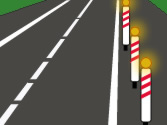
Yellow flashing lights, steady or alternating, prohibit crossing the line they form.
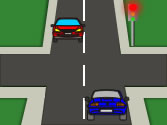
A steady red light requires stopping before turning, even when turning right.
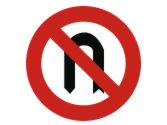
A no-U-turn sign forbids only U-turns; left turns remain allowed.
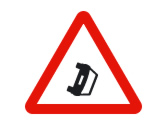
This sign warns of obstruction on the carriageway from accident, breakdown or other causes.
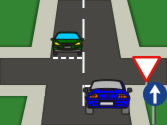
A give way sign requires stopping only if necessary, unlike a STOP sign.