Key Insights
2818 insights
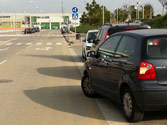
Vehicles leaving a parking space must yield to traffic; indicators warn but don't grant priority.
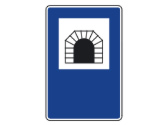
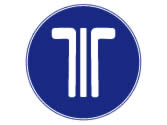
Overtaking is prohibited along sections affected by the tunnel sign unless multiple lanes exist in your direction.
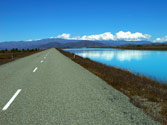
U-turns are allowed on conventional roads when no sign prohibits them and conditions are favourable.
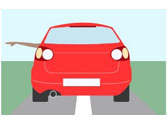
On a multi-lane one-direction road, position yourself in the leftmost lane to turn left.
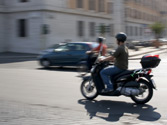
Overtaking a motorcycle in built-up areas requires lateral distance proportional to speed, width and road characteristics.
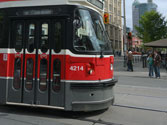
Trams travelling in the centre must always be overtaken on the right on two-way roads.
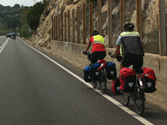
You may cross even a double continuous line to safely overtake cyclists or other vulnerable slow users.
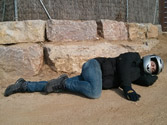
Use the recovery position to keep airways clear and prevent choking on tongue, vomit, or blood.
You must stop and help at an accident whenever cooperation is needed and no officers are present.
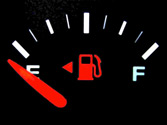
Higher fuel consumption directly means higher pollution, so drive efficiently to pollute less.
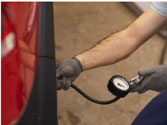
Always check tyre pressure with cold tyres and before starting to drive.
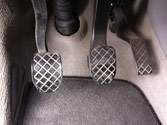
Lack of brake fluid is one of the most frequent causes of brake failure.
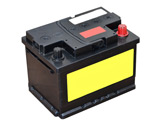
Maintenance-free batteries still need clean, tight terminals protected with grease.
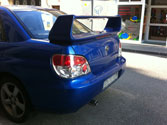
Adding non-original aerodynamic parts like spoilers increases drag and fuel consumption.
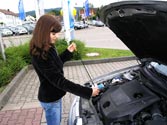
If the oil warning light stays off, oil pressure is correct.
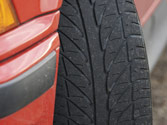
Studded tyres are allowed on both ice and snow as a substitute for chains.
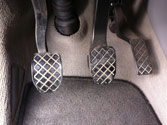
Loss of brake fluid or air in the circuit are common causes of brake failure.
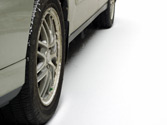
Under-inflated tyres increase fuel consumption and the risk of blowouts.
Irregular tyre wear typically indicates faulty shock absorbers needing inspection.
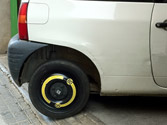
Use temporary spare wheels only to reach the nearest workshop, respecting their speed limit.
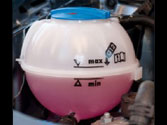
In winter, ensure the coolant contains antifreeze to prevent freezing.
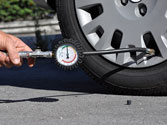
Over-inflated tyres reduce contact area and grip on the asphalt.
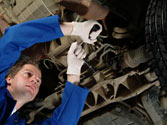
A high idle speed makes the engine consume more fuel unnecessarily.
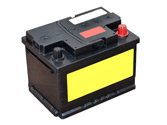
On maintenance-free batteries, only check that the terminals are clean and tight.
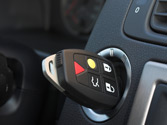
If the starter doesn't turn and lights fade, the battery is low on charge.
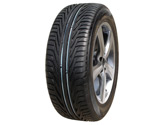
Inflate the spare tyre to the highest pressure recommended by the manufacturer.
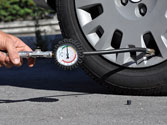
Use maximum recommended tyre pressure when fully loaded or driving long distances at high speed.
ABS prevents wheel lock-up during braking, preserving steering control.
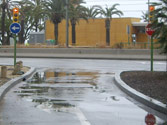
Rain wets the road and reduces tyre grip, doubling braking distance compared to dry conditions.
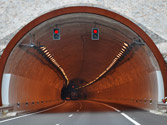
A red light always means stop; wait until it goes out, regardless of location.
A circular electronic toll sign makes electronic payment mandatory; the square version only permits it.
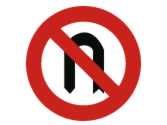
The U-turn prohibition sign does not forbid turning left, but a no-left-turn sign forbids U-turns.
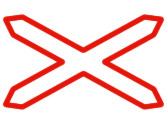
St. Andrew's cross signals an immediate level crossing without barriers, just metres away.
Green flag reopens the road, red flag closes it temporarily, yellow flag warns of danger.
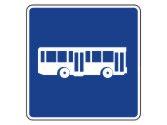
A bus symbol on a square blue lane sign means a lane reserved for buses.
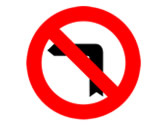
The no-left-turn sign also prohibits U-turns; the no-U-turn sign does not block left turns.
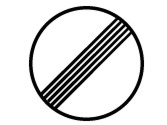
End of prohibitions sign cancels all previous specific prohibitions for moving vehicles.
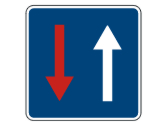
Priority over oncoming traffic at narrow passages is shown by a black-and-red arrow sign.
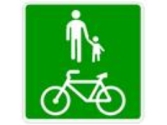
Segregated paths shared by pedestrians, cycles, and PMVs require pedestrians to yield to cycles and PMVs.
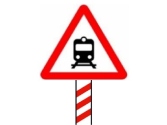
Inclined stripes ascending right indicate a level crossing approaches on the right side.
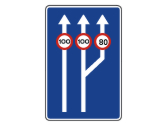
Lane signs with speed numbers indicate the maximum speed for each lane shown.
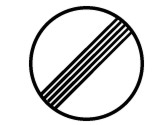
The end-of-prohibitions sign lifts all earlier specific prohibitions on moving vehicles.
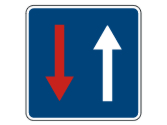
At narrow passages, the driver who finds the priority arrow sign goes first.
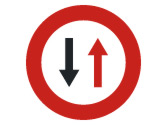
The red arrow narrow-passage sign requires you to yield and not enter if oncoming traffic must stop.
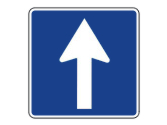
One-way road signs allow turning but never a U-turn against the flow.
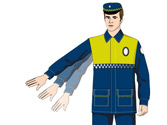
An officer raising and lowering an arm alternately orders you to reduce speed.
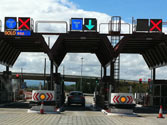
Red crosses close lanes, green arrows open them; obey overhead lane signals at tolls.
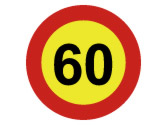
A yellow-background speed sign shows the maximum speed through roadworks for all vehicles.
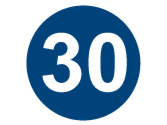
A round blue sign with a number indicates the minimum mandatory speed.
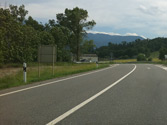
You may drive left of a continuous line only when it doesn't separate opposing directions.