Key Insights
2818 insights
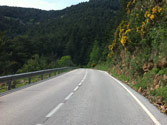
Since March 2022, exceeding the speed limit to overtake on conventional roads is no longer permitted.
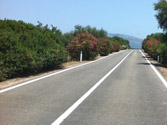
Conventional roads outside urban areas have a maximum speed of 90 km/h.
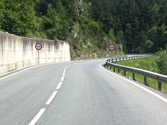
Adaptable mixed-use vehicles may drive at 90 km/h on conventional roads and 100 km/h on motorways.
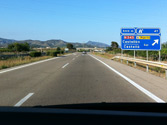
On motorways, drive on the carriageway unless an emergency forces you below 60 km/h and disrupts traffic.
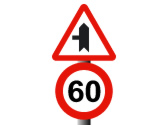
Speed limits posted with danger signs on the same panel end when the indicated danger ends.
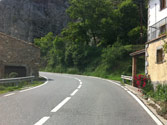
Conventional roads outside built-up areas have a maximum speed of 90 km/h regardless of lane count.
On unpaved roads, the maximum speed for all vehicles is 30 km/h.
Conventional roads with physical separation between directions may be signposted at 100 km/h.
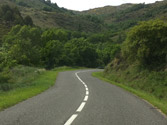
The minimum speed on a road is half its maximum permitted speed.
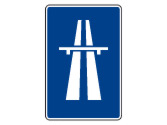
Any motor vehicle towing a trailer is limited to 90 km/h on motorways.
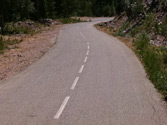
Motorhomes up to 3,500 kg may travel at 90 km/h on conventional roads; over 3,500 kg, only 80 km/h.
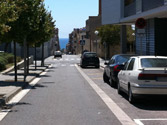
Urban roads with one lane per direction are limited to 30 km/h unless otherwise signposted.
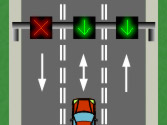
Reversible lanes follow the general speed limit of the road they belong to.
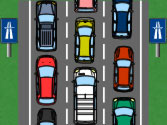
Use the shoulder only when an emergency reduces your speed; traffic congestion does not justify it.
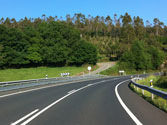
Vans are limited to 80 km/h on conventional roads.
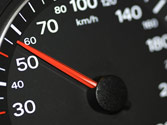
Braking distance increases far more steeply than speed — doubling speed quadruples the distance.
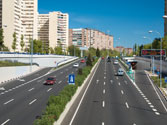
Motorcycles on urban motorways are limited to 80 km/h, versus 120 km/h on non-urban motorways.
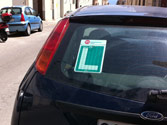
Novice drivers must follow the same speed limits as all other drivers.
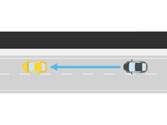
Braking distance is affected by rain, gravel, snow, ice, and overall road and vehicle conditions.
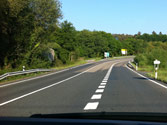
Conventional roads have a 90 km/h maximum regardless of the number of lanes.
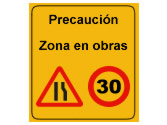
A speed limit paired with a danger sign on the same panel ends when that danger ends.
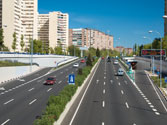
Urban motorways have a default maximum speed of 80 km/h when no sign indicates otherwise.
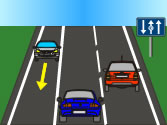
Conventional roads have a maximum speed of 90 km/h regardless of lane count.
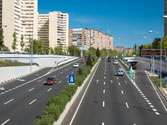
Motorways and dual carriageways within built-up areas are limited to 80 km/h.
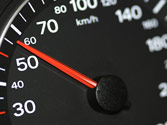
Narrow roads with poor pavement create a sensation of greater speed than actual.
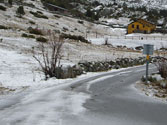
Braking distance can be up to 10 times greater on icy roads than on dry pavement.
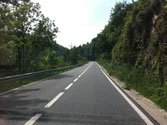
The minimum speed on conventional roads is 45 km/h, half the 90 km/h maximum.
The human factor causes 70-90% of traffic accidents, far more than road or vehicle factors.
Alcohol reduces the visual field, producing the tunnel effect where only the center of the road is seen clearly.
A driver's ability is shaped by training, experience, and current psychophysical state.
Children under 1.35m must ride in the back with a restraint system; taller children may use the front seat.

Alcohol reaches its peak effect roughly one hour after the last drink.
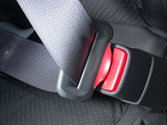
Seat belts are mandatory for all occupants, in all seats, on all roads.

Alcohol effects peak about one hour after the last drink, then slowly diminish.
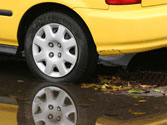
Wet brakes lose efficiency, doubling the braking distance in rain and up to tenfold on ice.
Alcohol increases reaction time, lengthening the stopping distance.
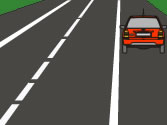
Signal an immobilised vehicle by placing the V-16 luminous device on its highest visible point.
Always put on a certified high-visibility reflective vest before exiting the vehicle on an interurban road.
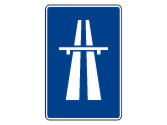
On motorways, always activate hazard lights and place the V-16 device on the highest visible point of the vehicle.
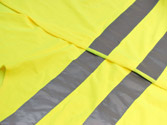
The approved reflective vest must be visible from at least 150 metres away.
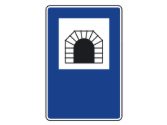
In tunnels, keep at least 100 metres or 4 seconds from the vehicle ahead (150m/6s for vehicles over 3,500kg).
Reaction distance and braking distance are different components that together form the stopping distance.
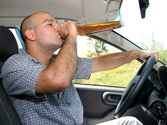
Maximum blood alcohol level is reached 30 to 90 minutes after the last drink.
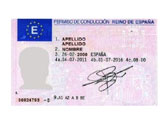
Novice drivers (first 2 years) have a stricter alcohol limit of 0.15 mg/L in exhaled air.

Alcohol consumption increases reaction time, even in small amounts.
The person is the main cause of traffic accidents, responsible for 70-90% of them.
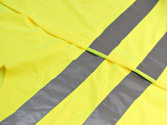
Carry the reflective vest inside the passenger compartment so you can put it on before exiting the vehicle.

The motorcycle driver is responsible for ensuring the passenger wears their helmet correctly fastened.
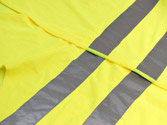
At least one reflective vest must be carried inside the vehicle.
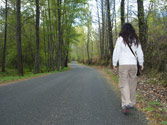
Pedestrians' reflective elements must be visible from a minimum distance of 150 metres.