Key Insights
2818 insights
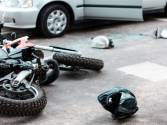
Rehabilitation costs are part of healthcare expenses from accidents.

You must provide assistance unless help is organized.
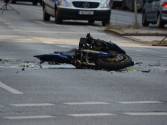
Stop to help restore traffic safety after an accident.
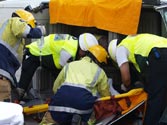
Continue on your way if your help is not necessary.
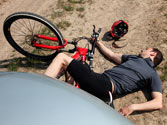
Head injuries are most serious for cyclists in accidents.
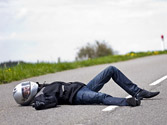
Do not remove a motorcyclist's helmet unless trained to do so.

You are obliged to assist if you witness an accident.
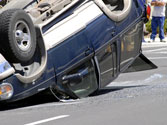
Follow the PAS rule: Protect, Alert, Aid in an accident.
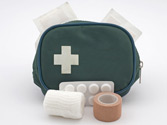
Carrying a first aid kit is advisable but not mandatory.
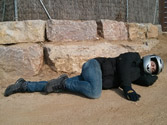
Place the injured in the recovery position to prevent suffocation.
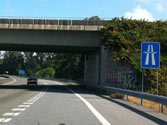
Never walk along the carriageway of a motorway after a breakdown.
Do not move injured persons until emergency services arrive.
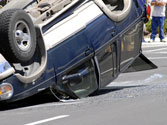
Use the PAS rule to act correctly in an accident.
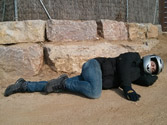
Place victims in the recovery position if they risk suffocation.
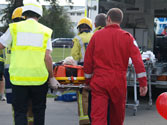
Keep the injured person's neck protected to avoid spinal injuries.
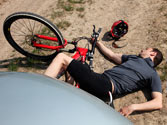
Do not plug bleeding from the ear or nose.
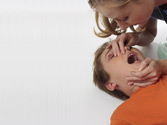
Inspect the mouth for obstructions before mouth-to-mouth ventilations.
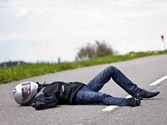
Always cover injured persons to prevent hypothermia.
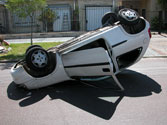
Stop to provide assistance if you witness an accident.
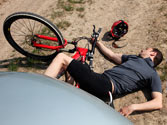
Do not move the injured person's head if they have bleeding.
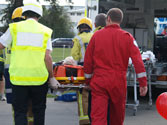
Continue on your way if help is already organized.
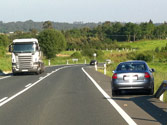
Use hazard lights and pre-warning devices for breakdowns.
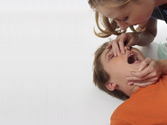
Remove any obstruction from the mouth of an injured person.
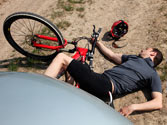
Protect the neck of an injured person from sudden movements.

Plug external haemorrhages but not internal ones.
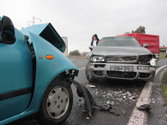
Compulsory insurance covers damages caused by the responsible driver.

Alcohol ingestion can worsen injuries in an accident.
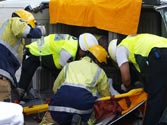
Always cover injured persons to prevent hypothermia.
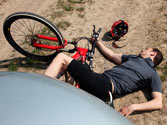
Do not plug bleeding from the nose or ear.
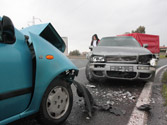
Compulsory insurance covers damages to non-responsible vehicles.
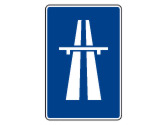
Signal a breakdown with hazard lights and a pre-warning device.
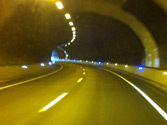
Turn off the engine and signal in a tunnel after a breakdown.
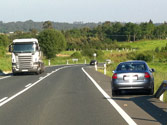
Signal a breakdown with hazard lights on the shoulder.
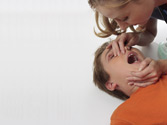
Call the emergency number if you don't know how to help.
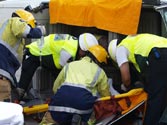
Always cover injured persons to prevent hypothermia.
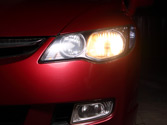
Regularly inspect your vehicle's lighting system for proper operation.
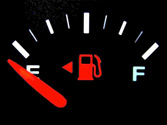
Check the ignition and fuel supply circuits if fuel consumption increases.
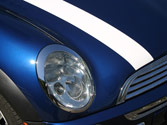
Inspect headlights and taillights for deterioration after exposure to heat.
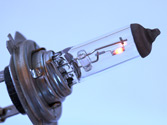
Replace vehicle bulbs immediately when their light intensity decreases.
The night vision assistant detects pedestrians or animals using infrared technology.
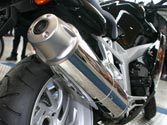
Maintain the exhaust pipe and silencer to avoid noise pollution.
Change the oil filter as indicated in the vehicle's manual.
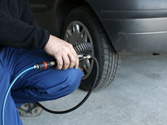
Always maintain tyre pressure as recommended by the manufacturer.
Proper vehicle maintenance reduces the likelihood of accidents.
Ensure tyre tread depth is never less than 1.6 mm for good grip.
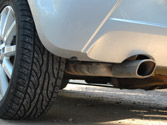
Do not drive with a damaged exhaust silencer due to noise pollution.
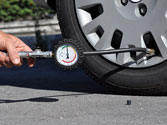
Check tyre pressure as recommended by the manufacturer, even in rain.
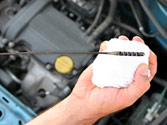
Use the dipstick to regularly check the engine oil level.
A functioning suspension keeps the vehicle in constant contact with the ground.
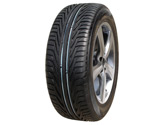
You can fit tyres with a higher speed code than recommended.