Key Insights
2818 insights
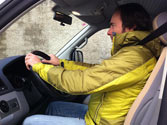
Remove bulky clothing like down jackets so the seat belt fits tightly against the body.

Blood alcohol level peaks at one hour after the last drink, then begins to decrease.
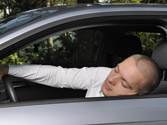
When sleepy while driving, stop in a safe place and rest for 20-30 minutes.
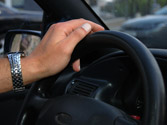
A driver's ability depends partly on training, plus experience and psychophysical state.
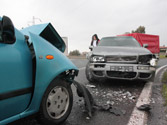
The person is the main cause of accidents, since drivers must adapt to road and weather conditions.
Alcohol consumption increases reaction time, reducing the driver's ability to respond.

Alcohol increases reaction time, making the driver slower to respond to any situation.
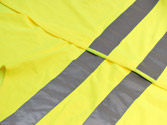
The reflective vest is mandatory when exiting the vehicle on roads outside built-up areas.
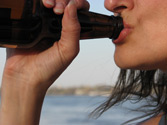
Alcohol effects begin to decrease between 30 and 90 minutes after the last drink, once the peak is reached.
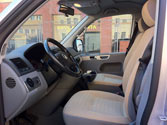
Cushions interfere with the seat belt's action and can cause the dangerous submarining effect.
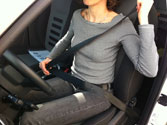
Pressure clips on seat belts cancel their protective effect and must not be used.
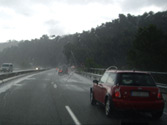
Increase the safety distance on wet roads, since braking efficiency is reduced.
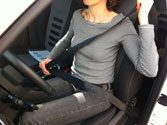
The lower belt strap must sit across the pelvis and hip bones, never over the abdomen.
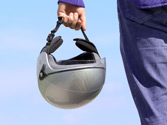
If your motorcycle helmet has no visor, wear glasses to protect your eyes from dust and debris.
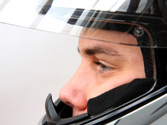
Always wear an approved, properly fastened helmet on a motorcycle, both inside and outside built-up areas.
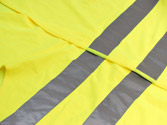
Always put on the high-visibility vest before exiting the vehicle on an interurban road, even in daylight.
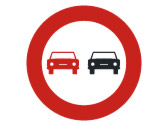
Always keep enough distance to brake without colliding with the vehicle ahead.
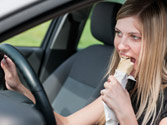
Eat light, alcohol-free meals before a trip to avoid drowsiness and impairment.
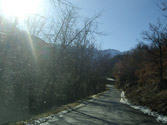
Choose departure times that avoid driving with the low sun ahead at sunrise or sunset to prevent glare.
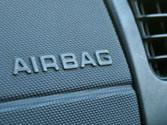
Always deactivate the front passenger airbag when using a rear-facing child restraint.
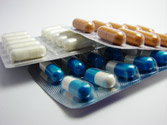
Medications can affect driving, typically by increasing reaction time.

Alcohol reduces the field of vision, producing the tunnel effect.
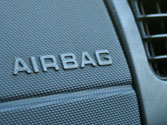
The front passenger airbag must be deactivated when using a rear-facing child seat there.
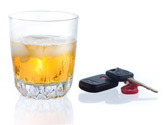
Novice drivers (first 2 years) have a maximum blood alcohol limit of 0.30 g/L.

Alcohol increases reaction time and therefore lengthens the stopping distance.
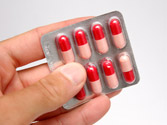
Cold medications can cause drowsiness, so always read the package leaflet before driving.
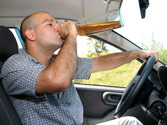
Alcohol effects begin to diminish about one hour after the last drink, once the peak is reached.
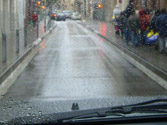
In fog, rain, snow or any reduced visibility, dipped (low-beam) headlights are mandatory.
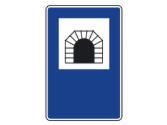
If stopped in a tunnel by traffic, keep position lights on and activate hazard warning lights.
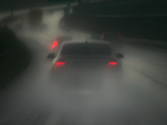
Rear fog lights are mandatory in very heavy rain, thick fog, heavy snow or dense smoke/dust.
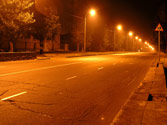
On urban roads and travesías, always use position lights with dipped headlights — never high beams.
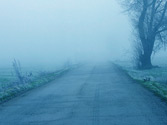
Front fog lights are always optional; only rear fog lights are mandatory in adverse conditions.
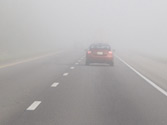
High beams are permitted in fog outside built-up areas, but dipped lights are far more advisable.
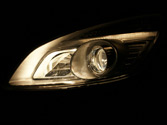
Use high-beam headlights only outside built-up areas on insufficiently lit roads without dazzling others.
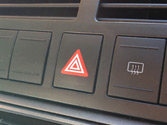
Use hazard lights whenever driving below the minimum speed risks a rear-end collision.
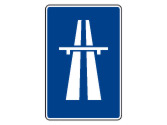
At 40 km/h or less on unlit roads, dipped or high beams are both valid if not dazzling.
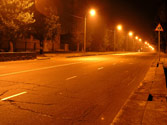
On a sufficiently lit urban road at night, no lights are needed when parked.
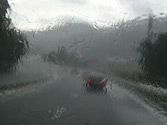
In very heavy rain, rear fog lights are mandatory and front fog lights are optional.
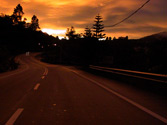
Position lights alone are never enough — always pair them with at least dipped headlights.
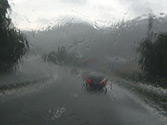
Rear fog lights are compulsory in very heavy rain, thick fog, heavy snow or dense smoke/dust.
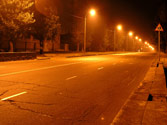
On any urban road at night, lit or not, use position lights with dipped headlights.
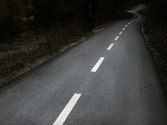
At 40 km/h or less, dipped headlights are sufficient even on insufficiently lit interurban roads.
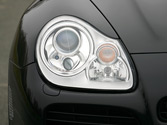
Position lights are white at the front, red at the rear, and amber on optional sides.
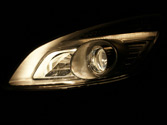
High beams are appropriate on insufficiently illuminated interurban roads when not dazzling others.
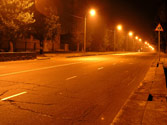
On urban roads, always drive with dipped headlights — high beams are forbidden in built-up areas.
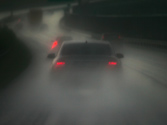
In very heavy rain, the rear fog light is mandatory while the front one remains optional.
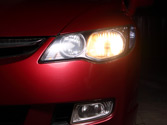
Below 40 km/h on unlit interurban roads, dipped headlights are sufficient and legal.
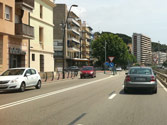
On urban through-roads (travesías), always use dipped headlights regardless of street lighting.
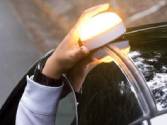
The V-16 hazard pre-warning device is used together with hazard lights, plus position lights at night.
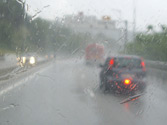
High beams are allowed in heavy rain outside towns, but generally inadvisable due to glare.