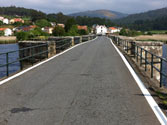
Which vehicle will have right of way at a narrowing when priority is not expressly signposted?
A)The vehicle that has to reverse the greater distance.
B)The vehicle that arrived first.
C)The vehicle that entered first.Correct
On a very narrow stretch of road where there is no priority signage, the vehicle that entered first will have right of way.
If there is doubt about who entered first, priority goes to the vehicle with the greatest difficulty manoeuvring. The order of priority among different types of vehicles when one of them must reverse is as follows:
1. Special vehicles and transport exceeding the established weights or dimensions.
2. Vehicle combinations, except those in point 4.
3. Animal-drawn vehicles.
4. Passenger cars towing trailers of up to 750 kilograms MAM and motorhomes.
5. Vehicles intended for collective passenger transport (buses).
6. Lorries, articulated lorries and vans.
7. Passenger cars and passenger car derivatives.
8. Special vehicles not exceeding the established weights or dimensions, quadricycles and light quadricycles.
9. Three-wheeled vehicles, motorcycles with sidecars and three-wheeled mopeds.
10. Motorcycles, two-wheeled mopeds and bicycles. When the vehicles are of the same type or of a type different from those listed above, right of way shall be decided in favour of the one that has to reverse the greater distance, and, in the event of a tie, the one with the greater width, length or maximum authorised mass.
2. Vehicle combinations, except those in point 4.
3. Animal-drawn vehicles.
4. Passenger cars towing trailers of up to 750 kilograms MAM and motorhomes.
5. Vehicles intended for collective passenger transport (buses).
6. Lorries, articulated lorries and vans.
7. Passenger cars and passenger car derivatives.
8. Special vehicles not exceeding the established weights or dimensions, quadricycles and light quadricycles.
9. Three-wheeled vehicles, motorcycles with sidecars and three-wheeled mopeds.
10. Motorcycles, two-wheeled mopeds and bicycles. When the vehicles are of the same type or of a type different from those listed above, right of way shall be decided in favour of the one that has to reverse the greater distance, and, in the event of a tie, the one with the greater width, length or maximum authorised mass.