Key Insights
2818 insights
Lost points can be partially recovered (up to 4) via a road re-education course every 2 years.
A maximum of 8 points may be lost in one day, except for very serious offences.
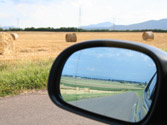
Mirrors must be checked regularly while driving, not just before maneuvers.
Immobilize accident vehicles with the handbrake applied and the ignition switched off.
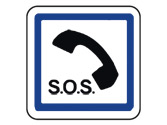
Dial 112 for any emergency — it's free and works without network coverage.
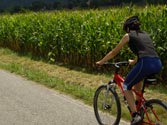
More cyclist accidents happen in summer because good weather brings more cyclists onto the roads.
Most accidents are predictable and avoidable by controlling known risk factors.
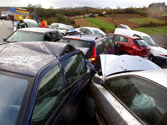
The vast majority of accidents are avoidable by preventing risk factors, especially driver-related ones.
Traffic accidents are a leading cause of mortality, especially among those under 35.
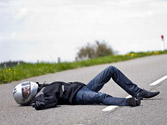
Never remove an accident victim's helmet unless strictly necessary and you know the proper technique.
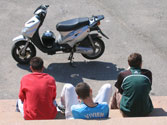
Not wearing a helmet is a leading cause of death in motorcycle and moped accidents.
Children and the elderly are the pedestrian groups most at risk in traffic.
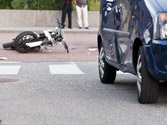
You must notify the authorities after an accident if any party involved requests it.
Many pedestrian knockdowns occur during reversing because visibility behind the vehicle is reduced.
Most accidents occur during holiday periods and weekends, especially early morning.
Traffic accidents have a huge economic impact ultimately borne by all citizens.
The human factor causes 70–90% of accidents, making it by far the main cause.
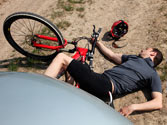
Head injuries are the most serious in cycling accidents, so wearing a helmet is essential.
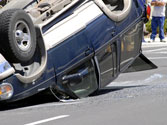
Higher speed means greater accident risk and more severe injuries.
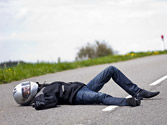
Do not remove an injured motorcyclist's helmet as a general rule.
The three main accident factors are the road and environment, the vehicle, and the human factor.
Never give medication, tranquillisers, or drinks to an accident victim.
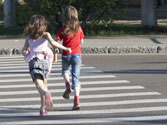
Children are especially vulnerable in knockdowns because their short stature exposes vital body parts.
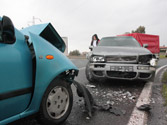
Follow the PAS rule: Protect the scene first, then Alert, then Assist.
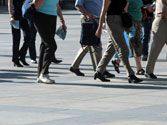
Pedestrians suffer the most accidents in cities, but injuries are more severe on interurban roads.
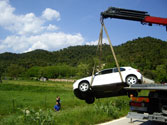
Traffic accidents generate material, healthcare, administrative, and human costs.
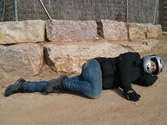
As a general rule, never remove the helmet from an injured motorcyclist.
Never give food or drinks — especially alcohol — to accident victims.
Traffic accidents are a leading cause of death and injury among young people in Spain.
Speeding is a main cause of fatal accidents among young drivers.
Distractions can come from inside the vehicle or from the road and surroundings.
Traffic accidents are a leading cause of mortality, particularly among young people.
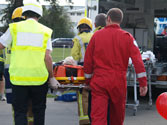
If help is already organised at an accident, continue your journey without slowing down to look.
With injured persons, move them as little as possible and call 112 immediately.
Children are vulnerable in traffic because they don't yet know all proper road behaviours.
Children, young people, and the elderly are the main vulnerable groups in traffic.
Don't move injured persons unless absolutely necessary for their safety.
You must assist accident victims unless help is already organised at the scene.
Risk factors aren't equal — the human factor causes most accidents.
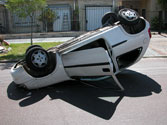
Most daytime accidents happen late afternoon when people leave work.
Only specialised personnel — or those fully trained — should perform basic life support.
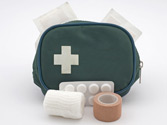
A first aid kit is recommended but not mandatory in vehicles with more than nine seats.
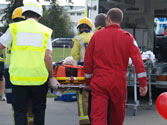
Motorcycle, moped, and bicycle riders face the highest risk of injury or death in accidents.
Traffic accidents are a leading cause of mortality and injuries, considered a public health priority.
Don't modify the front of a vehicle — it's designed to minimise injuries to pedestrians.
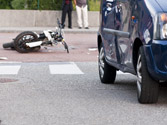
Traffic accidents are among the main causes of both injuries and mortality.
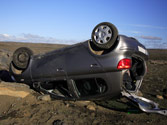
Accidents damage not only people and vehicles but also the road and surrounding environment.
The most frequent motorcycle accident is a frontal or front-lateral collision, especially in urban areas.
Most traffic accidents occur during holiday periods such as Easter, summer, and December.
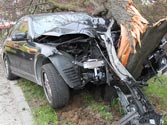
Accidents generate material damage plus healthcare, administrative, and human costs.