Key Insights
2818 insights
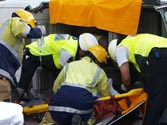
Costs for treating, rehabilitating, and adapting injured victims are called healthcare costs.
Traffic accidents harm the environment along with vehicles, roads, and people.

Most child pedestrian accidents occur at the end of the school day when they're agitated and distracted.
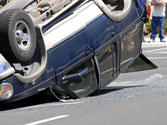
During the day, most accidents occur at commuting times to and from work.
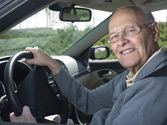
Elderly people are more accident-prone in complex situations requiring a quick response.
The human factor is responsible for the large majority of traffic accidents.
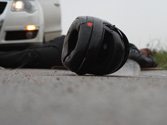
Collisions with other vehicles are the most frequent type of motorcycle accident.
Young drivers crash more often due to exhibitionist behaviour when driving in groups.
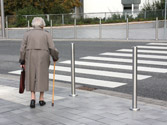
Elderly pedestrians have fewer accidents when accompanying children, as they take extra care.

Before mouth-to-mouth resuscitation, first clear and open the victim's airways.
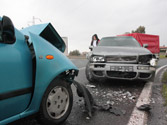
Apply the PAS rule after an accident: Protect, Alert, and Assist.
The human factor is the main cause of traffic accidents.
Material damage from accidents affects the vehicle and cargo, the road, and the environment.
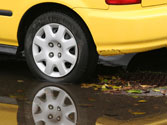
Wet roads reduce tyre grip, so slow down and double your safety distance.
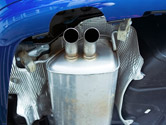
A damaged exhaust pipe makes the engine noticeably louder than normal.
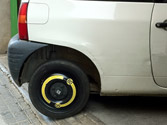
On a temporary spare tyre, never exceed 80 km/h and limit distance travelled.
Worn shock absorbers cause headlight oscillation that can dazzle other drivers.
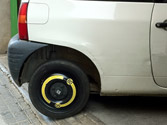
Always follow the manufacturer's instructions when using a temporary-use spare tyre.
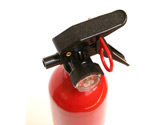
Private passenger cars and motorcycles are not required to carry a fire extinguisher.
Using the air conditioning increases engine load and therefore fuel consumption.
Preventive maintenance is essential to avoid accidents caused by mechanical failure.
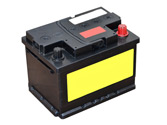
Top up a battery only with distilled water, never tap water or acid.
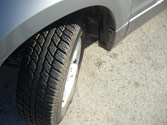
Incorrect tyre pressure causes uneven wear and increases the risk of a blowout.
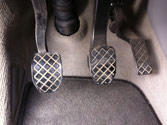
The foot brake acts on all four wheels; the handbrake only on the rear.
Truck drivers must carry an approved reflective vest in the vehicle.
Fire extinguishers are not compulsory in passenger cars or motorcycles.
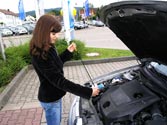
Check engine oil with the vehicle level and the engine stopped and cold.
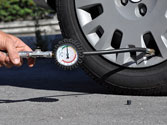
Check tyre pressure frequently and always before starting a long journey.
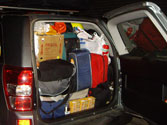
Exceeding the maximum authorised load impairs tyre performance and safety.
Drivers can prevent mechanical-failure accidents by keeping their vehicle properly maintained.
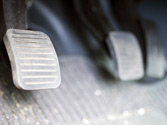
If the foot brake fails, downshift through the gears and use the handbrake progressively.
Reflective high-visibility vests carried in the vehicle must be type-approved.
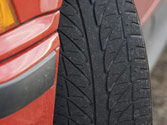
Heat accelerates tyre wear, so high temperatures shorten tyre life.
Trucks over 3,500 kg MAM must always carry an approved fire extinguisher.
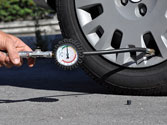
Always check tyre pressure when the tyres are cold for an accurate reading.
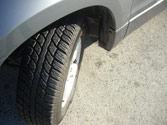
Regular tyre checks let you spot deterioration early and prevent blowouts.
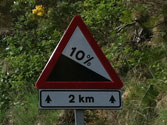
On long descents, shift to a lower gear to use engine braking and avoid brake fade.
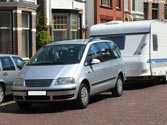
A spare wheel for the trailer is not compulsory, but a fire extinguisher is.
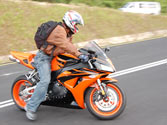
Smooth, efficient riding significantly reduces a motorcycle's fuel consumption and emissions.
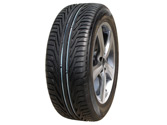
Underinflated tyres wear excessively on their outer edges.
Tyres are the vehicle component requiring the most frequent driver supervision.
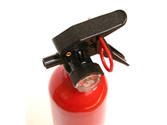
Passenger cars towing a trailer must carry an approved fire extinguisher.
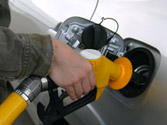
Increase your safety distance to gain reaction time, drive smoother, and save fuel.
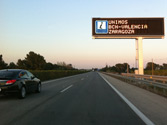
Efficient driving reduces accidents by combining vision, anticipation, and space.
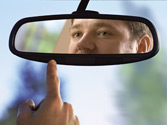
Check mirrors every 10–15 seconds on clear roads and motorways.
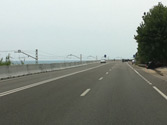
Preventive driving rests on three pillars: vision, anticipation, and space.
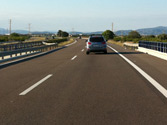
Smooth, efficient driving lowers stress and tension behind the wheel.
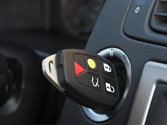
Switch off the engine during stops longer than 60 seconds to save fuel.
Defensive driving means looking far ahead, to the sides, and in the mirrors.
Efficient driving boosts comfort by reducing stress at the wheel.