Chapter 8 Insights
Maneuvers · 363 insights
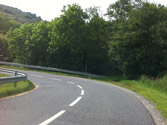
On curves with reduced visibility, overtaking is forbidden if it requires invading the opposite direction.
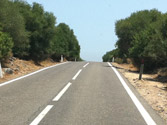
U-turns are prohibited wherever visibility is insufficient, such as crests with no visibility.
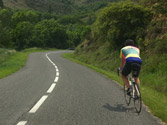
Overtaking a cyclist outside a built-up area requires at least 1.5 m of lateral separation.
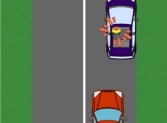
You may cross a solid line to overtake an immobilised or broken-down vehicle, leaving 1.5 m of separation.
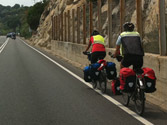
You may cross a solid line to overtake cyclists, mopeds, pedestrians or animals, leaving 1.5 m separation.
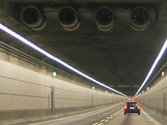
Overtaking in tunnels is allowed only when there is more than one lane in your direction and you don't invade the opposite.
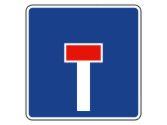
When forward movement is impossible, reversing has no distance limit and may even cross intersections.
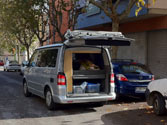
Double-row parking is always prohibited; only brief stopping is allowed when no nearby kerb space exists.
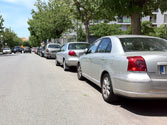
On urban roads you may park on the carriageway provided at least 3 metres of free passage remain.
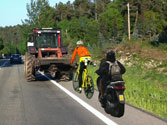
Bicycles are exempt from the 15-second/200-metre parallel-driving limit when overtaking on the verge.
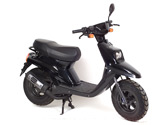
Mopeds turning left without a dedicated lane must do so from the right, off the carriageway when possible.
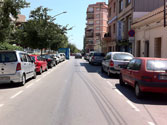
When leaving the driving position, engage the parking brake, switch off the engine and prevent unauthorised use.
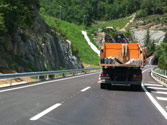
Begin overtaking from the proper frontal safety distance to react safely to sudden braking.
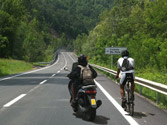
Mopeds overtaking must not exceed 15 seconds or 200 metres of parallel driving with the overtaken vehicle.
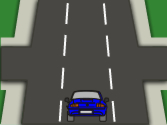
On a one-way road, position yourself near the left edge of the carriageway to turn left.
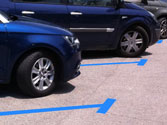
Lacking a valid ticket in a time-limited parking zone allows agents to immobilise the vehicle.
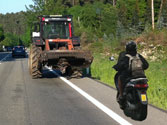
Mopeds overtaking slower vehicles must not exceed 200 metres or 15 seconds of parallel driving.
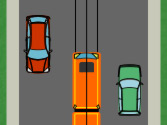
On two-way roads, trams travelling in the centre must be overtaken on the right.
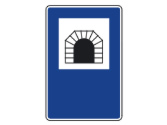
Overtaking is prohibited in tunnels with only one lane per direction of travel.
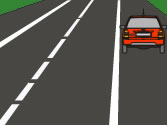
Stopping and parking are forbidden on the passable part of the shoulder outside built-up areas.
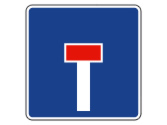
When forward movement is impossible, reverse only the minimum essential distance, even crossing intersections if needed.
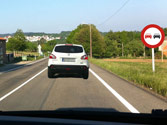
Don't begin overtaking if you cannot complete it before reaching a no-overtaking sign or continuous line.
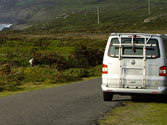
Outside built-up areas, vehicles must stop off the carriageway and beyond the passable shoulder.
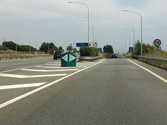
Enter deceleration lanes as early as possible, then reduce speed once inside them.
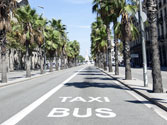
Stopping in a bus lane is always prohibited as it obstructs public transport.
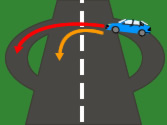
U-turns may follow either a short or full loop trajectory, unless a 'no left turn' sign forces the longer route.
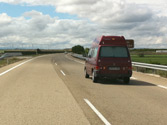
When overtaking cars or vans, leave lateral separation proportional to speed, width and road characteristics.
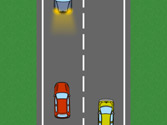
If danger arises during overtaking, the overtaken vehicle is required to reduce speed to facilitate the manoeuvre.
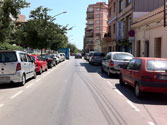
Stopping in double row is forbidden when there is nearby kerb space available.
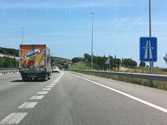
When merging onto a motorway, vehicles already on it have priority over you.
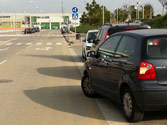
Vehicles leaving a parking space must yield to traffic; indicators warn but don't grant priority.
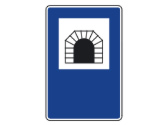
Overtaking is prohibited along sections affected by the tunnel sign unless multiple lanes exist in your direction.
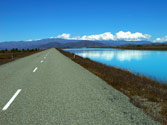
U-turns are allowed on conventional roads when no sign prohibits them and conditions are favourable.
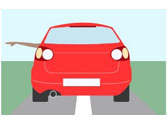
On a multi-lane one-direction road, position yourself in the leftmost lane to turn left.
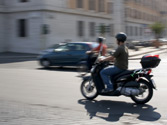
Overtaking a motorcycle in built-up areas requires lateral distance proportional to speed, width and road characteristics.
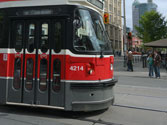
Trams travelling in the centre must always be overtaken on the right on two-way roads.
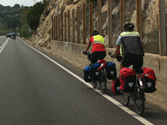
You may cross even a double continuous line to safely overtake cyclists or other vulnerable slow users.
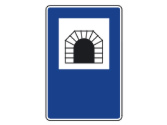
Overtaking is prohibited in tunnels with only one lane per direction.
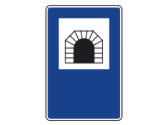
Overtaking in tunnels is allowed only if multiple lanes exist in your direction without invading the opposite side.
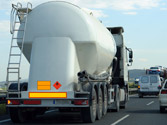
A rear rectangular plate signals a vehicle over 12 metres, requiring a longer overtaking manoeuvre.
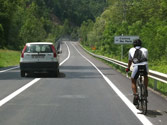
You may cross a solid line to overtake cyclists, leaving at least 1.5 metres lateral separation.
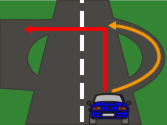
When a turning bay is provided, use it to make your left turn.
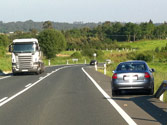
A vehicle immobilised by emergency may stop on a passable shoulder, but parking there is forbidden.
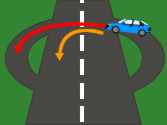
Either trajectory is valid for a U-turn unless a 'no left turn' sign forces using the loop.
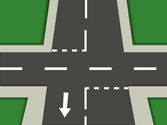
Overtaking at intersections is generally prohibited unless specific exceptions apply.
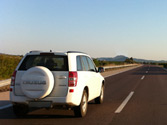
After overtaking outside built-up areas, return to the rightmost lane unless continuing to overtake.
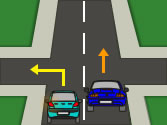
On two-way roads, position near the centre line to turn left; on one-way roads, hug the left edge.
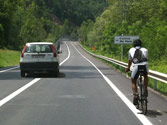
Overtaking cyclists requires at least 1.5 metres separation, fully changing lanes when more than one is available.
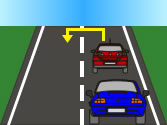
Never make a U-turn where it obstructs following traffic; find a safer location.
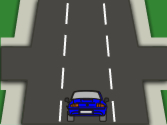
On a one-way road with three lanes, position in the leftmost lane to turn left.