Chapter 8 Insights
Maneuvers · 363 insights
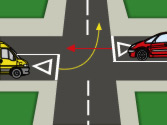
When turning left, give way to vehicles travelling in the opposite direction.
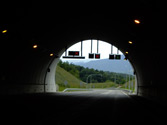
Immobilised in a tunnel: switch off engine, activate hazard lights, keep position lights on.
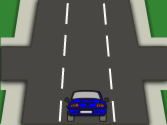
On a one-way road, position at the left edge to turn left.
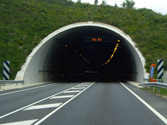
Overtaking in tunnels is prohibited when only one lane exists per direction.
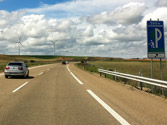
As a rule, overtaking must always be done on the left, not the right.
On one-way roads, approach the left edge to turn left.
Reversing is permitted as a complementary manoeuvre when joining traffic, within strict limits.
When reversing to join traffic, you may not encroach on a road junction.
On motorways, U-turns are only allowed at places specifically designated by signs.
Without chocks on an uphill slope, rest a front wheel against the kerb turned inwards.
The vehicle being overtaken must keep to the right edge to facilitate the manoeuvre.
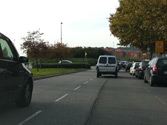
In built-up areas with two lanes per direction, overtaking on the right is permitted.
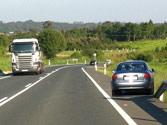
Parking on the usable hard shoulder of an interurban road is prohibited.
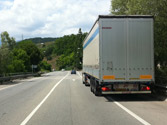
Oversized vehicles should slow down or use the hard shoulder to facilitate being overtaken.
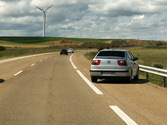
Both stopping and parking are prohibited on the usable hard shoulder of interurban roads.
Occupants must exit on the side closest to the kerb, with the vehicle fully stopped.
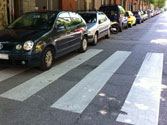
Stopping and parking are prohibited on pedestrian crossings but allowed in their vicinity.
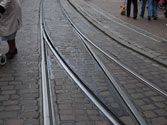
Stopping and parking on tram rails is always prohibited.
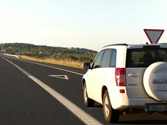
Faster movement in acceleration or deceleration lanes is not considered overtaking.
Always signal turns using the indicator lights or, failing that, the arm.
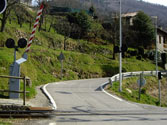
At level crossings, slow down and verify no train is approaching before crossing.
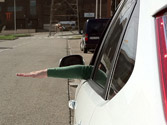
When light and arm signals contradict, the arm signal always takes precedence.
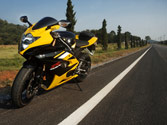
Stopping on the usable part of an interurban hard shoulder is prohibited.
Stopping near interurban intersections is prohibited if it creates danger from poor visibility.
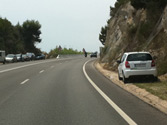
Parking is correct when off the carriageway and clear of the usable hard shoulder.
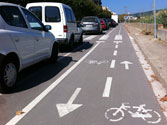
Stopping and parking are prohibited in lanes reserved for bicycles.
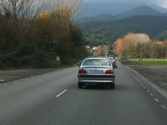
Outside built-up areas, signal overtaking with optical (light) and acoustic (horn) signals.
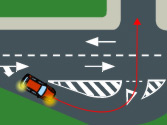
If a turning loop is provided, you must use it for left turns or U-turns.
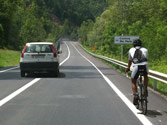
When overtaking a cyclist, leave at least 1.50 metres clearance and occupy the adjacent lane.
Without working indicators, signal a left turn with the left arm extended horizontally, palm down.
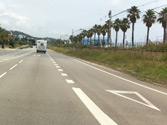
An acceleration lane lets you reach an appropriate merging speed before joining traffic.
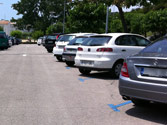
When parking, you may reverse only the minimum distance needed, never exceeding 15 metres.
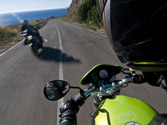
Motorcycles must keep enough lateral clearance to safely cross oncoming vehicles.
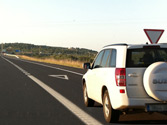
Vehicles in the acceleration lane must give way to those already on the main carriageway.
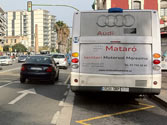
You must give way to a bus pulling out from a designated stop in built-up areas.
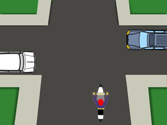
Always signal every manoeuvre well in advance so others can anticipate your intentions.
Abandon a direction change when oncoming traffic's speed and distance make it unsafe.
To warn of a considerable speed reduction, repeatedly tap the brake lights.
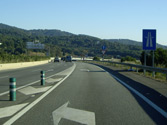
Never begin merging from an acceleration lane until you are sure it's safe.
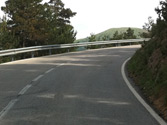
Overtaking is prohibited on bends with reduced visibility.
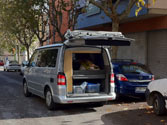
Double-parking to unload is allowed only if no nearby space exists and traffic isn't obstructed.
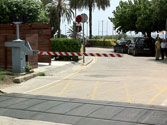
U-turns are prohibited at level crossings.
When overtaking, travel noticeably faster than the vehicle ahead and complete it quickly.
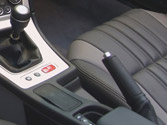
On uphill parking, apply the parking brake and engage first gear.
Use only parking lights when immobilised on the hard shoulder outside built-up areas at night.
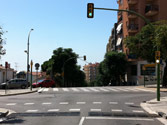
Stopping and parking are prohibited at intersections when they hinder other vehicles' turns.
When reversing to merge into traffic, never encroach on an intersection.
Signal any manoeuvre involving lateral or rearward movement using lights or arm.
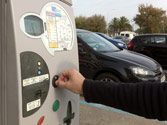
In time-limited zones, parking without a valid ticket can lead to a fine and immobilisation.
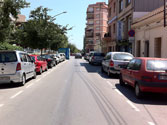
Reversing is permitted as a complementary manoeuvre for stopping, within strict limits.