Chapter 8 Insights
Maneuvers · 363 insights
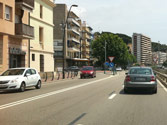
On urban through roads, choose the lane best suited to your destination, including for left turns.
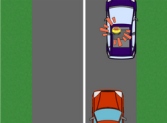
You may pass a stationary obstacle, even using the opposite lane, once safety is assured.
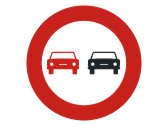
Even where overtaking is banned, you may pass cyclists by crossing into the oncoming lane.
When joining traffic, reversing is limited to a maximum of 15 metres.
Reversing to park must never encroach on a road junction.
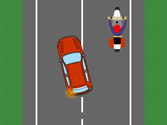
Crossing a continuous line entirely into the oncoming lane to overtake is prohibited.
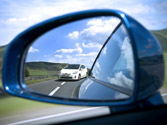
A vehicle that has begun moving left to overtake has priority over you.
Overtake on the right with care when the vehicle ahead clearly signals a left turn.
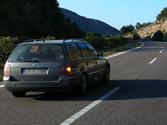
After overtaking, return to the right lane unless you're about to overtake again.
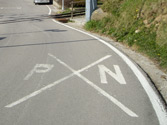
At level crossings, always reduce speed below the maximum permitted limit.
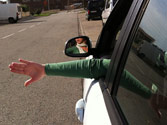
Always signal your intention to perform any manoeuvre, with sufficient advance notice.
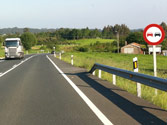
U-turns are forbidden where overtaking is prohibited unless expressly authorised.
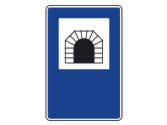
Making a U-turn inside a tunnel is always prohibited.
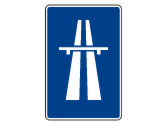
Use the motorway hard shoulder when an emergency forces you to drive abnormally slowly.
The driver who has already begun signalling and overtaking has priority.
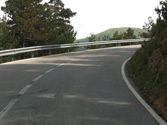
Stopping or parking on bends with reduced visibility is prohibited.
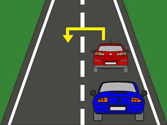
Only make a U-turn where you won't endanger or obstruct other road users.
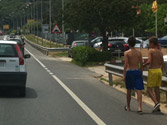
Yield to pedestrians crossing a hard shoulder when no pedestrian zone is available.
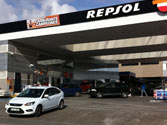
When joining a road from a service area, yield to traffic from both directions.
Double parking is always prohibited, without exceptions.
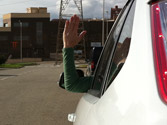
Arm signals are valid as long as they are clearly perceptible to others.
When reversing to park, you may not exceed 15 metres or cross an intersection.
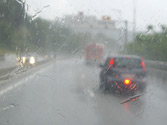
Take extra care overtaking on wet roads, as splashing can severely impair visibility.
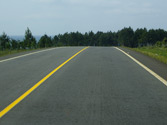
Stopping and parking on crests is only prohibited where visibility is reduced.
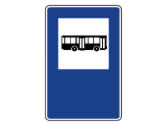
At marked bus stops, parking is forbidden though brief stopping may be allowed.
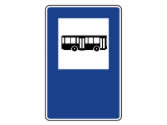
Never stop or park in zones reserved for urban public transport.
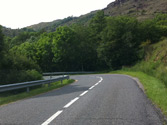
Stopping is forbidden on curves with reduced visibility and in their vicinity.
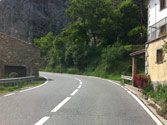
U-turns are forbidden anywhere visibility prevents you from ensuring safety.
Reversing through an intersection is never permitted, even when parking.
Stopping is prohibited in tunnels, underpasses and sections marked by the tunnel sign.
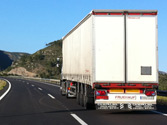
Drivers being overtaken aren't generally required to use the hard shoulder unless conditions demand it.
Overtaking is prohibited at and near pedestrian crossings.
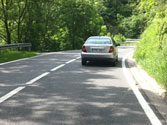
To turn left on a two-way road, position yourself at the centre line without crossing it.
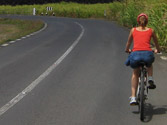
When passing cyclists outside towns, you must occupy part of the oncoming lane, leaving 1.5 metres.
Signalling a lane change does not give you priority over vehicles already in that lane.
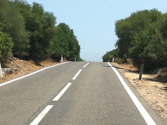
Overtaking is prohibited on crests with reduced visibility.
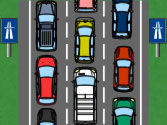
In dense traffic, faster movement in one lane is not considered overtaking.
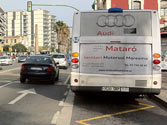
Stopping is prohibited in zones reserved exclusively for urban public transport.
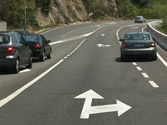
Signal lateral shifts with the turn indicator, or with the arm if unavailable.
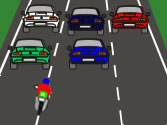
Before slowing significantly, ensure safety and warn others with brake lights or arm signals.
When overtaking a moped, leave at least 1.5 metres of lateral clearance, even in towns.
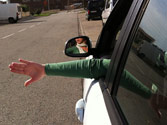
An arm extended horizontally with palm facing back signals reversing.
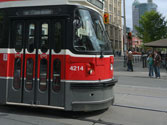
Trams travelling along the centre of a two-way road are overtaken on the right.
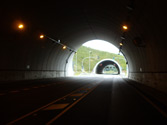
Overtaking in tunnels is allowed only when there are multiple lanes in your direction.
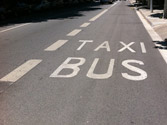
Faster travel in a reserved lane like a bus lane is not considered overtaking.
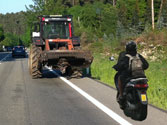
Vehicles required to use the hard shoulder may overtake only if parallel travel stays under 15 seconds or 200 metres.
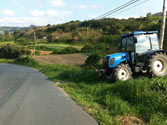
Vehicles on unpaved roads must yield to those on paved roads when joining.
The 1.5-metre minimum clearance for pedestrians applies on interurban roads.
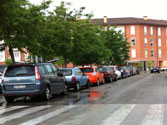
Stopping on the left edge is allowed only on one-way urban roads.
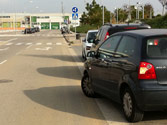
When joining traffic, you must yield to vehicles already on the road.