Chapter 8 Insights
Maneuvers · 363 insights
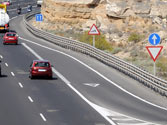
If you must give way on an acceleration lane, stop at the beginning of that lane.
Reversing into a road junction is prohibited when stopping, parking or merging.
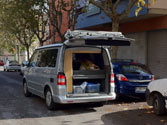
Double parking is always prohibited; only brief stopping may be allowed under conditions.
When unable to advance or turn, reverse only the minimum indispensable distance.
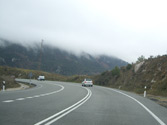
Overtaking on blind bends is allowed only if directions are clearly separated and uncrossed.
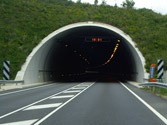
In single-lane tunnels, keep at least 100 metres or 4 seconds from the vehicle ahead.

Never turn left at an intersection without sufficient visibility, even if signage permits.
You may pass an obstacle by using the adjacent lane if it is unoccupied and safe.
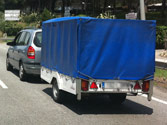
Vehicles with trailers on steep slopes require chocks or wheels turned against the kerb.
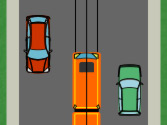
Trams travelling along the centre of the road must always be overtaken on the right.
Reversing is completely prohibited on motorways and dual carriageways.
Parking at intersections is prohibited when it prevents other vehicles from turning.
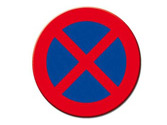
Stopping is always prohibited where it creates risk or obstruction to traffic.
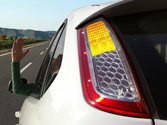
Manoeuvres should be signalled preferably using the vehicle's light indicators.
Keep the indicator light on until the turning or lateral manoeuvre is fully completed.
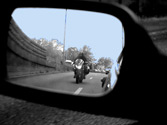
Outside built-up areas, leave at least 1.50 metres lateral clearance when overtaking.
Signal any lateral movement, reversing, stopping, or slowing down to warn other road users in advance.
Never park on the pavement — it forces pedestrians onto the carriageway and into danger.
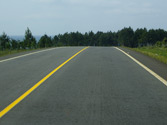
Never overtake or change direction on bends or crests with limited visibility.
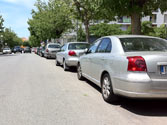
When stopped on the right, enter and exit from the left side quickly and cautiously, watching for cyclists.
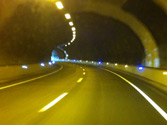
Overtaking in tunnels is only allowed when there are multiple lanes in your direction.
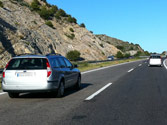
Overtaking on the right is allowed in built-up areas with two or more marked lanes per direction.
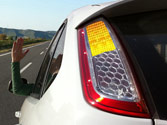
Arm signals always prevail over light signals in case of contradiction, since lights may fail.
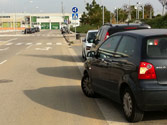
Before joining traffic, ensure you can do so safely and yield to all other road users.
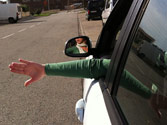
An extended left arm with palm facing backwards signals reversing.
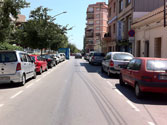
Parking parallel to the kerb is the rule, but other positions are allowed when conditions require it.
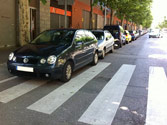
Stopping and parking are forbidden on pedestrian crossings.
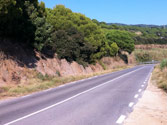
On interurban roads, always stop or park off the carriageway and clear of the passable hard shoulder, on the right.
Motorcyclists must remember they can go unnoticed by others, especially at higher speeds.
U-turns on motorways and dual carriageways are forbidden except where specifically designated.
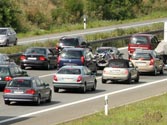
Faster movement in a lane during congested traffic is not considered overtaking.
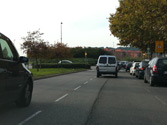
When changing lanes, yield to vehicles already travelling in the lane you wish to enter.
Reverse only with the utmost caution and stop immediately if a person, vehicle, or animal appears.
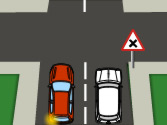
Overtaking at intersections is forbidden unless your road has clearly established priority.
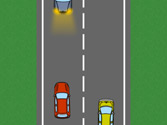
If danger arises during overtaking, slow down, signal right, and return to your lane.
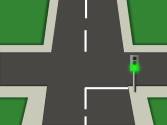
U-turns are permitted at intersections where you have clear priority, such as a green light.
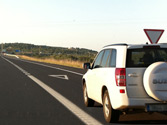
Help vehicles merging from acceleration lanes by changing lanes or slightly reducing speed when possible.
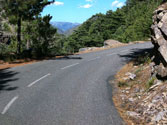
U-turns are prohibited where visibility is reduced.
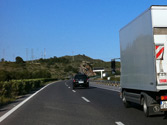
You may remain in the same lane after overtaking unless faster vehicles are behind.
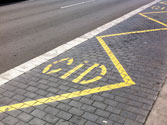
Only stopping is allowed in loading and unloading areas marked with yellow zigzag lines.
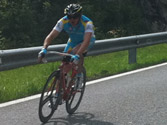
Do not overtake if it endangers or hinders cyclists.
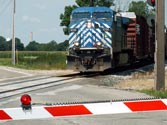
Overtaking at level crossings is strictly prohibited.
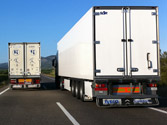
Do not overtake if visibility is blocked by another vehicle.
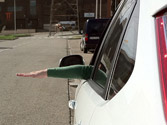
A horizontal arm signal indicates a left turn.
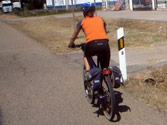
Cycles and mopeds must turn left from the right side of the road.
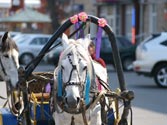
Maintain at least 1.5 meters lateral separation when overtaking animal-drawn vehicles.
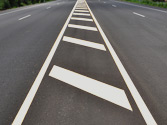
Do not stop or park on traffic-channelling islands.
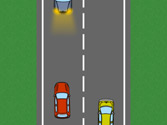
If overtaking becomes unsafe, slow down and return to your lane.
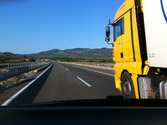
Complete overtaking by returning to your lane gradually and safely.
Reversing is allowed only as a complementary maneuver to stopping.