Chapter 8 Insights
Maneuvers · 363 insights
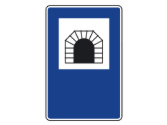
U-turns are prohibited on road sections affected by the tunnel sign.
U-turns are allowed on conventional roads where no specific prohibition applies.
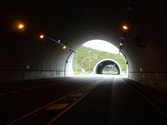
In a tunnel fire, pull right, switch off the engine, and head to the nearest exit on foot.
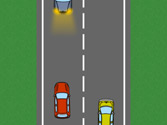
Always facilitate an overtaking vehicle, even by slowing if needed for safety.
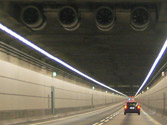
In tunnels with multiple lanes in your direction, overtaking is allowed.
Before reversing, ensure no danger exists, using a guide if visibility is poor.
Park on poorly lit through roads with sidelights on, replaceable by parking lights when in line.
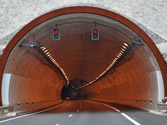
If stopped in a tunnel, switch off the engine, activate hazards, and keep sidelights on.
Acoustic signals are allowed to warn of overtaking outside built-up areas or to prevent accidents.
Before joining traffic, ensure you can do so without endangering other road users.
A vehicle that has signalled its intention to overtake first has priority to do so.
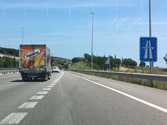
Ensure safe entry from an acceleration lane at the very start of that lane.
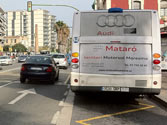
In built-up areas, give way to buses re-entering traffic from a stop, even stopping if needed.
Parking on central reservations, islands or channelling elements seriously disrupts traffic.
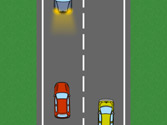
Slowing down during a dangerous overtake helps the overtaking vehicle return to its lane sooner.

The V-16 hazard light must be placed on the highest part of the immobilised vehicle.
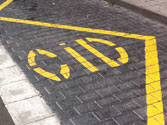
Loading and unloading zones (yellow zigzag) prohibit parking unless signs indicate permitted hours.
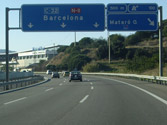
On motorways and dual carriageways, stop only in designated rest or service areas.
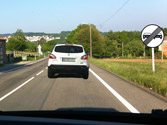
When being overtaken, move to the right edge and don't change speed to facilitate the manoeuvre.
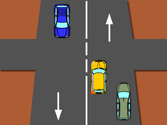
Never turn left without sufficient visibility, even if no sign prohibits it.
When reversing, stop immediately at any warning and abandon the manoeuvre if needed.
Signal a left turn by extending the left arm horizontally with palm facing down.
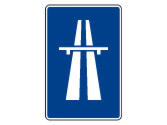
Enter a motorway at a speed that allows safe merging with existing traffic.
When parking on a slope, engage first gear uphill and reverse gear downhill.
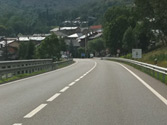
To turn left on a two-way road, position alongside the centre line without crossing it.
Always signal manoeuvres with sufficient advance notice for others to react safely.
After a blowout, brake smoothly and gradually to maintain control of the vehicle.
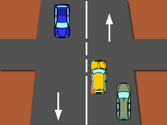
You may overtake on the right when the vehicle ahead clearly signals a left turn.
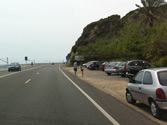
On interurban roads, stop on the right, off the carriageway and clear of the usable hard shoulder.
Parking is prohibited on pavements, promenades, and any pedestrian-designated areas.
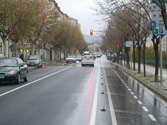
On slippery surfaces, slow down beforehand and keep the motorcycle as upright as possible.
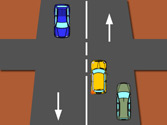
When turning left, keep close to the centre line so others can pass on your right.
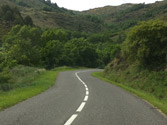
Never make a U-turn on bends or crests with limited visibility.
If stopped over two minutes in a tunnel, switch off the engine but keep parking lights on.
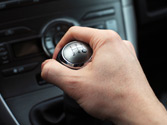
When parking on a downhill slope with a manual gearbox, engage reverse gear.
On narrow unmarked sections, the vehicle that entered first has priority.
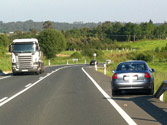
Signal a broken-down vehicle with hazard lights and the V-16 pre-warning device.
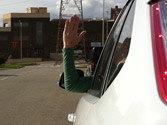
An arm extended at 90° upwards signals an intention to turn right.
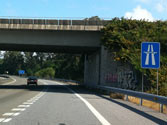
In the acceleration lane, accelerate to reach the appropriate merging speed by its end.
When exiting a garage, give way to pedestrians and proceed with extreme caution.
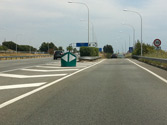
Enter the deceleration lane as soon as it begins, then progressively reduce speed.
Reversing is prohibited except briefly when you cannot move forward or change direction.
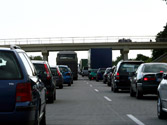
Always signal lane changes with sufficient advance warning, especially in heavy traffic.
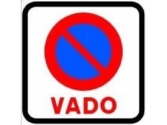
When joining a road from a building, give way to pedestrians and vehicles at low speed.
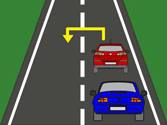
A U-turn must be completed in a single movement without using reverse gear.
Parking in the middle of the carriageway seriously obstructs traffic and is prohibited.
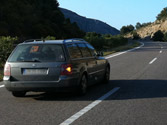
Keep direction indicators on throughout the entire duration of the manoeuvre.
Blocking dropped kerbs for disabled persons constitutes a serious traffic obstruction.
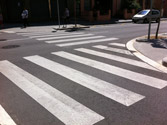
Changing direction is prohibited at pedestrian crossings and in their vicinity.
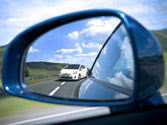
When about to be overtaken, move to the right edge to facilitate the manoeuvre.