Key Insights
2818 insights
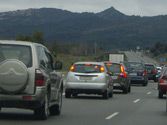
Rear-end collisions are mainly caused by failing to keep a safe following distance.
Tiredness lengthens reaction time; rest 20-30 minutes every 2 hours or 200 km.
Drowsiness lowers attention and leads drivers to accept more dangerous risks.
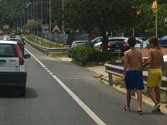
Pedestrian fatalities are most severe on conventional roads due to higher vehicle speeds.
A slack seatbelt allows the body to fly forward and strike the wheel or windscreen.
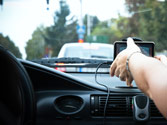
Mount the GPS where it doesn't block vision and never near an airbag.
With respiratory allergies, keep windows closed and air conditioning moderate.
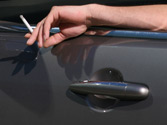
Smoking while driving distracts, occupies a hand, and reduces visibility.
Most accidents are caused by human factors and are therefore avoidable.
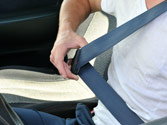
Place the lap belt over the hip bones, always below the abdomen.
On a motorcycle in heavy rain, slow down and stop to take shelter if needed.
The LDW system warns the driver of involuntary lane departure.
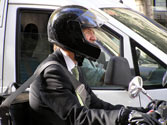
Good helmet ventilation improves comfort and safety while riding.
Untreated respiratory illness reduces a driver's attention and concentration.
Young drivers take greater risks when accompanied, due to competitive showing-off.
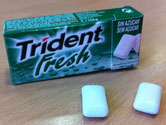
Nothing eaten, drunk, or chewed reduces blood alcohol level — only time does.
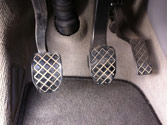
Hovering your foot over the brake in uncertain situations shortens reaction distance.
On hot days, fatigue arrives sooner — take more frequent breaks.
Driving under the influence of drugs always costs 6 points from the licence.
Insufficient rest is a key contributor to driving fatigue; stop every 2 hours.
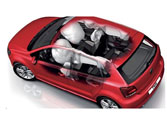
Airbags require precautions: use seatbelt, keep distance, no objects nearby.
Stress triggers driving fatigue and increases aggression, errors, and distractions.

Stimulants only delay drowsiness briefly; it returns, often more strongly.

For the same weight and amount drunk, women generally reach higher blood alcohol levels.
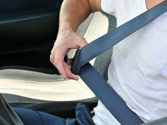
The lap belt must rest over the hard hip bones, never on the soft abdomen.
Drowsiness dangerously increases reaction time, delaying every response.
Alcohol lengthens reaction time, increasing the distance covered before reacting.
Chronic illness sufferers must consult a doctor about driving risks and medications.
Above 50 km/h in towns, the chance of a pedestrian collision being fatal jumps sharply.
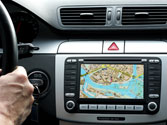
A GPS becomes dangerous when it distracts; programme it before driving.
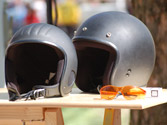
Without a visor, wear safety glasses to protect eyes from wind, dust, and insects.
Chassis and bodywork absorb crash energy to protect occupants from serious injury.
Refusing a breathalyser is a criminal offence of serious disobedience.
Alcohol is a leading cause of traffic accidents; the only safe level is 0.0.
Medications can impair driving; consult your doctor before taking them and driving.
No safety device replaces the seatbelt — they all work as complements.
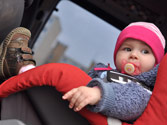
The rear centre seat is the safest position for child restraint devices.
Vulnerable groups — pedestrians, cyclists, motorcyclists, young, elderly, children — face higher accident risk.
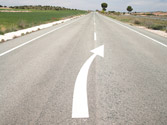
A right-pointing arrow on the road warns of an upcoming continuous line; move into the right lane immediately.

Tunnel signs require dipped headlights regardless of visibility or road lighting.
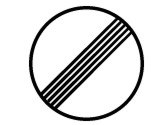
The end-of-prohibitions sign cancels all prior restrictions imposed by previous prohibition signs.
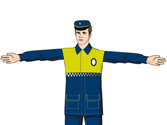
An officer with arms extended horizontally stops all users whose path crosses the line of the arms.
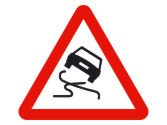
The slippery road sign warns of a potentially very slippery surface ahead, without specifying the cause.
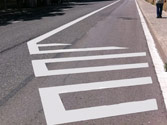
A solid white line with broken sections marks the start of a lane reserved for certain vehicles.
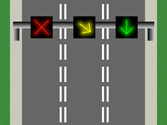
A red X above your lane means leave that lane as quickly and safely as possible.
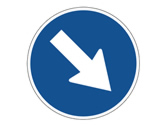
The mandatory passage sign requires you to pass the obstacle on the side the arrow indicates.
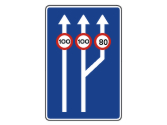
On interurban roads, always travel in the right lane unless your speed requires using a faster lane.
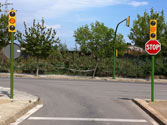
Priority order: officers, then circumstantial signs, then traffic lights, then vertical signs, then road markings.
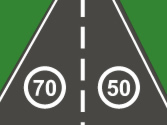
A speed limit painted within a marked lane applies only to vehicles travelling in that lane.
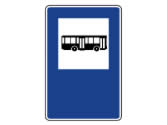
This sign reserves the marked area as a designated bus stop, not a bus lane.