Key Insights
2818 insights
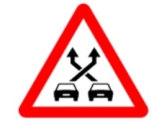
Conflicting traffic signs warn of frequent collisions from lane changes and merging movements.
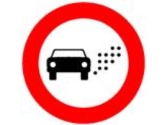
Environmental restriction signs limit access based on the vehicle's environmental badge or criteria.
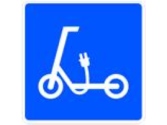
Roads reserved for personal mobility vehicles cannot be used by pedestrians.
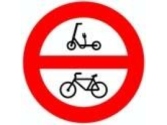
This prohibition sign blocks both bicycles and personal mobility vehicles from the road.
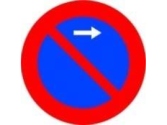
The directional no-parking sign prohibits only parking, not stopping, in the arrow's direction.
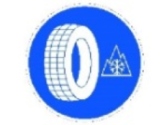
Mandatory winter tyre signs require chains or anti-skid systems to continue along the section.
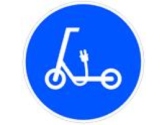
A mandatory PMV road forces personal mobility vehicles to use it and bans all other users.
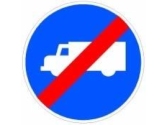
Sign R-509 marks the end of the mandatory carriageway for lorries, articulated lorries, and vans.
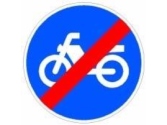
Sign R-510 marks the end of the reserved and mandatory road for mopeds.
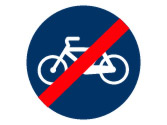
This sign marks the end of the cycle-only road; cyclists must rejoin general traffic.
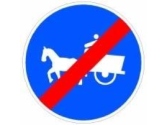
Sign R-511 marks the end of the mandatory path for animal-drawn vehicles.
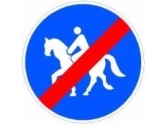
This sign ends the obligation for riding animals to use the reserved path.
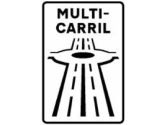
Sign S-1b marks the start of a multi-lane road with its special traffic rules.
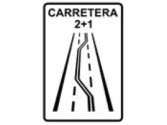
On a 2+1 road, the generic maximum speed for passenger cars is 90 km/h.
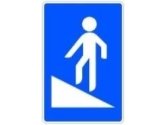
This sign indicates an overhead pedestrian crossing equipped with a ramp.
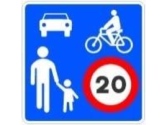
Shared zones prioritise pedestrians; vehicles travel at max 20 km/h under special rules.
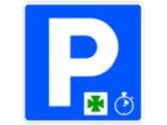
This sign authorises parking only for a specific purpose and limited time.
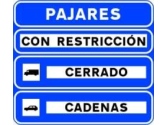
Mountain pass signs require passenger cars to carry chains or authorised anti-skid devices.
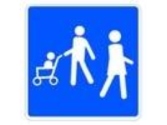
Personal mobility vehicles cannot enter pedestrian-only zones unless specifically permitted.
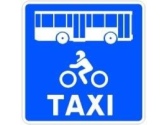
Reserved lanes showing a motorcycle pictogram permit motorcycles to circulate in them.
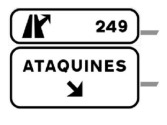
White immediate-exit signs on motorways indicate the exit leads to a conventional or multi-lane road.
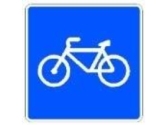
A road reserved exclusively for cycles prohibits all other types of vehicles.
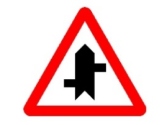
On a section with direct accesses, vehicles on the main road have priority over those entering.
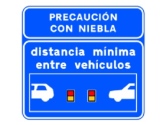
In frequent-fog stretches, keep the indicated number of luminous beacons between vehicles.
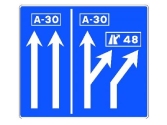
Lane direction signs at junctions show the only permitted directions and through road for each lane.
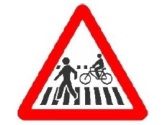
This sign warns of an attached or shared pedestrian and cyclist crossing ahead.
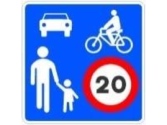
In coexistence zones, vehicles may park only in places specifically signed or marked.
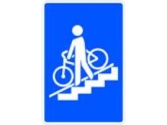
This sign indicates a pedestrian underpass with a rail or ramp for cyclists.
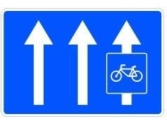
Sign S-65a reserves the marked lane exclusively for cycles, prohibiting all other vehicles.
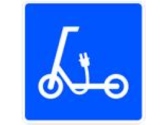
Roads reserved exclusively for PMVs cannot be used by cycles.
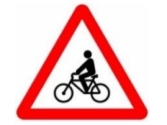
This sign warns of a stretch with frequent cyclist traffic, requiring caution and safe overtaking.
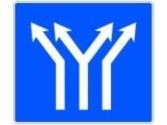
Sign S-63b indicates the central lane splits, creating two lanes to the left and two to the right.
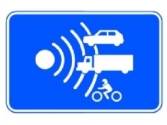
This sign warns of speed control devices on motorways or dual carriageways.
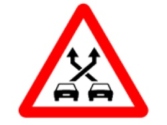
At conflicting traffic sections, exercise extreme caution and anticipate lane-change manoeuvres.
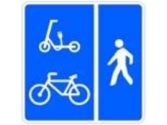
This sign indicates a road shared by cycles, PMVs and pedestrians with separate spaces for each.
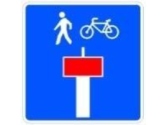
This sign indicates a dead-end road with exit only for pedestrians or cyclists.
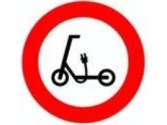
Electric scooter users must stop and not enter when facing a PMV access prohibition sign.
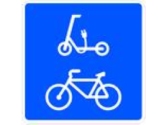
This sign reserves the road exclusively for cycles and PMVs, prohibiting all other vehicles.
Children's shorter stature limits their visual field, focusing their vision closer and missing distant information.
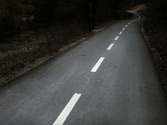
Night Vision Assistant uses infrared to detect pedestrians or animals beyond headlight range, highlighting them on screen.

The economic cost of traffic accidents affects all of society, paid directly or indirectly by everyone.
Licence seniority is counted from the first licence obtained, so the 0.3 g/l limit applies for two years total.
Children under 1.35 m must travel in the rear seat using an approved restraint device suited to their size.
Proper ventilation and a comfortable cabin temperature help delay the onset of fatigue while driving.
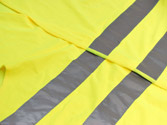
Drivers must wear a reflective vest on interurban roads whenever occupying the carriageway or hard shoulder, day or night.
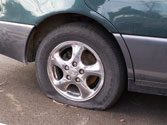
After a tyre blowout, reduce speed gradually; sharp braking destabilises the vehicle and risks loss of control.
Airbags and headrests only function effectively when combined with a properly fastened seatbelt.
Alcohol reduces the visual field, causing the tunnel effect where only the centre of the road is seen clearly.
Novice drivers tire more easily because lack of experience makes driving more mentally and physically demanding.
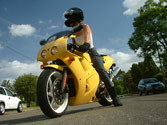
Motorcycles, with or without sidecar, must have one or two low-beam headlights at the front.