Key Insights
2818 insights
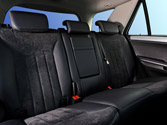
Passive safety systems—seatbelts, airbags, headrests, helmets—reduce injuries once an accident occurs.
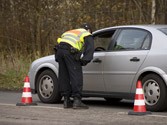
You may be given two breathalyser tests, with at least 10 minutes between them.
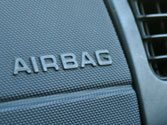
An airbag without a seatbelt can cause serious injury; always use both together.

Depression increases irritability and anxiety, leading to disproportionate reactions while driving.
Avoid smoking while driving as it causes distractions and reduces attention.
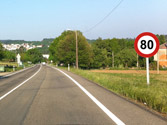
Speed limits depend on road layout and the traffic it must handle.
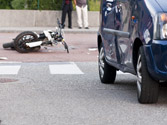
Traffic accidents are the leading cause of death among young people aged 15 to 29.
Alcohol creates a false sense of confidence, leading drivers to accept greater risks.
Accident risk rises with any alcohol intake, even before reaching the legal limit; only 0.0 is safe.
Depression causes insecurity and uncertain decision-making at the wheel.
Rear Cross Traffic Alert warns of vehicles approaching sideways while reversing out of a parking space.
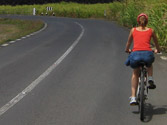
Wind and rain can make cyclists fall, so give them extra space and caution.
A reversing camera provides a real-time view of the area behind the vehicle.
Reading or consulting maps while driving is a dangerous distraction that must be avoided.

Alcohol's effects vary with body build, age, sex, and drinking habits.
Safe driving depends on both the driver's behaviour and the vehicle's good condition.
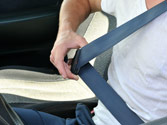
The chest strap must pass over the collarbone and run down the centre of the chest.
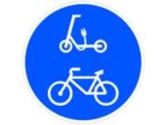
A blue circular sign with a bicycle reserves the road for cycles and PMVs only.
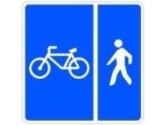
A divided cycle-pedestrian sign means each user has a separate reserved space.
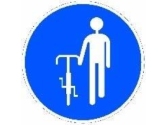
Sign R-422 obliges cyclists to dismount and continue on foot.
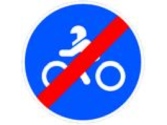
Sign R-508 marks the end of the mandatory lane for two-wheeled motorcycles and assimilated trikes.
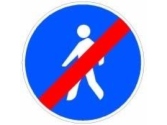
Sign R-513 marks the end of the reserved and mandatory pedestrian path.
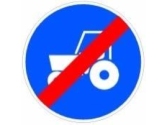
Sign R-514 marks the end of the compulsory road for tractors.
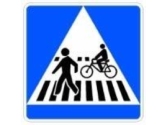
A combined pedestrian-cyclist crossing sign marks where both may cross, often with separated spaces.
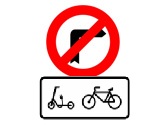
A sub-panel with vehicle pictograms restricts the main sign's prohibition to those vehicles only.
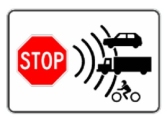
This sign warns of an automatic STOP-compliance enforcement device at the intersection.
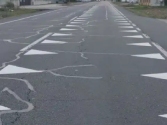
A through-road sign demands reduced speed and extra caution due to vulnerable users.
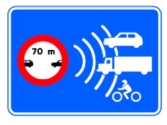
This sign warns of a minimum following-distance control on a motorway or dual carriageway.
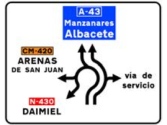
Roundabout pre-signalling shows each exit's direction and the correct lane to use.
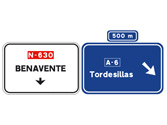
Advance exit signs with distance adopt the destination road's colour when exiting to a higher-category road.
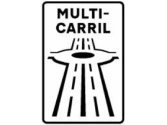
On multi-lane roads, cars may overtake at a maximum of 90 km/h.
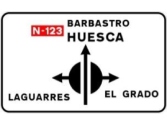
A split-roundabout sign means the main carriageway continues without losing priority.
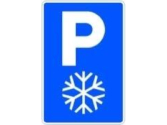
This sign marks an emergency parking area mainly for snowfall and exceptional incidents.
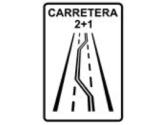
Sign S-1c marks a 2+1 road where the central lane alternates for overtaking.
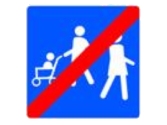
This sign marks the end of a pedestrian-reserved zone, restoring normal traffic rules.
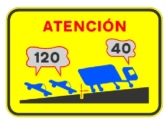
This sign warns of rear-end collision risk where lorries climb slowly on motorway gradients.
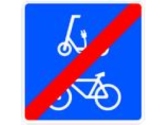
This sign marks the end of a road exclusive to cycles and personal mobility vehicles.
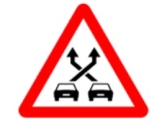
This sign warns of weaving zones where on-ramps and off-ramps are close together.
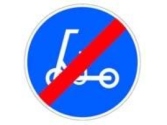
After this sign, PMVs no longer have to use the reserved lane.
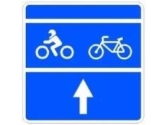
This sign marks an advanced waiting area at traffic lights for motorcycles, mopeds and cycles.
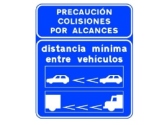
Inside tunnels, keep the number of chevron markings indicated as your safety distance.
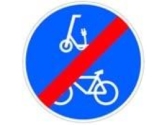
After this sign, cycles and PMVs no longer need to use the reserved lane.
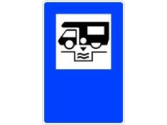
This sign marks a wastewater disposal point for caravans and motorhomes.
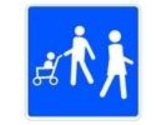
This sign designates an area reserved exclusively for pedestrian use.
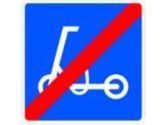
This sign marks the end of a road exclusively for personal mobility vehicles.
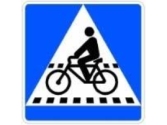
This sign marks a crossing reserved exclusively for cyclists.
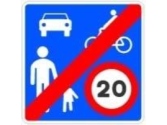
After leaving a coexistence zone, the urban limit of 50 km/h applies on two-lane same-direction roads.
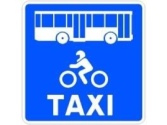
A reserved-lane sign permits only the vehicles shown in its pictogram.
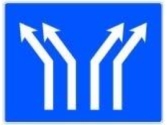
Sign S-63a warns of a four-lane fork: two lanes go left, two go right.
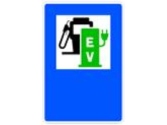
This sign indicates a service station offering both conventional fuel and electric charging.