Chapter 9 Insights
Lighting · 139 insights
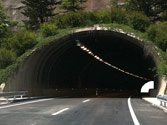
Use at least low beam headlights to drive through tunnels.
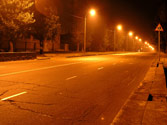
Use hazard lights and position lights if immobilized in a built-up area.
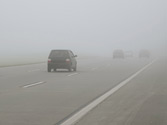
In daytime fog without front fog lights, use position lights with low beam.
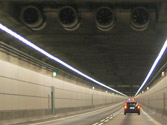
In a traffic jam under an overpass, keep position and emergency lights on.
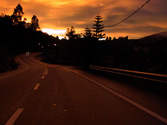
Use position and dipped beam lights between sunset and sunrise.
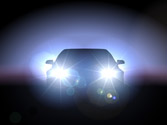
If dazzled by oncoming lights, reduce speed and avoid looking directly at them.
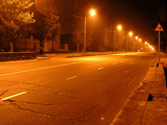
At night on insufficiently lit roads, use position lights with low beam.
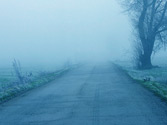
The rear fog light is mandatory in dense fog during the day.
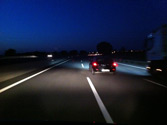
On insufficiently lit roads outside built-up areas, use low-beam headlights.
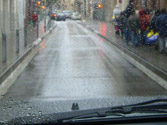
In fog, rain, snow or any reduced visibility, dipped (low-beam) headlights are mandatory.
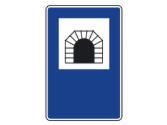
If stopped in a tunnel by traffic, keep position lights on and activate hazard warning lights.
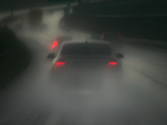
Rear fog lights are mandatory in very heavy rain, thick fog, heavy snow or dense smoke/dust.
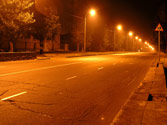
On urban roads and travesías, always use position lights with dipped headlights — never high beams.
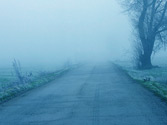
Front fog lights are always optional; only rear fog lights are mandatory in adverse conditions.
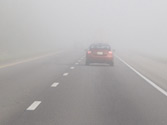
High beams are permitted in fog outside built-up areas, but dipped lights are far more advisable.
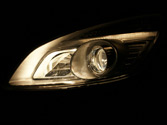
Use high-beam headlights only outside built-up areas on insufficiently lit roads without dazzling others.
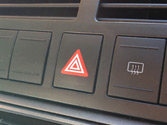
Use hazard lights whenever driving below the minimum speed risks a rear-end collision.
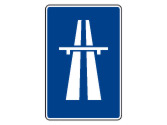
At 40 km/h or less on unlit roads, dipped or high beams are both valid if not dazzling.
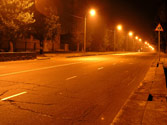
On a sufficiently lit urban road at night, no lights are needed when parked.
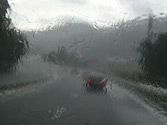
In very heavy rain, rear fog lights are mandatory and front fog lights are optional.
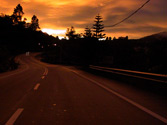
Position lights alone are never enough — always pair them with at least dipped headlights.
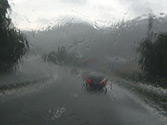
Rear fog lights are compulsory in very heavy rain, thick fog, heavy snow or dense smoke/dust.
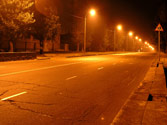
On any urban road at night, lit or not, use position lights with dipped headlights.
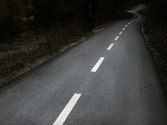
At 40 km/h or less, dipped headlights are sufficient even on insufficiently lit interurban roads.
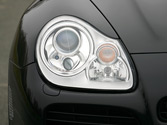
Position lights are white at the front, red at the rear, and amber on optional sides.
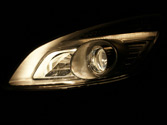
High beams are appropriate on insufficiently illuminated interurban roads when not dazzling others.
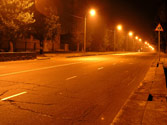
On urban roads, always drive with dipped headlights — high beams are forbidden in built-up areas.
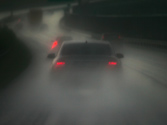
In very heavy rain, the rear fog light is mandatory while the front one remains optional.
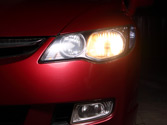
Below 40 km/h on unlit interurban roads, dipped headlights are sufficient and legal.
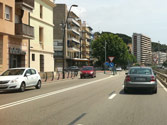
On urban through-roads (travesías), always use dipped headlights regardless of street lighting.

The V-16 hazard pre-warning device is used together with hazard lights, plus position lights at night.
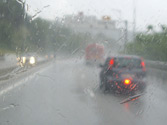
High beams are allowed in heavy rain outside towns, but generally inadvisable due to glare.
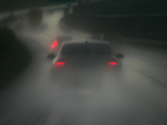
Rear fog lights must be on in very heavy rain, thick fog, heavy snow or dense smoke.
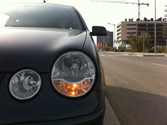
Even dipped headlights can dazzle other drivers if they are poorly adjusted.
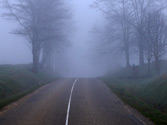
High beams are allowed in fog outside built-up areas only when there is no risk of dazzling.
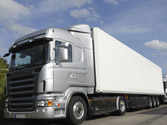
Clearance lights mark the total width of the vehicle and are mandatory above 2.10 m wide.
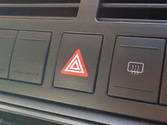
Hazard lights may be used while moving if driving abnormally slowly with risk of being rear-ended.
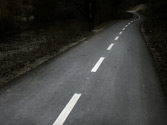
Below 40 km/h on unlit interurban roads, either dipped or high beams may be used.
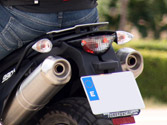
The number plate light must switch on simultaneously with the position lights.