Key Insights
2818 insights
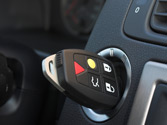
AEBS activates on driver inattention with risk of a rear-end collision.
The field of vision narrows as speed increases, producing the tunnel effect.
Depression increases distractions and reduces attention while driving.
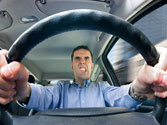
Avoid driving when stressed, as it makes behaviour reckless and dangerous.
Drug abusers face a significantly higher probability of having an accident.
LSD's effects on driving can persist for 10 to 12 hours after consumption.
Some medications can negatively affect a driver's behaviour and ability.
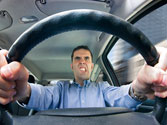
Stress makes drivers more hostile and aggressive towards other road users.
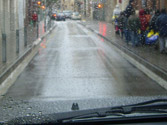
Rain reduces tyre grip, demanding lower speed and greater safety distance.
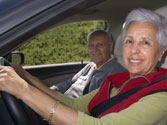
Elderly people face greater traffic risk because of declining vision and hearing.
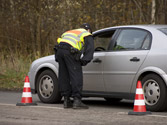
An immobilised vehicle can be driven again only when alcohol drops to the permitted level.
Even natural medicines can have negative effects on driving in some cases.
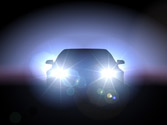
LED technology prevents glare by selectively dimming light directed at other road users.
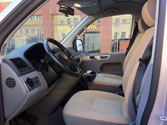
A towel on the seat can cause the submarining effect and compromise the seatbelt.
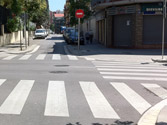
Always respect pedestrians' right of way to avoid running them over.
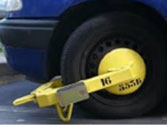
After a positive breath test, the vehicle is immobilised unless another authorised driver takes over.
Hanging up and putting away the mobile phone are especially dangerous distraction moments.
Signal any lateral movement, reversing, stopping, or slowing down to warn other road users in advance.
Never park on the pavement — it forces pedestrians onto the carriageway and into danger.
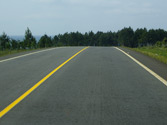
Never overtake or change direction on bends or crests with limited visibility.
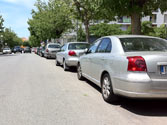
When stopped on the right, enter and exit from the left side quickly and cautiously, watching for cyclists.
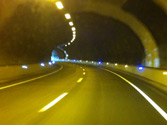
Overtaking in tunnels is only allowed when there are multiple lanes in your direction.
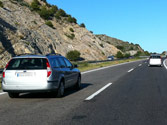
Overtaking on the right is allowed in built-up areas with two or more marked lanes per direction.
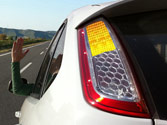
Arm signals always prevail over light signals in case of contradiction, since lights may fail.
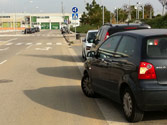
Before joining traffic, ensure you can do so safely and yield to all other road users.
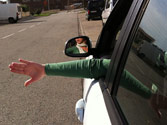
An extended left arm with palm facing backwards signals reversing.
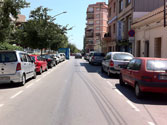
Parking parallel to the kerb is the rule, but other positions are allowed when conditions require it.
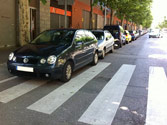
Stopping and parking are forbidden on pedestrian crossings.
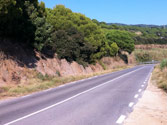
On interurban roads, always stop or park off the carriageway and clear of the passable hard shoulder, on the right.
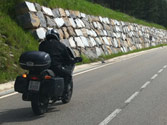
Motorcyclists must remember they can go unnoticed by others, especially at higher speeds.
U-turns on motorways and dual carriageways are forbidden except where specifically designated.
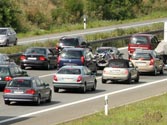
Faster movement in a lane during congested traffic is not considered overtaking.
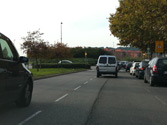
When changing lanes, yield to vehicles already travelling in the lane you wish to enter.
Reverse only with the utmost caution and stop immediately if a person, vehicle, or animal appears.
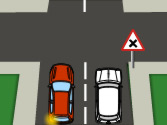
Overtaking at intersections is forbidden unless your road has clearly established priority.
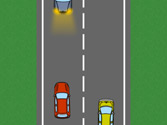
If danger arises during overtaking, slow down, signal right, and return to your lane.
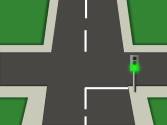
U-turns are permitted at intersections where you have clear priority, such as a green light.
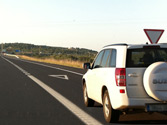
Help vehicles merging from acceleration lanes by changing lanes or slightly reducing speed when possible.
When yielding, never force priority vehicles to brake or swerve abruptly.
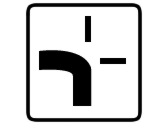
On priority road signs, the thick line shows which branch keeps priority.
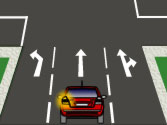
To turn left, position your vehicle in the leftmost lane beforehand.
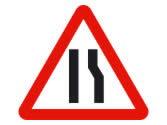
A road-narrowing sign with a metre panel shows the width of the narrowing.
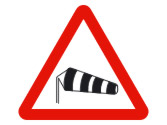
A windsock sign warns of frequent strong crosswinds ahead.
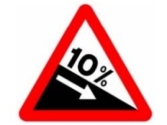
A descending percentage sign warns of a steep downhill gradient.
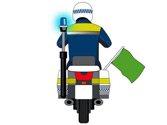
A green flag means the road is reopened to traffic from where the vehicle has passed.
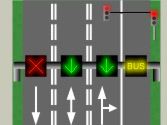
A green lane arrow never overrides a red circular light — you must still stop.
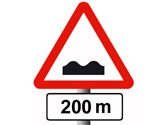
A panel under a danger sign shows the distance to where the hazard begins.
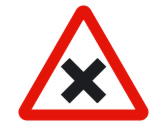
At unsignalled intersections, vehicles approaching from your right have priority.
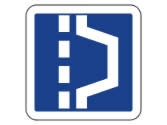
This sign marks a lay-by for emergency stopping to clear the road.
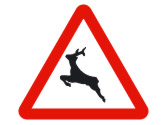
This sign warns that free-roaming animals may cross the road frequently.