Key Insights
2818 insights
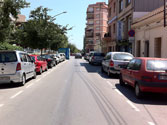
Reversing is permitted as a complementary manoeuvre for stopping, within strict limits.
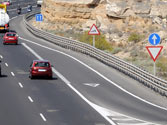
If you must give way on an acceleration lane, stop at the beginning of that lane.
Reversing into a road junction is prohibited when stopping, parking or merging.
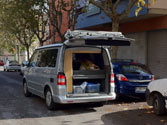
Double parking is always prohibited; only brief stopping may be allowed under conditions.
When unable to advance or turn, reverse only the minimum indispensable distance.
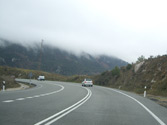
Overtaking on blind bends is allowed only if directions are clearly separated and uncrossed.
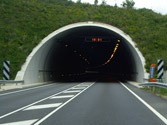
In single-lane tunnels, keep at least 100 metres or 4 seconds from the vehicle ahead.
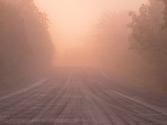
Never turn left at an intersection without sufficient visibility, even if signage permits.
You may pass an obstacle by using the adjacent lane if it is unoccupied and safe.
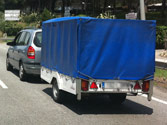
Vehicles with trailers on steep slopes require chocks or wheels turned against the kerb.
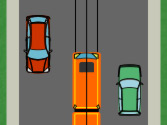
Trams travelling along the centre of the road must always be overtaken on the right.
Reversing is completely prohibited on motorways and dual carriageways.
Parking at intersections is prohibited when it prevents other vehicles from turning.
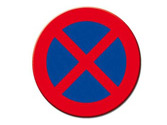
Stopping is always prohibited where it creates risk or obstruction to traffic.
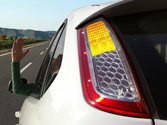
Manoeuvres should be signalled preferably using the vehicle's light indicators.
Keep the indicator light on until the turning or lateral manoeuvre is fully completed.
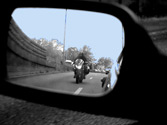
Outside built-up areas, leave at least 1.50 metres lateral clearance when overtaking.
Drug testing at checkpoints is allowed under the same conditions as alcohol testing.
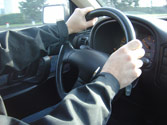
Steering is an active safety system because it helps prevent accidents from happening.
A helmet only protects you when its retention strap is properly fastened.
Reversing causes many pedestrian knockdowns, so always check carefully before backing up.
Stopping distance varies with the condition of the vehicle, driver, and road.
Reduce accident risk by avoiding the human risk factors that depend on you.
Nothing—not water, coffee, nor smoking—lowers blood alcohol; only time does.
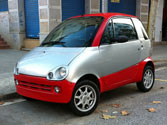
Light quadricycles with safety structure and seatbelts noted on the ITV card don't require helmets.
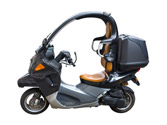
If your motorcycle has a fitted seatbelt, you must wear it on all roads.
Hands-free devices are permitted, but handheld mobile phones are prohibited while driving.
Mobile phone use is dangerous because it reduces the attention needed to drive safely.
Alcohol affects people differently based on weight, sex, and psychophysical state.
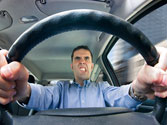
Stress makes driving more reckless by increasing aggressiveness and risk acceptance.
Increase the safety distance in fog to allow more reaction time to braking ahead.
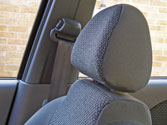
Headrests must be properly adjusted in both front and rear seats to prevent neck injuries.
Older drivers struggle most in situations that demand a quick response.
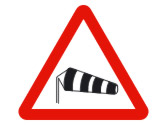
Counter crosswinds by gripping firmly and steering into the wind direction.
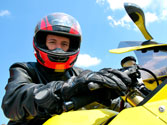
A motorcycle suit must resist impacts and abrasion to protect you in a fall.
Drowsiness can hit even well-rested drivers in early morning and after lunch hours.
Forward Collision Warning alerts the driver when the safety distance becomes inadequate.
The seatbelt is mandatory on every journey, no matter how short.
Traffic sign recognition uses a camera or sensor near the interior rearview mirror.
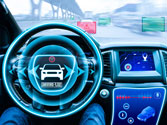
ADAS systems notably improve the vehicle's active safety by helping prevent accidents.
Vulnerable groups are population groups most prone to being involved in accidents.
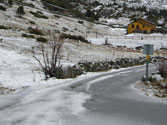
Without ABS on ice, avoid braking to prevent wheel lock and loss of control.
Fatigue causes muscle stiffness because the muscles cannot fully relax.
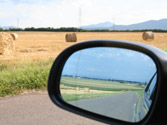
Blind Spot Information only warns; the driver always retains full control of the vehicle.
ABS stands for Anti-lock Braking System, preventing wheel lock during hard braking.
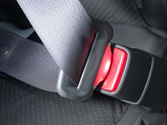
Seatbelts are compulsory in cars except for the driver when reversing or parking.
Alcohol can cause tunnel vision and other serious vision alterations.
Bad weather promotes fatigue, so rest breaks should be more frequent.
Psychotropic medications can seriously impair the ability to drive safely.
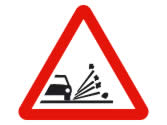
Increase the distance from vehicles ahead when there is gravel to protect your windscreen.