Chapter 9 Insights
Lighting · 139 insights
If dazzled by glare, look to the right edge and reduce speed, stopping if necessary.
Lights must be on during the day inside tunnels, underpasses, and sections marked with the tunnel sign.
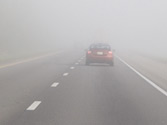
The rear fog light is mandatory in conditions that severely reduce visibility, to make your vehicle visible from behind.
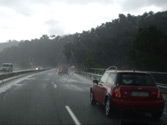
Heavy rain significantly reduces visibility, so using the lighting system is mandatory.
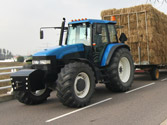
Special vehicles must use the amber rotating light when travelling at 40 km/h or less on public roads.
Low-beam headlights are mandatory by day on reversible lanes, hard shoulders, and contraflow lanes.
The rear fog light is only mandatory in VERY heavy rain, not in ordinary heavy rain.
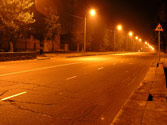
Parked vehicles need no lights when the urban road is sufficiently lit for others to see them.
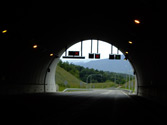
In an insufficiently lit tunnel, use position lights together with low-beam headlights.
When in doubt about lighting, switch on the dipped headlights to be more visible.
Adaptive lighting that follows the curve of the road is permitted on any vehicle.
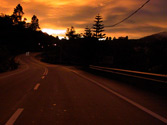
A vehicle immobilised on the hard shoulder at night must keep its sidelights (position lights) on.
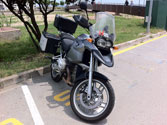
Motorcycles may optionally fit both front and rear fog lights, but neither is mandatory.
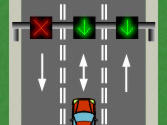
Dipped headlights must always be on when driving in a reversible lane, day or night.
Switch from high beam to low beam whenever you might dazzle anyone, including pedestrians.
When driving with only low beams, adjust speed so you can stop within the illuminated area.
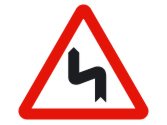
Front fog lights are permitted on narrow, bendy roads marked with the dangerous bends sign.
Whenever visibility is significantly reduced, using the appropriate lighting system is mandatory.
Switch high beams to low beams as soon as you might dazzle any road user.
Below 40 km/h, low-beam headlights are allowed on insufficiently lit roads, with high beams optional when not dazzling.
Motorcycles must keep dipped headlights on at all times on any road.
On insufficiently lit through-roads, use sidelights together with dipped headlights.
Front fog lights are not mandatory; sidelights and dipped headlights suffice if the vehicle has no fog lights.
Priority vehicles on emergency calls must use both flashing lights and audible signals simultaneously.
High-beam headlights are completely prohibited within built-up areas.
Use the parking light when parking on insufficiently lit through-roads at night or in low visibility.
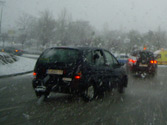
In light snowfall, only the front fog lights are appropriate; rear fog lights require heavy snowfall.
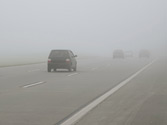
The rear fog light is mandatory in dense fog, very heavy rain, heavy snowfall, or dense smoke or dust.
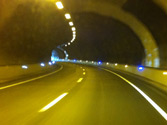
In sufficiently lit tunnels, use position lights together with dipped (low-beam) headlights.
Switching on the rear fog light in very heavy rain is correct and mandatory.
The lighting system serves both to see the road and to be seen by other drivers.
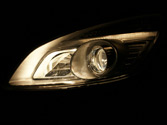
Replace high beams with low beams whenever there's any possibility of dazzling other road users.
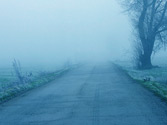
In thick fog, combining low beams with fog lights is correct.
Sidelights indicate the vehicle's position on the carriageway and its width.
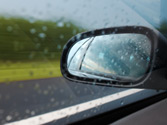
Fog lights are not permitted in light rain; they require conditions of significantly reduced visibility.
Vehicle lights must be checked frequently to ensure proper adjustment, operation, and condition.
High beams are prohibited whenever they could dazzle other road users.
High beams must be used at over 40 km/h on insufficiently lit interurban roads when not dazzling others.
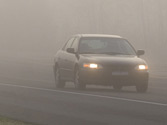
Only the rear fog light is mandatory in dense fog; the front one remains optional.
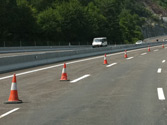
By day, dipped headlights are mandatory in lanes adjacent to contraflow lanes.
In built-up areas, brief alternating flashes of high beam are allowed to prevent accidents.
On sufficiently lit through-roads at night, use sidelights together with dipped headlights.
Clearance lights are mandatory for vehicles wider than 2.10 metres.
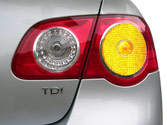
The right indicator signals any lateral movement to the right, including lane changes and stops.
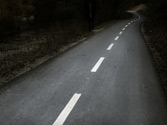
On insufficiently lit interurban roads, switch to dipped headlights whenever you might dazzle others.
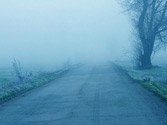
In heavy fog, use fog lights together with the dipped headlights.
Position lights alone are never enough; they must always be combined with another driving light.
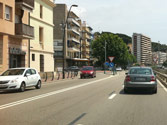
Fog lights may not be used on through-roads under normal visibility conditions.
All motorcycles, with or without sidecar, may optionally be fitted with a front fog light.
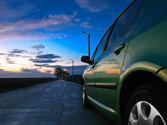
After sunset, even still in daylight, switch on the dipped (low-beam) headlights.