Chapter 5 Insights
The road · 143 insights
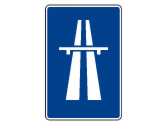
Towing a broken-down vehicle on a motorway must be done by a tow truck, not a passenger car.
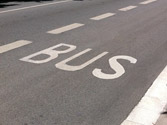
Stopping in a bus lane is never permitted.
Driving on the hard shoulder to reach an exit in heavy traffic is prohibited.
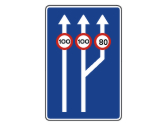
Car-trailer combinations under 7 metres normally use the right lane but may use any of three lanes.
Mopeds may ride two abreast on a wide passable hard shoulder, never encroaching on the carriageway.
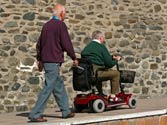
Reduced-mobility vehicles must use the hard shoulder when no road is specially designated for them.
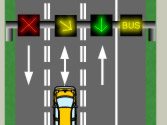
Reversible lanes are marked by double broken lines on each side.
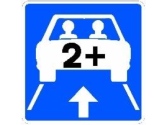
Cars towing trailers cannot use the HOV lane.
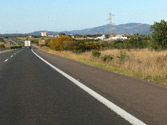
The carriageway is the part of the road dedicated to vehicle traffic.
Breakdown forcing abnormally reduced speed on motorway: leave at the first available exit.
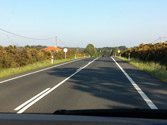
Mopeds must travel on the hard shoulder when passable and sufficient.
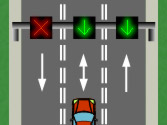
Vehicles in a reversible lane must never cross into the lane on its left.
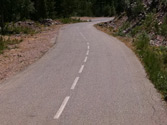
On lanes narrower than 3 metres you may cross broken longitudinal markings when necessary and safe.
On a one-way carriageway with a central island, you may pass on either side.
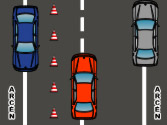
On hard shoulders and additional lanes, drive with at least dipped headlights on, day or night.
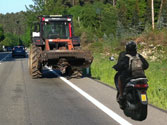
Vehicles on the hard shoulder may overtake only if travelling abreast lasts under 15 seconds or 200 metres.
Motorways and dual carriageways are generally safer than conventional roads, though crashes are more severe.
Mopeds are forbidden from travelling on dual carriageways.
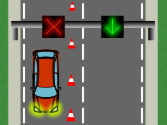
On a contraflow lane you cannot move into the normal-direction lane, not even to overtake.
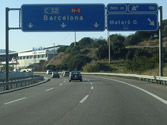
On multi-lane motorways, normally drive in the right-hand lane.
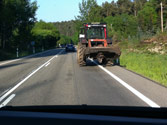
Tractors under 3,500 kg MAM must travel on the right-hand hard shoulder when passable.
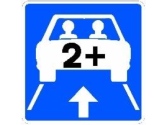
Motorcycles and private cars may use the HOV lane.
Reversing is prohibited on motorways and dual carriageways.
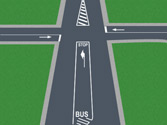
On two-way roads with a central refuge, traffic must pass to the right of it.
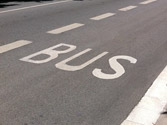
You can never stop in a bus lane.
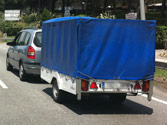
Lanes opened due to roadworks may be used by all authorised vehicles, including car-trailer combinations.
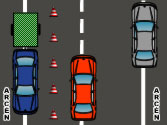
All vehicles authorised on the road may use an additional lane, with at least dipped headlights on.
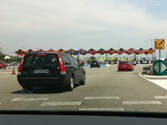
Picking up hitchhikers is prohibited even at motorway toll plazas.
Cyclists over 14 may ride on dual carriageway hard shoulders unless signposted otherwise.
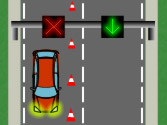
Motorcycles are allowed in lanes opened in the opposite direction to the usual one.
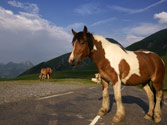
Animals must travel as close as possible to the right-hand edge of the road.
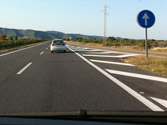
Mopeds may cross hatched zones because they're required to travel on the hard shoulder.
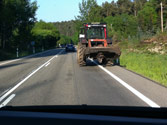
Tractors under 3,500 kg MAM correctly travel on the hard shoulder when one is available.
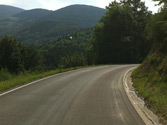
On interurban roads without a pedestrian zone, pedestrians walk on their left.
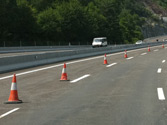
When a contraflow lane is opened for roadworks, car-trailer combinations may use it unless prohibited.
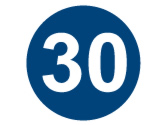
If you can't reach minimum speed with rear-end risk, activate hazard warning lights.
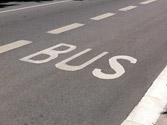
On a bus-lane section with broken lines, cars may cross only for manoeuvres other than stopping, parking, changing direction or overtaking.
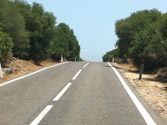
On crests with limited visibility, leave the opposite half of the carriageway completely clear.
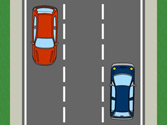
On three-lane two-way roads, use the central lane only to overtake or turn left.
Reduced-mobility vehicles must travel on the right-hand hard shoulder when no special road exists for them.
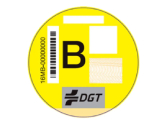
Passenger cars with B environmental label may use HOV lanes with one occupant.
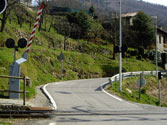
Stop at level crossings if barriers are moving or traffic lights prohibit passage.
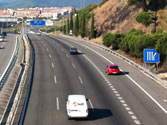
Use deceleration lanes to safely reduce speed when exiting a motorway.
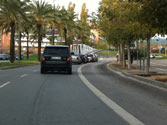
On a two-way road, always drive on the right side of traffic islands.
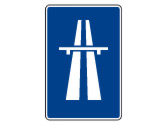
Only vehicles able to reach 60 km/h may drive on motorways.
Mixed-use vehicles with a disabled sign can use HOV lanes even with one occupant.
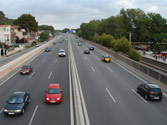
Use left lanes only when right lanes are occupied and do not obstruct following vehicles.
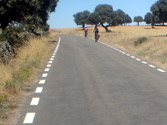
Mopeds must travel on the roadway, as close as possible to the right edge.
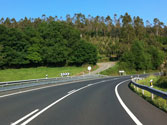
Mopeds should travel on the right shoulder if available; otherwise, use the roadway.
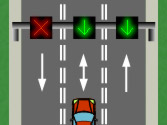
A lane with double broken markings is reversible, regulated by traffic lights.