A lane delimited by double broken longitudinal markings is a... lane
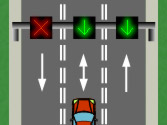
A)reversible.Correct
B)additional traffic.
C)used in the opposite direction to the usual one.
A reversible lane is characterised by the presence of double broken longitudinal markings on both sides of the lane. It is a lane that is regulated by traffic lights and can be used in one direction or the other depending on how it is determined. It can be used by all vehicles that can travel on that roadway, and they must keep the dipped beam on regardless of visibility conditions.
- Circumstantial additional lane:
On roadways with two-way traffic and shoulders, when the width of the platform allows, an additional lane of traffic may be enabled in one of the directions of travel by using provisional signalling and beaconing elements that modify the area of vehicle travel in the centre of the roadway.
The enabling of this additional lane of traffic shall mean, through the use of both shoulders, having two lanes in one direction of travel and one in the other.
Vehicles travelling on the shoulders and on this additional lane shall do so at a maximum speed of 80 kilometres per hour and a minimum of 60, or less if so established or signposted, and must use, at least, the short-range or dipped beam lighting.
- Lane in opposite direction to the usual one:
When the roadways have more than one lane of traffic in each direction of travel, the authority in charge of traffic regulation may enable lanes for use in the opposite direction to the usual one. They will be duly signposted, normally, with cones or similar devices, which prohibit passage through the real or imaginary line that joins them. Drivers shall take special care to avoid altering these beaconing elements.
The use of these lanes is limited to motorcycles and passenger cars without trailers, unless this lane is enabled for carrying out work on the roadway, in which case all types of vehicles authorised to travel on the road under works may travel, except by express prohibition.
The dipped beam must be on and with speed limitation, minimum 60 km/h and maximum 80 km/h, unless other signage exists.
- Circumstantial additional lane:
On roadways with two-way traffic and shoulders, when the width of the platform allows, an additional lane of traffic may be enabled in one of the directions of travel by using provisional signalling and beaconing elements that modify the area of vehicle travel in the centre of the roadway.
The enabling of this additional lane of traffic shall mean, through the use of both shoulders, having two lanes in one direction of travel and one in the other.
Vehicles travelling on the shoulders and on this additional lane shall do so at a maximum speed of 80 kilometres per hour and a minimum of 60, or less if so established or signposted, and must use, at least, the short-range or dipped beam lighting.
- Lane in opposite direction to the usual one:
When the roadways have more than one lane of traffic in each direction of travel, the authority in charge of traffic regulation may enable lanes for use in the opposite direction to the usual one. They will be duly signposted, normally, with cones or similar devices, which prohibit passage through the real or imaginary line that joins them. Drivers shall take special care to avoid altering these beaconing elements.
The use of these lanes is limited to motorcycles and passenger cars without trailers, unless this lane is enabled for carrying out work on the roadway, in which case all types of vehicles authorised to travel on the road under works may travel, except by express prohibition.
The dipped beam must be on and with speed limitation, minimum 60 km/h and maximum 80 km/h, unless other signage exists.