Chapter Preview
1. Adhesion
The grip of the tyre with the road. The best adhesion occurs on a rough and dry road surface. In rain and/or ice, adhesion is reduced.
2. Tyres/tires
Parts of a tyre
1. Pneumatic part: formed by the cover, air and tube (if it has one).
2. Metallic part: rim
Types of tyres:
With tube: | Without tube (tubeless): |
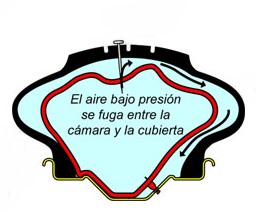 | 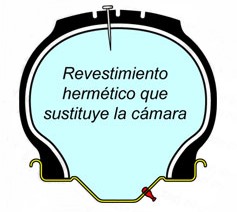 |
Air under pressure leaks between the inner tube and the tyre | Airtight coating that replaces the inner tube |
When a tyre must be changed, you should try make them all of equal width, size and tread. If you decide to mix tyres, at least use the same ones on the same axle (front or rear).
It is RECOMMENDED to replace a tyre when the tread depth is less than 2 millimetres. When the depth is 1.6 millimetres or every 5 years, it is MANDATORY to change the tyre.
In the picture we can see, how to check tyre wear with a coin.
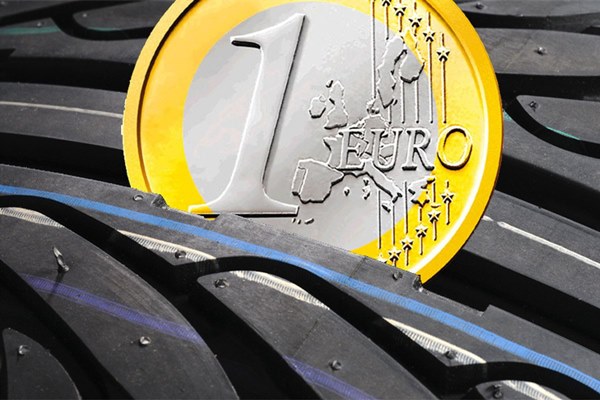
Keep in mind that wider tyres consume more fuel and have higher adhesion with the road.
Tyre pressure should be checked with cold tyres and the manufacturer’s recommended pressure for either winter or summer must be followed.
You may not install tyres with a speed symbol below the manufacturer’s recommendation.
Spare wheels must have pressure higher than the recommended by the manufacturer. When driving with a spare wheel, it is required to:
Travel at a maximum of 80km/h
Maximum of 200km
Its purpose is to help the vehicle reach the nearest workshop to repair the tyre or replace it with a new one
Less air in the tyre (underinflated) | More air in the tyre (overinflated) |
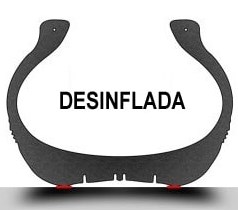 | 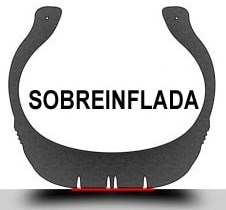 |
Wears down on the sides | Wears down more in the center |
If a wheel is unbalanced (due to blows or bumps), go to the workshop.
In case of a puncture, despite changing the wheel, you should go to the nearest workshop.
In case of a tyre blowout, hold the steering wheel tightly, slowly release the accelerator and apply the brakes.
3. Brakes
Lack of brake maintenance is the main reason why cars do not pass the ITV/MOT.
Braking systems:
Service brake: located on a pedal, it is operated with the foot and brakes all wheels
Parking brake: the hand brake, used for parking, normally brakes the rear wheels
Emergency brake: automatic, only acts if the normal brake (service) malfunctions
Types of brakes:
Disc: uses friction pads
Drum: uses friction shoes
Disc brakes are better, since they cool and dry better when uncovered.
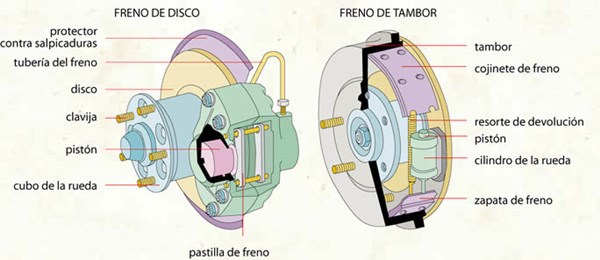
Maintenance: Check the brake fluid and replace it when indicated by the manufacturer. The liquid neither heats or consumes.
If you step on the brake and notice it feels light and spongy, this indicates there is air in the brake fluid pipes.
If when you step on the pedal, it brakes, but you have to go almost to the bottom, it means that the brake fluid level is low.
The brake servo makes the brakes smoother.
The ABS prevents wheel locking when braking, which prevents the wheels from skidding, so they don’t lose adhesion. In case of emergency braking with ABS, a constant and regular pressure is applied until the vehicle has stopped.
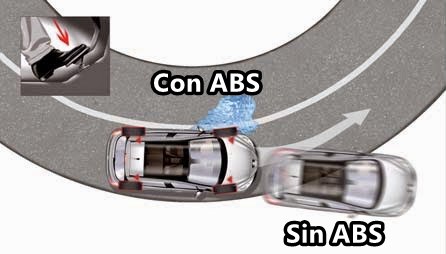
In case of skidding:
Skidding front axle: corrected by turning the steering wheel to the opposite side of the skid.
Skidding rear axle: corrected by turning the steering wheel to the same side of the skid.
3.1 Braking effectiveness
Depends on:
The condition of the brakes and brake fluid
The pressure applied to the brake pedal
The tyres
The state of the road, speed and mass of the vehicle
3.2 Tyre wear
Can be increased by:
Driving style
Vehicle speed
The weather (+ wear in summer)
Load and mass
Incorrect tyre pressure
Create a free account to read the full chapter
Track your progress, use AI tools, and prepare for your driving exam — all for free.