Chapter Preview
1. Preventive driving
1. VISION | 2. ANTICIPATION | 3. SPACE MANAGEMENT |
Look ahead and to the sides. | Anticipate the movements of other users. | Safety distance:
- When stopped:
|
The area of uncertainty is a safety space around the vehicle which covers the front, rear and especially the sides, where any road user could move unexpectedly. E.g. a cyclist can turn right quickly.
Among the various road users: don’t surprise, don’t disturb and be understanding.
2. Use of the road
Pedestrians must travel:
Within a locality, on the right or left
Outside of a locality and on cross roads, to the left. If in a group, wheelchair or pushing a moped or cycle, they may travel on the right
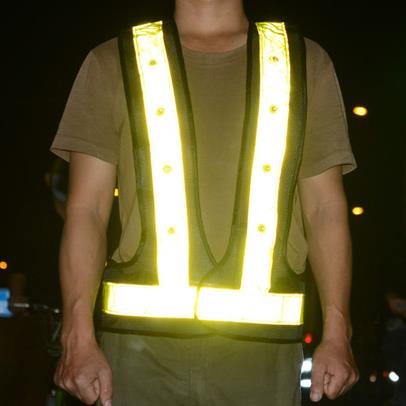
At night: approved reflectors visible from 150 metres
Forbidden to cross roundabouts, must always walk around them
Prohibited to travel on motorways and dual carriageways
Animals:
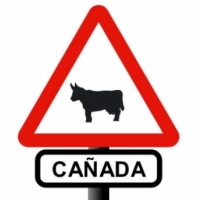
Should travel on designated animal crossings
Forbidden to go on the motorway and dual carriageway, including animal-drawn vehicles
At night animal drivers must have a white front light and a red light in the rear
Large vehicles:
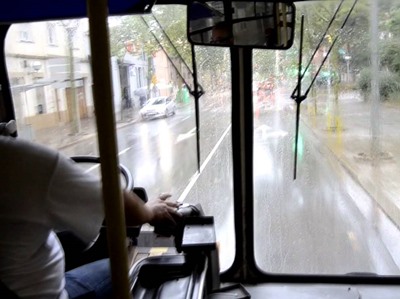
Impede traffic flow and visibility
Must pay attention to the length while overtaking
They usually have a wide windscreen, which will emit large amounts of water in case of rain
2-wheeled vehicles:
Motorcycles, mopeds and quads: Helmet is mandatory for drivers and passengers. The driver is responsible for helmet use throughout the vehicle. If the motorcycle has a self-protective structure, you only need to use the seatbelt. Headlights day and night.
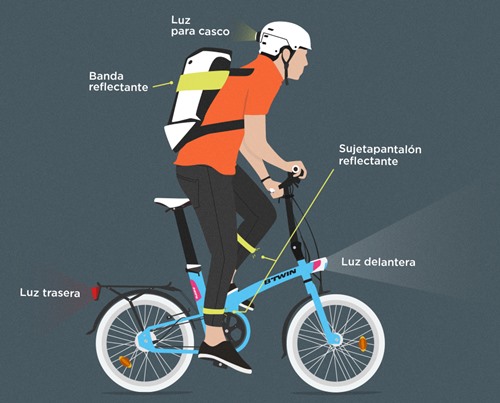
Bicyclists: Helmet is mandatory for cyclists only outside of town, except in extreme heat and with steep slopes. When riding at night, must have a reflector visible from 150 metres. At night, must have a white front light and a red light in the rear.
3. Adjusting the seat and controls
1. Incorrect position causes fatigue and tension.
2. The seat and seat back allow the driver to reach the pedals and steering wheel with slightly bent legs and arms.
3. Clutch:
ENGAGED = OUT OF GEAR = No motor movement is transmitted to the wheels
NOT ENGAGED = IN GEAR = Motor movement is transmitted to the wheels
4. Steering wheel: Held firmly and simulating a clock with hands marking 10 minutes to 2 or quarter to 3.
5. Gearbox: To change gear, it will be necessary to engage the clutch.
Low gear (First): Low speed, but with great power and increased consumption.
High gear (Fifth or sixth): High speed, but with little power and less consumption.
6. Turn signals: After performing a manoeuvre, they should be turned off.
7. Brakes:
Service (foot brake): Acts on all 4 wheels
Parking (hand brake): Usually acts on the rear wheels
4. Groups at risk of accidents
YOUNG DRIVERS:
Majority of fatal accidents, between ages 15 and 19
Less experience and perception of risk
Usually more alcohol and drug consumption
Drive faster
Their main cause of accidents is not respecting traffic rules
More accidents at night, at dawn, during summer, holidays, weekends and on the route back and forth from work
ELDERLY DRIVERS:
They are more likely to have accidents caused by the loss of their physical and mental faculties
Visual/auditory field is smaller, and mobility is less accurate
They consume more medication
They are more sensitive to complicated traffic situations
PEDESTRIANS:
In the city, hitting pedestrians are the accidents which produce the most victims
The elderly and children are the most vulnerable
They constantly commit infractions (cross where they shouldn’t, run traffic lights, etc.)
You should never give signals for them to cross
CHILDREN:
Not familiar with road rules and this causes them to get hit more often
Short stature limits their peripheral visual field
Develop the ability to locate the source of sounds beginning at age 7
Confuse seeing with being seen
The height of most vehicles makes the car strike them on the head in an accident
CYCLISTS:
More accidents on conventional highways, especially on weekends
The most common accident is frontal collision
They turn incorrectly or travel in the opposite direction
Avoid giving them acoustic signals (so as not to startle them)
Wearing a helmet reduces the chance of head injury 3 times
MOPEDS AND MOTORCYCLES:
The responsibility for accidents is shared with the other vehicle drivers
Injuries are more severe because the driver always takes the hit, as their body acts as the chassis
They are less stable, more fragile and less visible
Wearing a helmet reduces the likelihood of head injuries up to three times
Create a free account to read the full chapter
Track your progress, use AI tools, and prepare for your driving exam — all for free.