Chapter 6 Insights
Speed · 169 insights
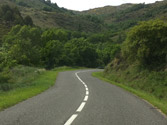
The minimum speed on a road is half its maximum permitted speed.
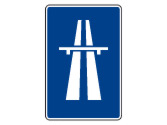
Any motor vehicle towing a trailer is limited to 90 km/h on motorways.
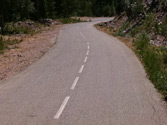
Motorhomes up to 3,500 kg may travel at 90 km/h on conventional roads; over 3,500 kg, only 80 km/h.
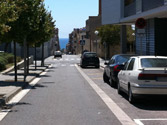
Urban roads with one lane per direction are limited to 30 km/h unless otherwise signposted.
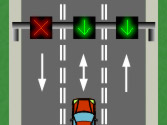
Reversible lanes follow the general speed limit of the road they belong to.
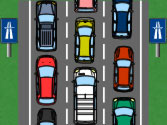
Use the shoulder only when an emergency reduces your speed; traffic congestion does not justify it.
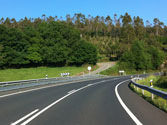
Vans are limited to 80 km/h on conventional roads.
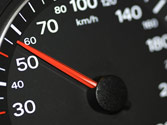
Braking distance increases far more steeply than speed — doubling speed quadruples the distance.
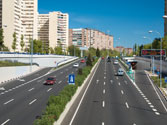
Motorcycles on urban motorways are limited to 80 km/h, versus 120 km/h on non-urban motorways.
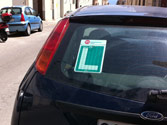
Novice drivers must follow the same speed limits as all other drivers.
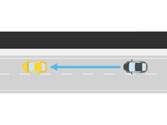
Braking distance is affected by rain, gravel, snow, ice, and overall road and vehicle conditions.
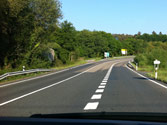
Conventional roads have a 90 km/h maximum regardless of the number of lanes.
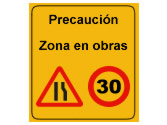
A speed limit paired with a danger sign on the same panel ends when that danger ends.
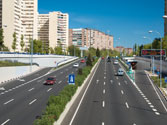
Urban motorways have a default maximum speed of 80 km/h when no sign indicates otherwise.
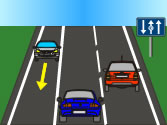
Conventional roads have a maximum speed of 90 km/h regardless of lane count.
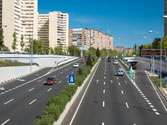
Motorways and dual carriageways within built-up areas are limited to 80 km/h.
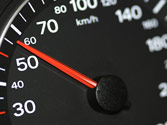
Narrow roads with poor pavement create a sensation of greater speed than actual.
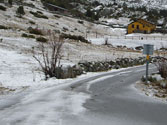
Braking distance can be up to 10 times greater on icy roads than on dry pavement.
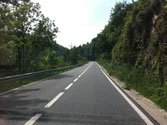
The minimum speed on conventional roads is 45 km/h, half the 90 km/h maximum.