Chapter 2 Insights
Road Signage · 154 insights
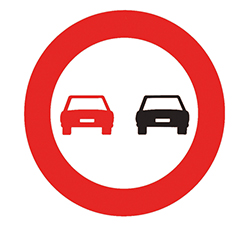
Overtaking is prohibited except for two-wheeled motorcycles without invading the opposite direction.
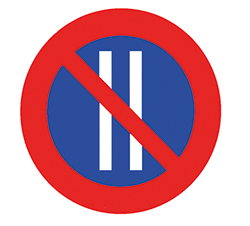
This sign prohibits parking on even-numbered days on the side where it is located.
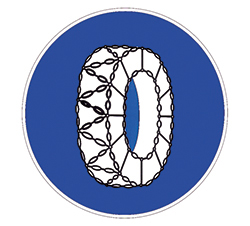
This sign requires you to drive with chains from the point where it is located.
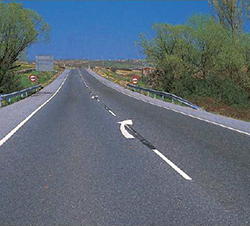
The return arrow requires you to merge into the right lane as soon as possible.
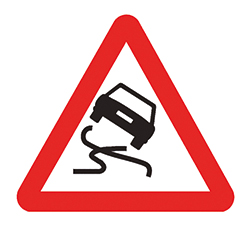
The triangular slippery road sign warns that the road may be very slippery.
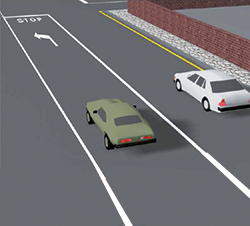
The horizontal stop marking in a lane only affects those driving in it.
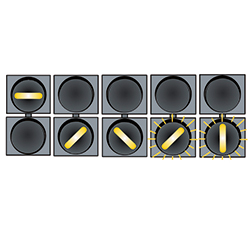
A traffic light with a white line on a black background prohibits passage to buses and trams.
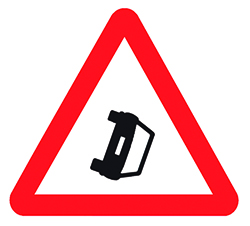
This sign warns of a crashed vehicle obstructing the road.
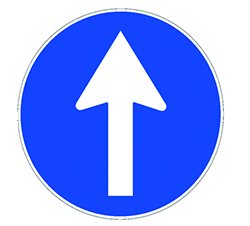
A mandatory direction arrow prevents any other turn at the next intersection.
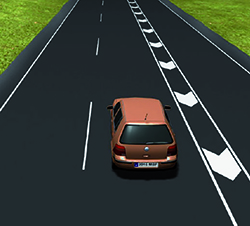
A solid line can never be crossed to change lanes.
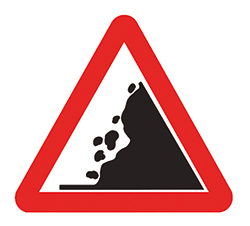
When you see a falling rocks sign, increase your attention to possible obstacles on the road.
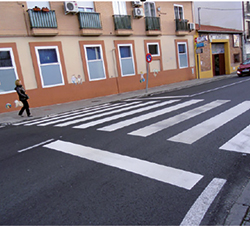
White stripes parallel to the road axis indicate a pedestrian crossing.
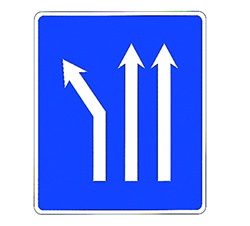
An inclined arrow on a direction sign indicates that the lane veers off or disappears.
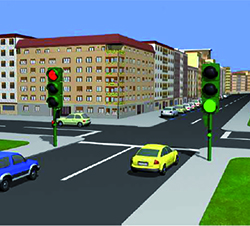
With a green light, you may turn right while yielding to pedestrians.
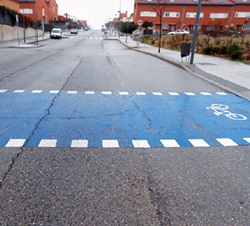
Two parallel lines of white squares mark a cyclist crossing.
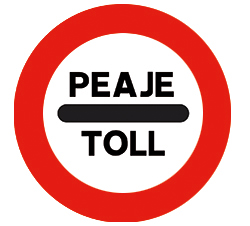
The toll sign requires you to stop before continuing.
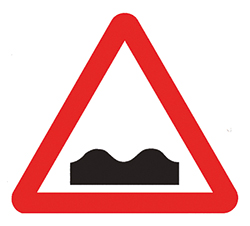
The bump sign warns of a speed bump or poor road surface.
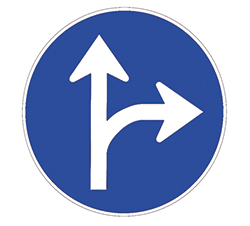
Arrows on a round blue sign require you to follow one of the indicated directions.
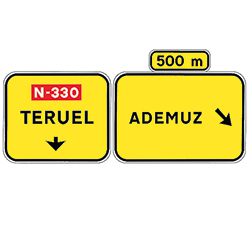
Direction signs with a yellow background indicate a road works section.
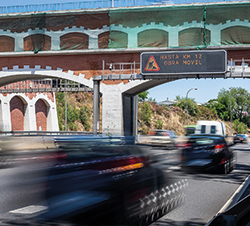
Variable message panels can impose mandatory instructions.
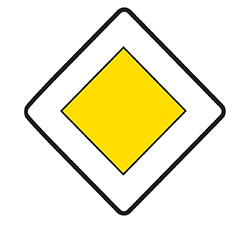
The priority road sign grants right of way at all intersections along the section.
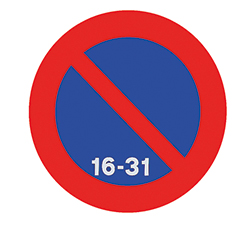
No parking on odd days: from 9 a.m. on the 16th until 9 a.m. on the 1st.
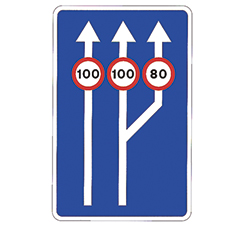
This sign announces an expansion from two to three lanes with the indicated maximum speed.
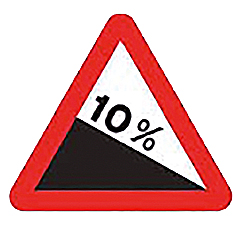
The triangle with a percentage and downward slope warns of a steep descent.

A solid line prohibits overtaking on that section.
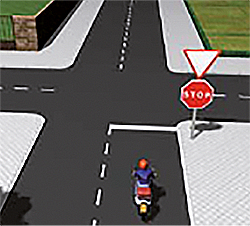
Between two contradictory signs of the same type, the more restrictive one always prevails.
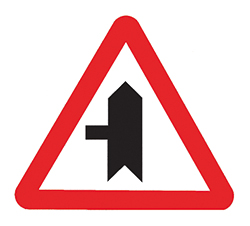
The triangle with a crossroad and a highlighted road indicates an intersection with right of way.
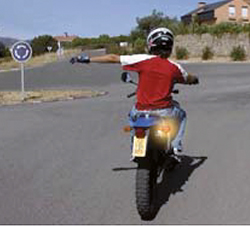
The order of priority is: officers, circumstantial signs, traffic lights, vertical signs, and road markings.
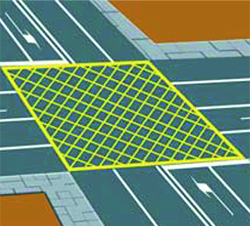
The yellow grid prohibits entering the intersection if you may remain stopped and obstruct it.
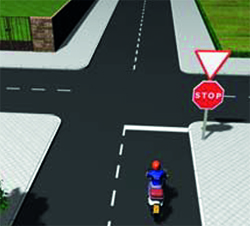
Between contradictory signs of the same type, the more restrictive one always prevails.
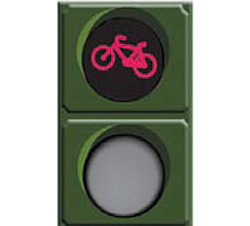
Traffic lights with a bicycle silhouette are mandatory for cyclists and moped riders.
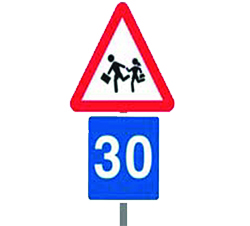
Square signs showing a speed on a blue background indicate a recommended speed, not a mandatory one.
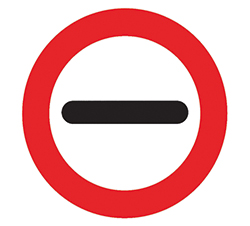
The STOP sign requires you to come to a complete stop and yield before continuing.
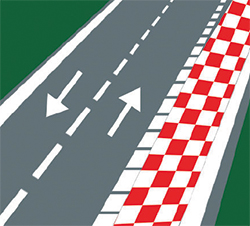
White and red zigzag markings indicate an emergency braking zone where stopping or parking is prohibited.
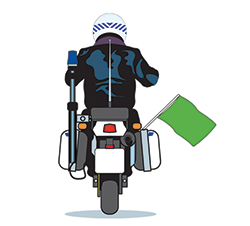
A green flag held by an officer indicates that the road is being reopened to traffic.
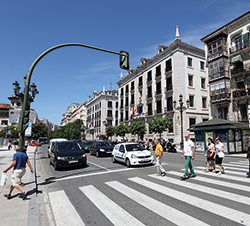
A solid transverse line only requires you to stop when a sign or traffic light imposes it.
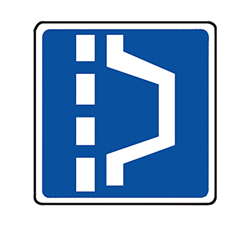
In tunnels, signposted lay-bys allow you to leave your vehicle without obstructing traffic.
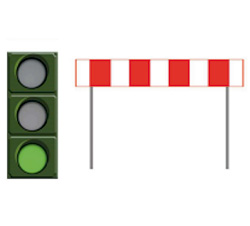
Circumstantial and beaconing signs take precedence over traffic lights in the order of priority.
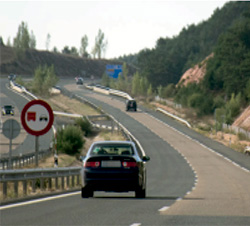
The no-overtaking restriction for trucks applies to vehicles exceeding 3,500 kg.
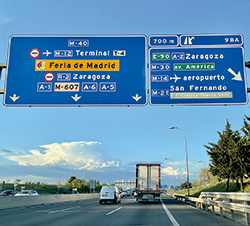
Blue signs indicate directions toward other roads or towns.
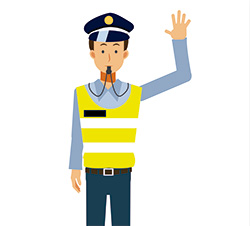
An officer's arm raised vertically requires all users, including pedestrians, to stop.
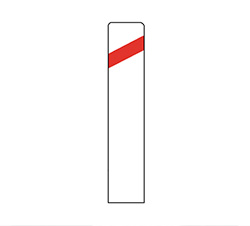
A triangular sign with a barrier warns of a nearby level crossing, movable bridge, or dock.
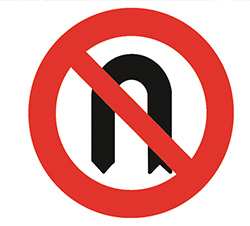
A circular sign with a crossed-out U-turn arrow prohibits making a U-turn.
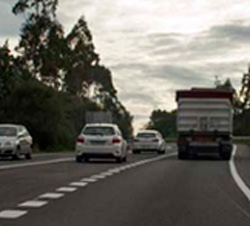
A broken longitudinal line near the right edge delimits a special lane.
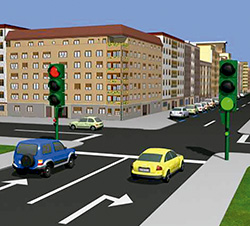
A lane-selection arrow requires you to follow the indicated direction, with no option to continue straight.
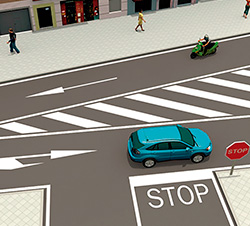
It is forbidden to drive or stop on chevron markings bordered by a solid line.
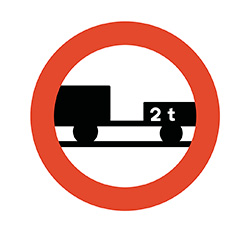
Signs directed at trucks do not apply to passenger cars, even when towing a trailer.
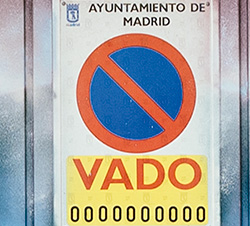
In front of a driveway entrance, the no-stopping and no-parking restriction is limited only to parking.
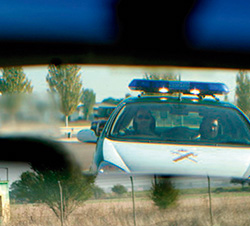
When the V-1 signal is on, stop on the right-hand side in front of the police vehicle.
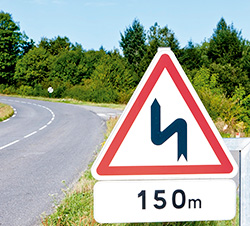
A distance panel beneath a danger sign indicates the meters to the start of the hazardous stretch.