Chapter 1 Insights
Basic Concepts, Roads and Types of Vehicles · 53 insights
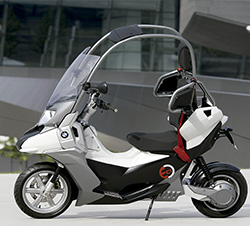
Motorcycles with approved self-protection structures and seatbelts are exempt from the mandatory use of a helmet.
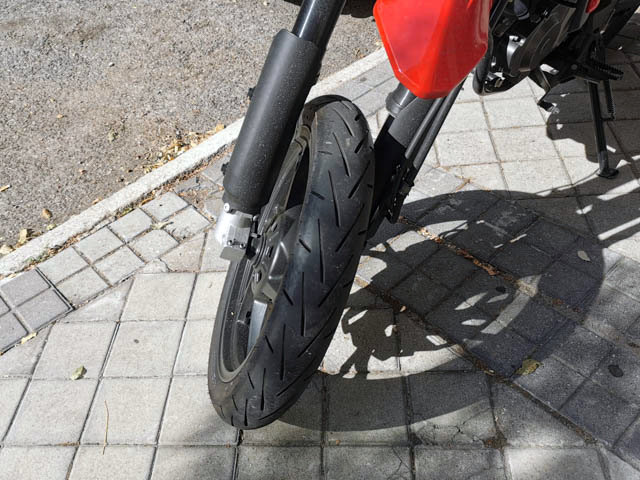
On a motorcycle, the front brake is operated with the right hand.
People in wheelchairs, groups of pedestrians, and those pushing two-wheeled vehicles travel on the right side.
Outside built-up areas, pedestrians walk on the left to face oncoming vehicles.
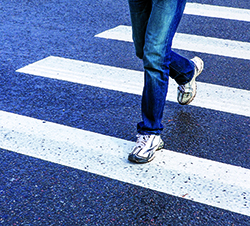
A pedestrian is anyone who walks on a public road without being a driver.
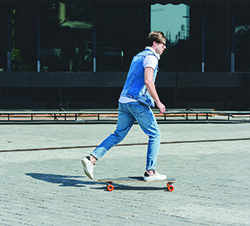
Skaters and skateboard users may never be towed by other vehicles.
It is prohibited to drive vehicles that exceed the legal noise emission limits.
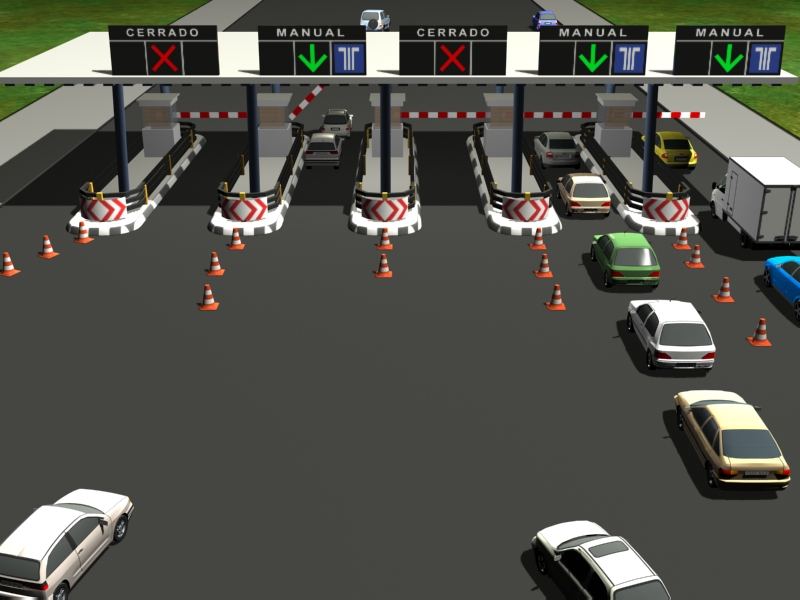
At toll booths, always use the lane marked with a green arrow.
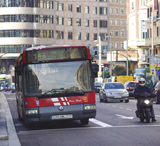
The BUS lane is reserved for buses and authorized vehicles; never invade it, not even to overtake.
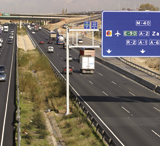
Mopeds may not travel on dual carriageways or motorways because they cannot reach 60 km/h.
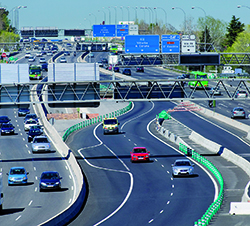
Motorcycles may travel normally in a HOV (high-occupancy vehicle) lane.
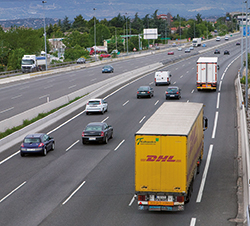
Mopeds are prohibited from traveling on motorways and dual carriageways.
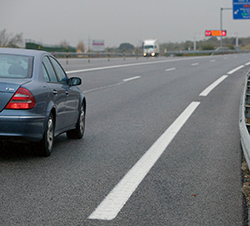
Cyclists over 14 years old may ride on the shoulders of dual carriageways, unless a sign indicates otherwise.
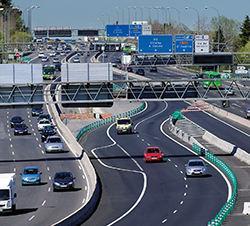
Mopeds may not use the HOV lane, not even with two occupants.
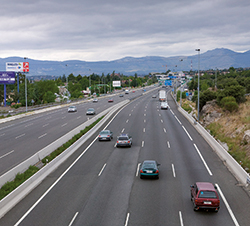
Mopeds are prohibited from traveling on motorways.
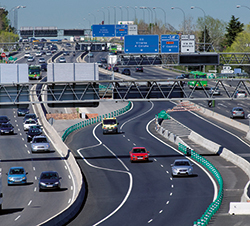
A car with a trailer, even a light one, may not use the HOV lane.
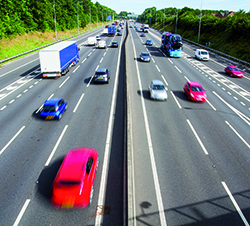
On roads with three carriageways, the side carriageways are one-way, although some lanes may be enabled in the opposite direction.
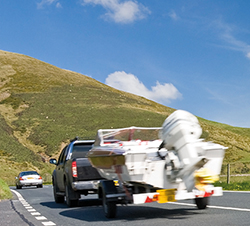
No car with a trailer attached may travel in the HOV lane.
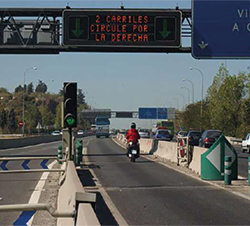
Motorcycles are always authorized to travel in the HOV lane.
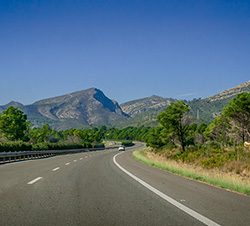
On a conventional road with a usable shoulder, mopeds must travel on the right-hand shoulder.
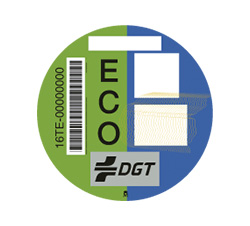
An ECO vehicle with only the driver cannot use the HOV lane unless expressly authorized by variable message panels.
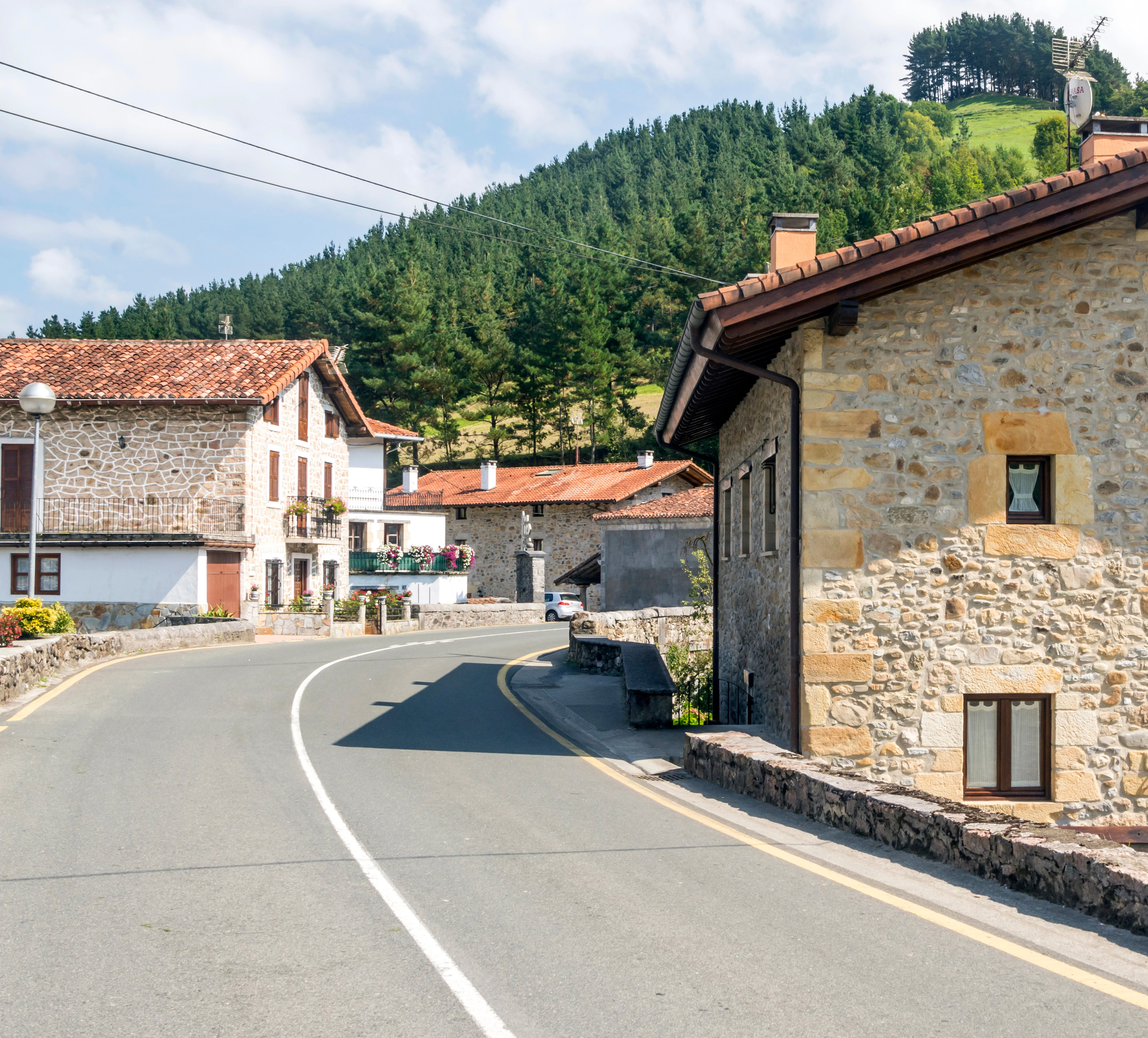
The section of road that crosses through a populated area is called a 'travesía' (through-road).
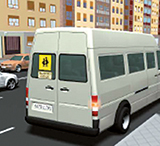
When approaching a stopped school bus, reduce your speed and stop if necessary.
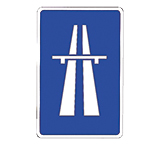
The rectangular blue sign showing two separated carriageways marks the beginning of a motorway.
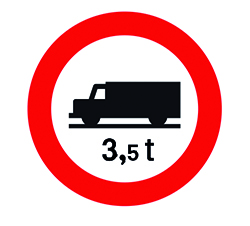
The no-entry sign for trucks applies to those with a maximum authorized mass exceeding 3,500 kg, whether loaded or not.
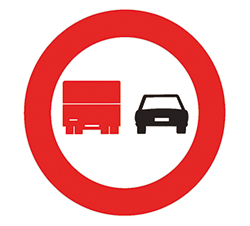
The no-overtaking restriction for trucks only applies to those with a maximum authorized mass exceeding 3,500 kg.
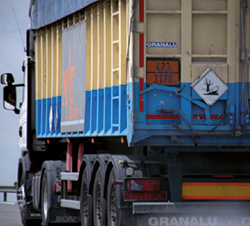
The rectangular yellow panel with a red border indicates long vehicles exceeding 12 meters in length.
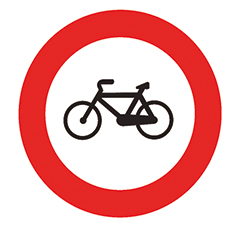
Bicycles are prohibited from accessing motorways and dual carriageways.
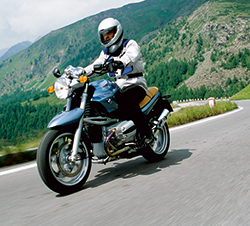
As a general rule, motorcycles must ride on the roadway, not on the shoulder.
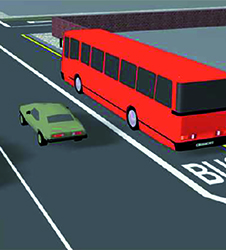
Cars are not allowed to stop or park in a bus lane.
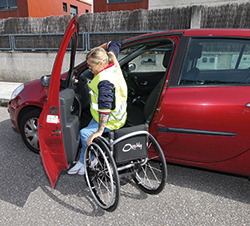
Mobility-impaired vehicles travel on the shoulder if it is passable and sufficient.
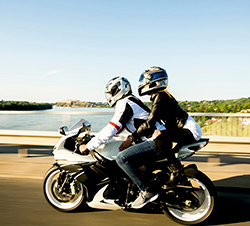
With a passenger on a motorcycle, the greater rear weight makes it harder to lock the rear wheel when braking.
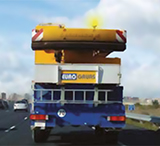
The rotating amber light only signals presence; it does not grant right of way.
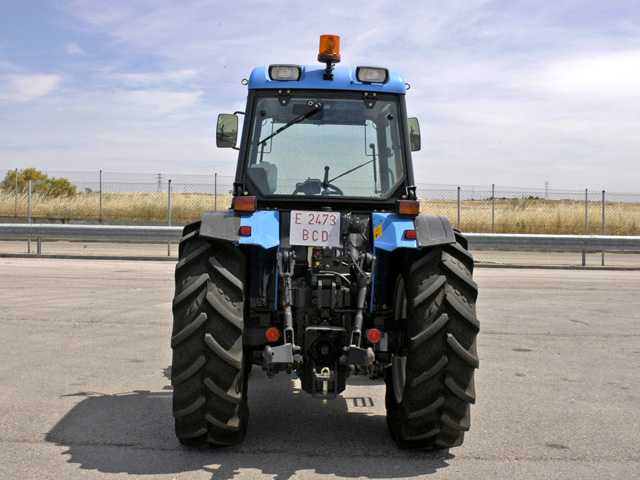
The rotating amber light on an agricultural tractor warns of its presence on or near the road.
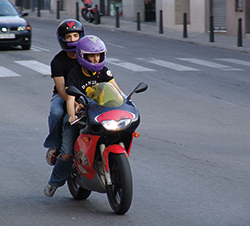
A motorcycle passenger must sit astride with their feet on the side footrests.
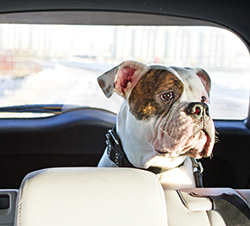
Pets must be properly secured so they do not interfere with control of the vehicle.
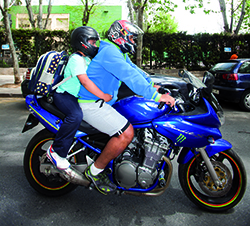
The minimum age to travel as a passenger on a motorcycle is 12 years, except for authorized parents or guardians.

On urban roads, loading and unloading is governed by the rules set by the municipal authorities.
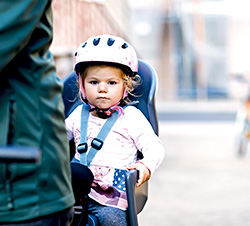
An adult may carry a child up to 7 years old on a bicycle in an approved child seat.
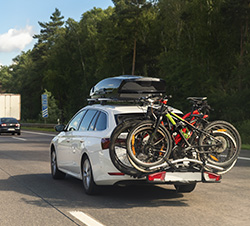
If luggage blocks the interior rearview mirror, it is sufficient to have two exterior mirrors, one on each side.
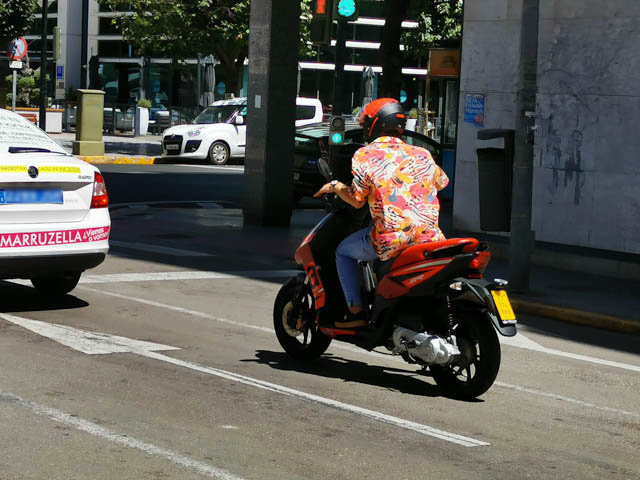
Mopeds may tow a trailer provided certain regulatory conditions are met.
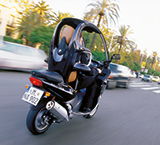
Motorcycles carry a single rear license plate mounted in a vertical position.
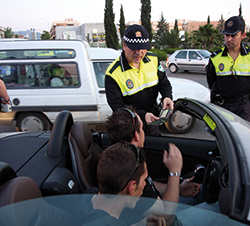
A vehicle that exceeds the regulatory levels of gases, smoke or noise can be immobilized.
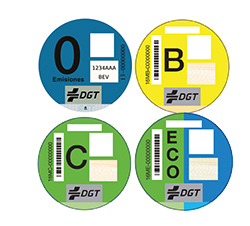
The V-25 sticker indicates the vehicle's environmental classification based on its emissions and fuel.
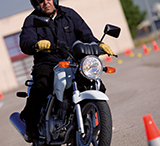
Gloves are essential when riding a motorcycle to protect the hands in falls and improve grip.
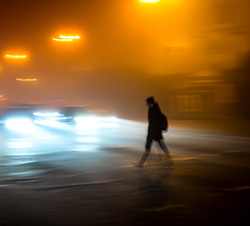
At night, on interurban roads, pedestrians must wear a reflective element visible from 150 meters away.
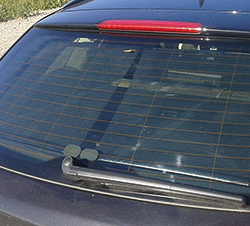
You may only use rear curtains or window films if you have two exterior rearview mirrors.
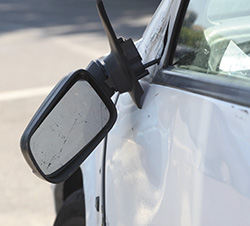
Without adequate rear visibility, you cannot drive; the rearview mirror must allow you to see following traffic.
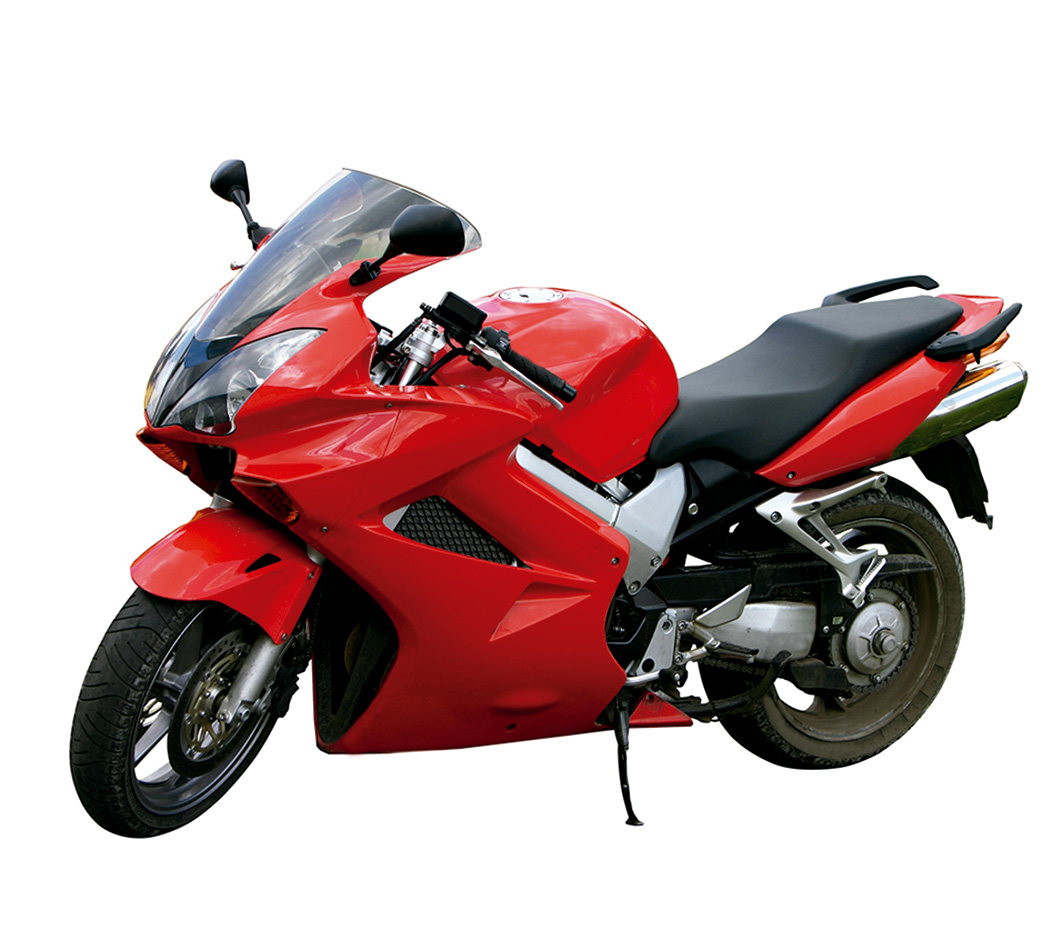
Modifying a motorcycle's fairing alters its aerodynamics and, therefore, its fuel consumption.
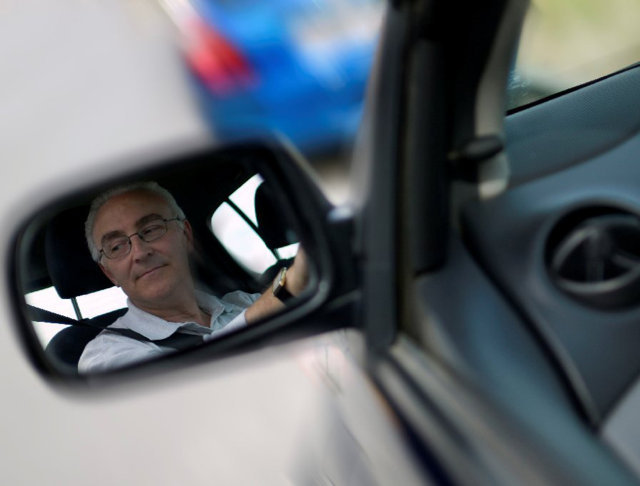
Every passenger car must mandatorily have a left exterior rearview mirror.