An officer with their arm raised vertically requires vehicles approaching from the front to ...
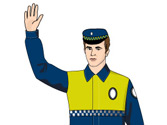
A)reduce speed.
B)continue driving.
C)stop.Correct
When an officer raises their arm vertically, they require all road users approaching the officer to stop, except for drivers who cannot do so with sufficient safety. If this signal is made at an intersection, it will not require drivers who have already entered it to stop.
One or both arms extended horizontally requires all users approaching the officer to stop, from the directions that cross the one indicated by the extended arm or arms. The signal remains in force even if the officer lowers their arms, until they change position or make another signal.
An officer with their arm extended moving it alternately up and down requires drivers approaching the officer on the side corresponding to the arm making the signal, and perpendicular to that arm, to reduce their vehicle's speed. The signals an officer can make with the whistle are:
- Short blasts: you must stop.
- Long blast: you may resume driving.
An officer with their arm extended moving it alternately up and down requires drivers approaching the officer on the side corresponding to the arm making the signal, and perpendicular to that arm, to reduce their vehicle's speed. The signals an officer can make with the whistle are:
- Short blasts: you must stop.
- Long blast: you may resume driving.